9 Rustic Wine Cellar Designs That Bring Old-World Charm to Your Home
A properly designed wine cellar can increase a home’s resale value by up to 15%, according to real estate appraisers who specialize in luxury properties. Yet most homeowners who invest in wine storage focus almost entirely on function and forget that the best cellars in the world — from the caves beneath Burgundy’s Clos de Vougeot to the stone vaults of Rioja — were never just about storage. They were about atmosphere, story, and a deep connection to the land.
Disclosure: This post contains affiliate links. As an Amazon Associate, we earn from qualifying purchases, and at no extra cost to you.
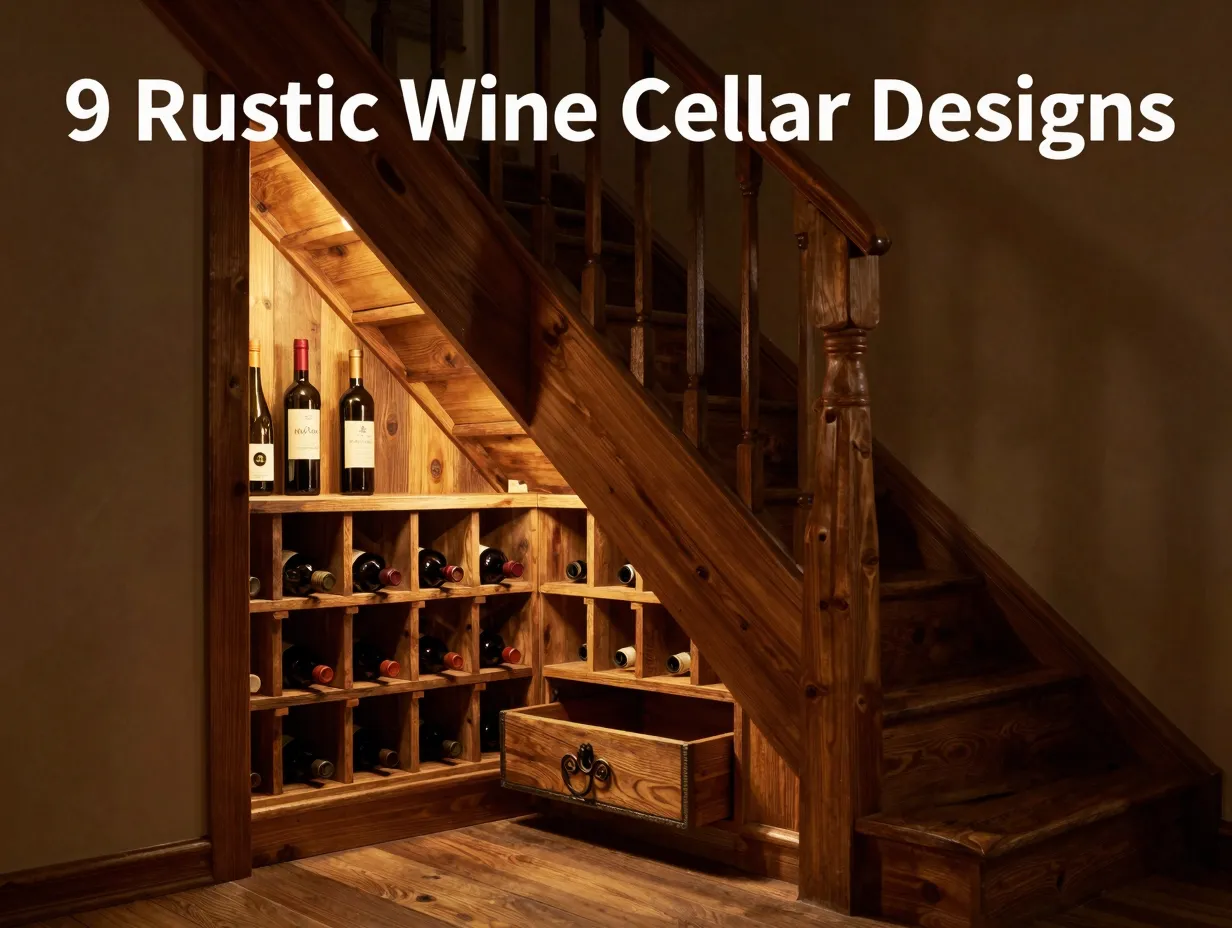
That is exactly what the 9 Rustic Wine Cellar Designs That Bring Old-World Charm to Your Home in this guide are designed to deliver. Whether you have a sprawling basement or a modest under-stair nook, these designs prove that old-world character is not reserved for European chateaux. With the right materials, lighting, and layout choices, any home can host a wine space that feels genuinely timeless.
I have spent years researching wine cellar design trends, speaking with custom cellar builders, and visiting residential cellars across the country. What I have found is that the most memorable spaces share a handful of core principles — and that rustic design, far from being outdated, is experiencing a powerful resurgence in 2026.
Key Takeaways
- Reclaimed wood, natural stone, and wrought iron are the foundation materials of authentic rustic wine cellar design [1]
- Warm, layered lighting is as important as the racking system in creating old-world atmosphere [2]
- Modern climate control and LED technology can be integrated without sacrificing rustic charm [3]
- Underutilized spaces like stair alcoves and basement corners can become stunning compact cellars [5]
- Personalized details — antique accessories, family barrel tables, custom label displays — transform a storage room into a signature space [4]
What Makes a Wine Cellar Truly “Rustic”
Before diving into the specific designs, it helps to understand what separates a genuinely rustic wine cellar from one that simply has a wooden rack and a stone-look tile floor.
Authentic rustic design relies on three pillars:
| Pillar | Key Elements | Why It Matters |
|---|---|---|
| Materials | Reclaimed wood, natural stone, wrought iron | Creates tactile authenticity [1] |
| Atmosphere | Warm lighting, aged finishes, organic textures | Evokes old-world sensory experience [2] |
| Craftsmanship | Hand-carved details, custom joinery, artisan ironwork | Signals quality and permanence [4] |
The rustic aesthetic is not about making things look old for the sake of it. It is about honoring the centuries-old tradition of wine storage in environments shaped by nature — caves, stone barns, underground vaults. When you bring those textures and materials into a residential setting, you create a space that feels earned rather than manufactured.
“The best rustic cellars feel like they have always been there. The goal is to design something that looks like it was discovered, not installed.”
With that framing in mind, here are the 9 Rustic Wine Cellar Designs That Bring Old-World Charm to Your Home, each suited to a different space, budget, and personal style.
9 Rustic Wine Cellar Designs That Bring Old-World Charm to Your Home
1. The Stone Vault Cellar
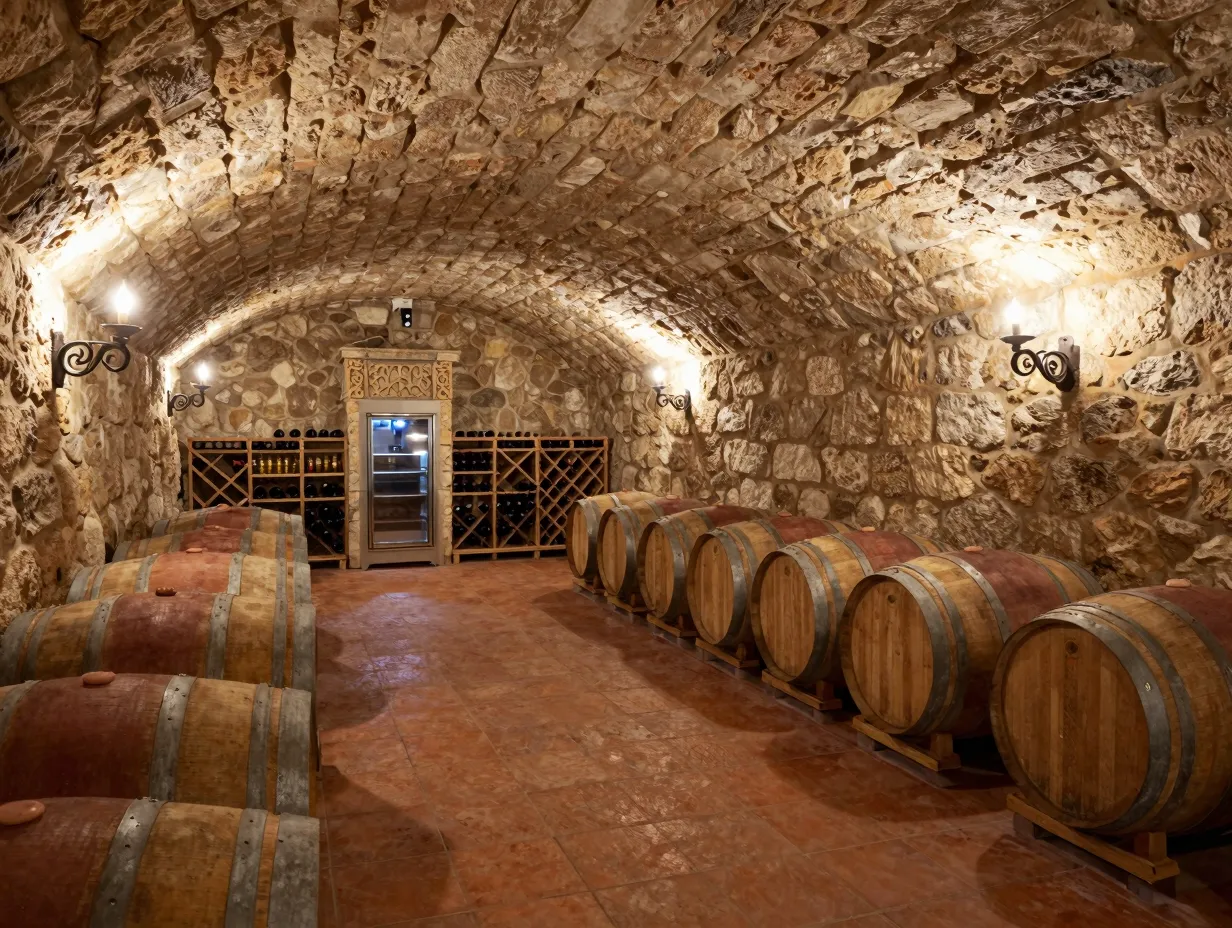
The stone vault is the archetype of old-world wine storage. Modeled after the underground cellars of France and Spain, this design uses rough-cut limestone or fieldstone for walls and ceiling, often incorporating a barrel-vaulted arch that draws the eye toward the wine racks.
Key design elements:
- Natural or faux-stone wall cladding in limestone, slate, or fieldstone
- Barrel-vaulted ceiling in brick or stone
- Terracotta or reclaimed slate floor tiles
- Wrought-iron candle-style sconces for wall lighting
The stone vault works best in a dedicated basement room of at least 100 square feet. Climate control is essential here — stone is a natural insulator, but it needs help maintaining the 55-58°F temperature range ideal for long-term storage [3]. Modern refrigeration units can be concealed behind decorative stone panels, keeping the aesthetic intact while protecting your collection.
One builder I spoke with described installing a stone vault for a client in Pennsylvania who had visited the caves at Moët & Chandon and wanted to replicate that feeling at home. The finished cellar used reclaimed Pennsylvania fieldstone and holds over 2,000 bottles. The client calls it “the most-visited room in the house.”
2. The Reclaimed Wood Farmhouse Cellar
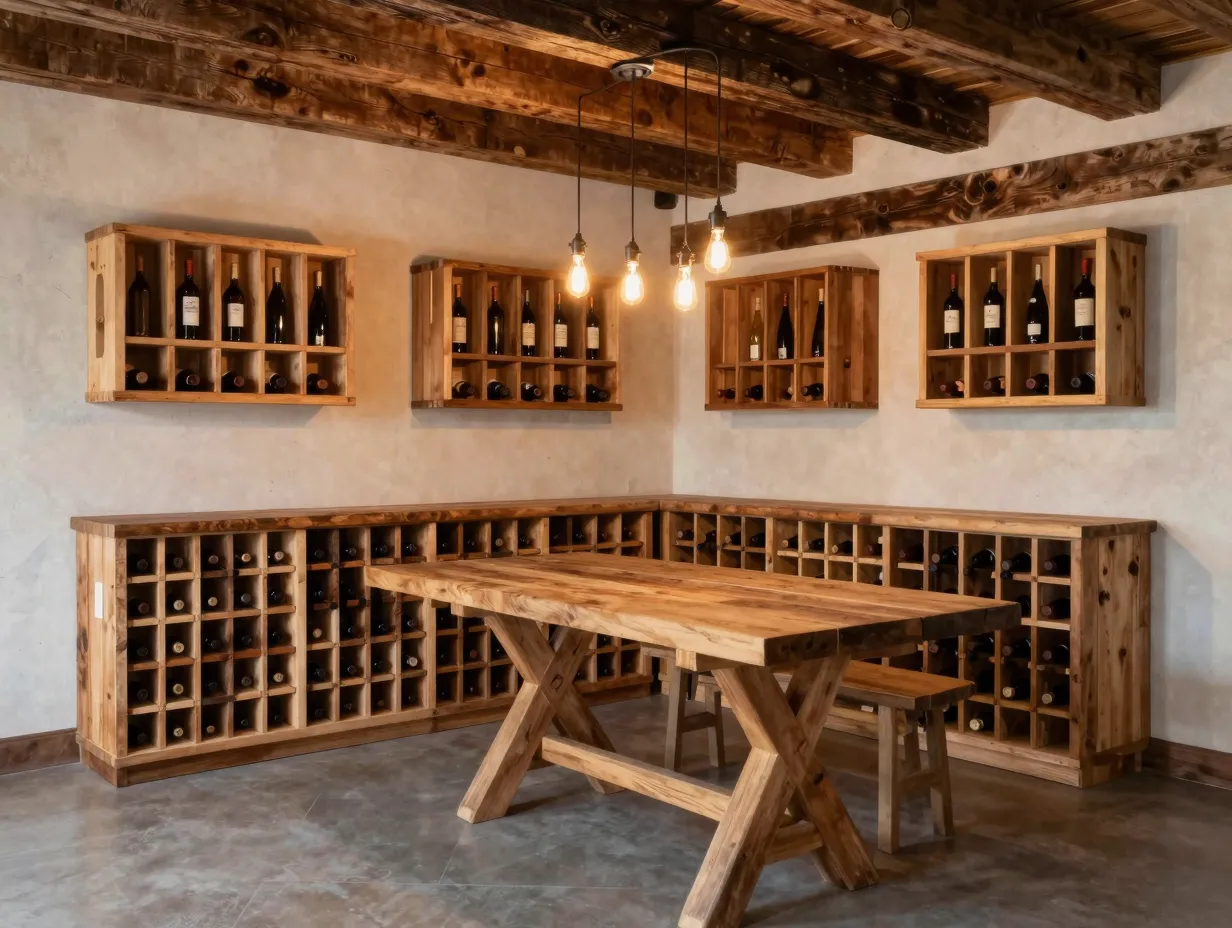
Reclaimed wood is arguably the single most powerful material in rustic wine cellar design. Salvaged barn wood, railway sleepers, and old-growth timber bring decades — sometimes centuries — of character that no new lumber can replicate [1].
The farmhouse cellar style pairs this aged wood with simple, functional racking, whitewashed or plaster walls, and Edison-bulb pendant lighting. The result is warm, unpretentious, and deeply inviting.
Design tips for the reclaimed wood farmhouse style:
- Source wood from certified salvage suppliers to ensure structural integrity
- Mix wood tones — darker beams against lighter racking creates visual depth
- Use open-bottle displays at eye level for frequently accessed wines
- Add a simple wooden tasting table with cross-leg or sawbuck base
This style also aligns with sustainable design values. Using reclaimed materials diverts wood from landfills and reduces demand for new-growth timber, making it a responsible choice as well as a beautiful one [1].
3. The Under-Stair Wine Nook
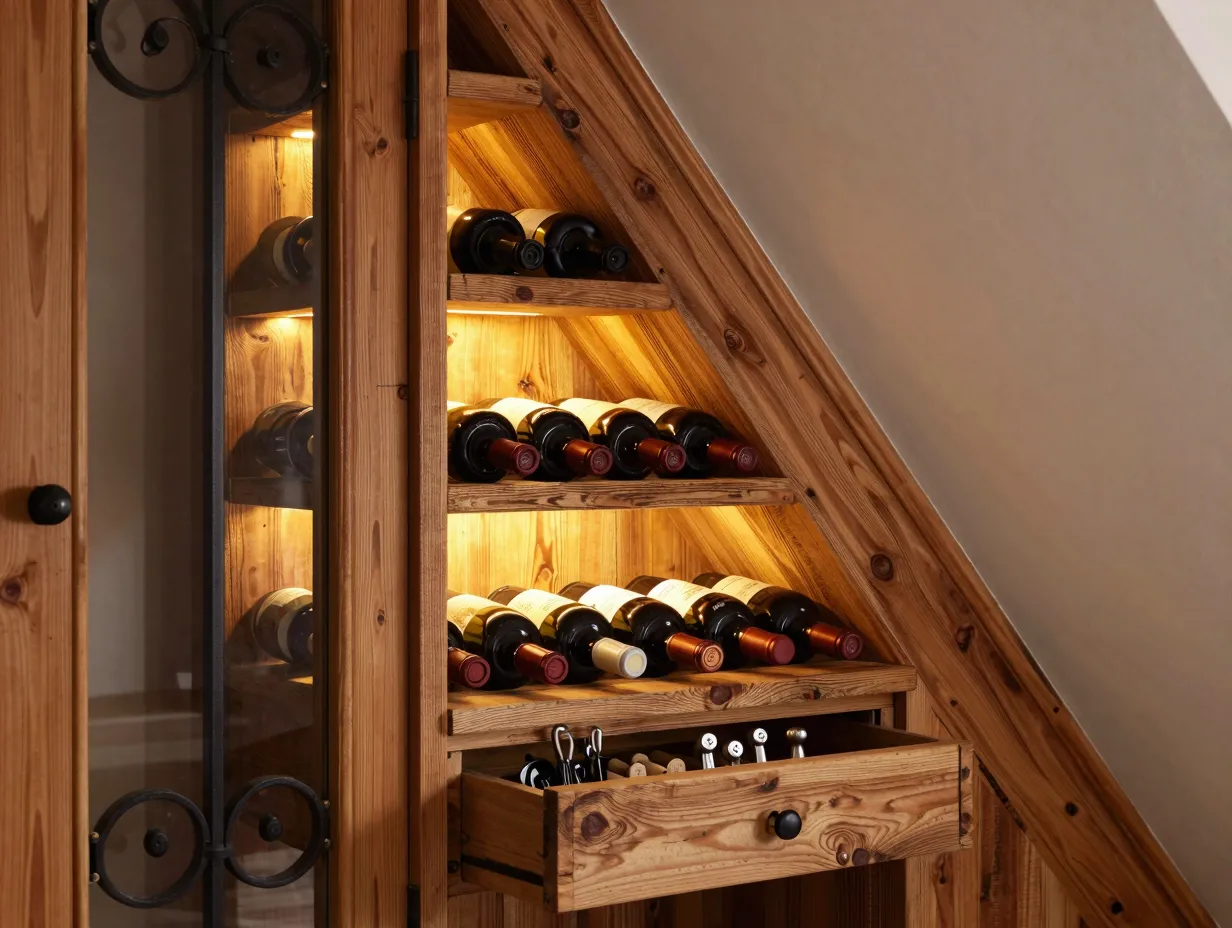
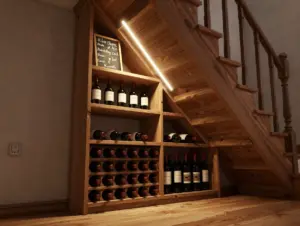
Not every home has a basement, and not every wine enthusiast needs to store 1,000 bottles. The under-stair wine nook has emerged as one of the most creative and practical solutions for compact wine storage, transforming dead space into a focal point [5].
What makes this design work:
- Custom-built racking that follows the angled ceiling line of the staircase
- A glass or wrought-iron door that allows visual access from the adjacent room
- Reclaimed wood shelving with integrated LED strip lighting underneath each shelf
- A small pull-out drawer at the base for accessories like corkscrews and wine stoppers
The key challenge with under-stair cellars is climate management. Because the space is small and often adjacent to a heated living area, a dedicated mini-split or through-wall cooling unit is typically required [6]. These units have become significantly more energy-efficient in recent years, which helps manage both operating costs and environmental impact.
I have seen under-stair nooks in homes as small as 900 square feet that hold 80 to 120 bottles in style. When lit properly with warm amber LEDs and finished with reclaimed wood, they look like they belong in a Tuscan farmhouse.
4. The Glass-Enclosed Rustic Cellar
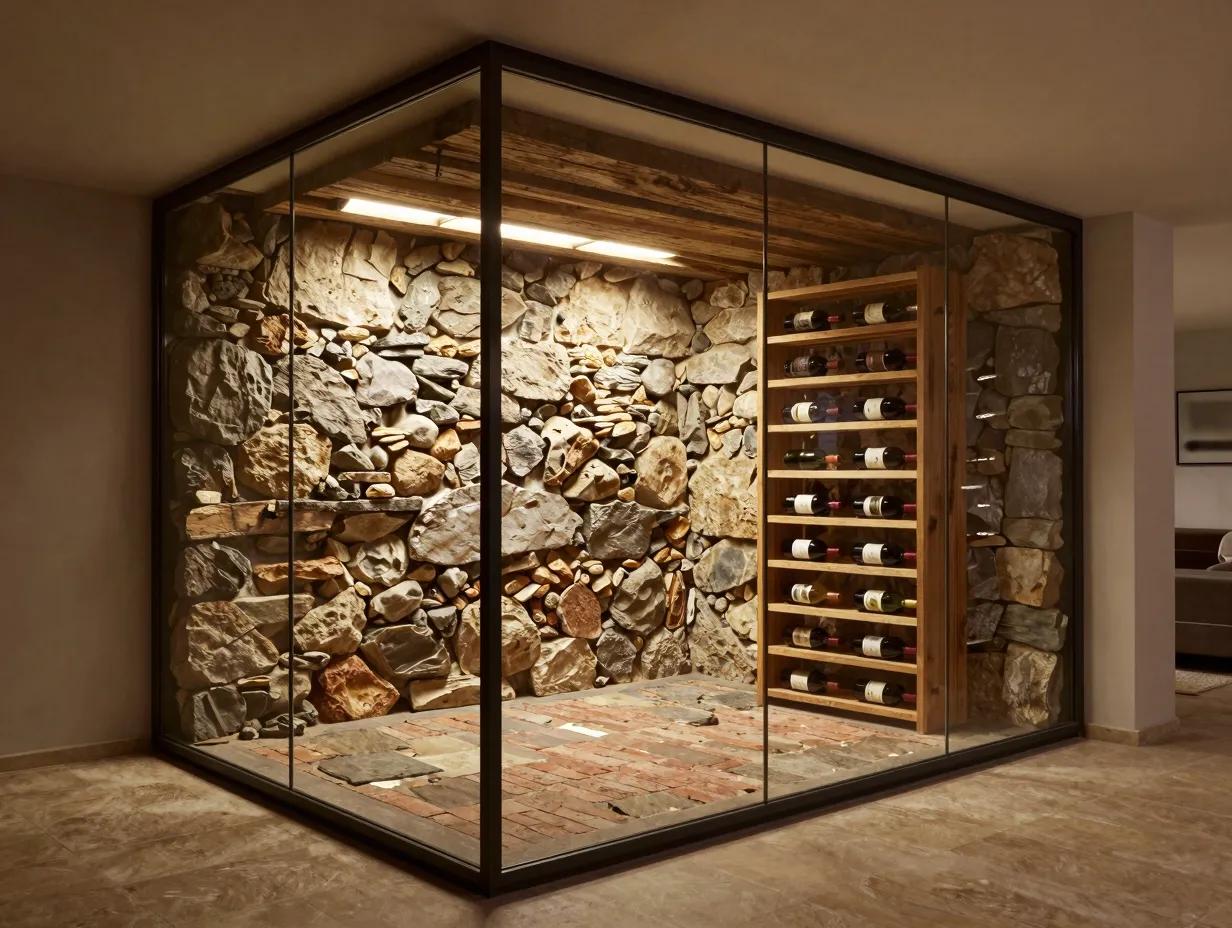
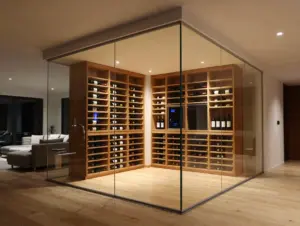
One of the most striking trends in contemporary wine cellar design is the marriage of rustic materials with glass enclosures [3]. A frameless glass wall or door allows the cellar to be seen from the living room, kitchen, or dining area, turning the wine collection into a piece of living art.
The visual contrast is the point. Rough stone or aged wood behind crystal-clear glass creates a tension between old and new that feels genuinely sophisticated.
Design considerations for glass-enclosed cellars:
| Element | Recommendation |
|---|---|
| Glass type | Frameless tempered glass, minimum 3/8 inch thick |
| Condensation control | Proper vapor barrier and climate control prevent fogging |
| Interior lighting | Warm LED strips highlight bottles and textures |
| Flooring | Reclaimed brick or slate visible through glass adds depth |
The glass enclosure also serves a practical function: it lets you monitor the cellar at a glance without opening the door and disrupting the temperature. For serious collectors, this is a meaningful advantage [3].
5. The Barrel-Accented Tasting Room Cellar
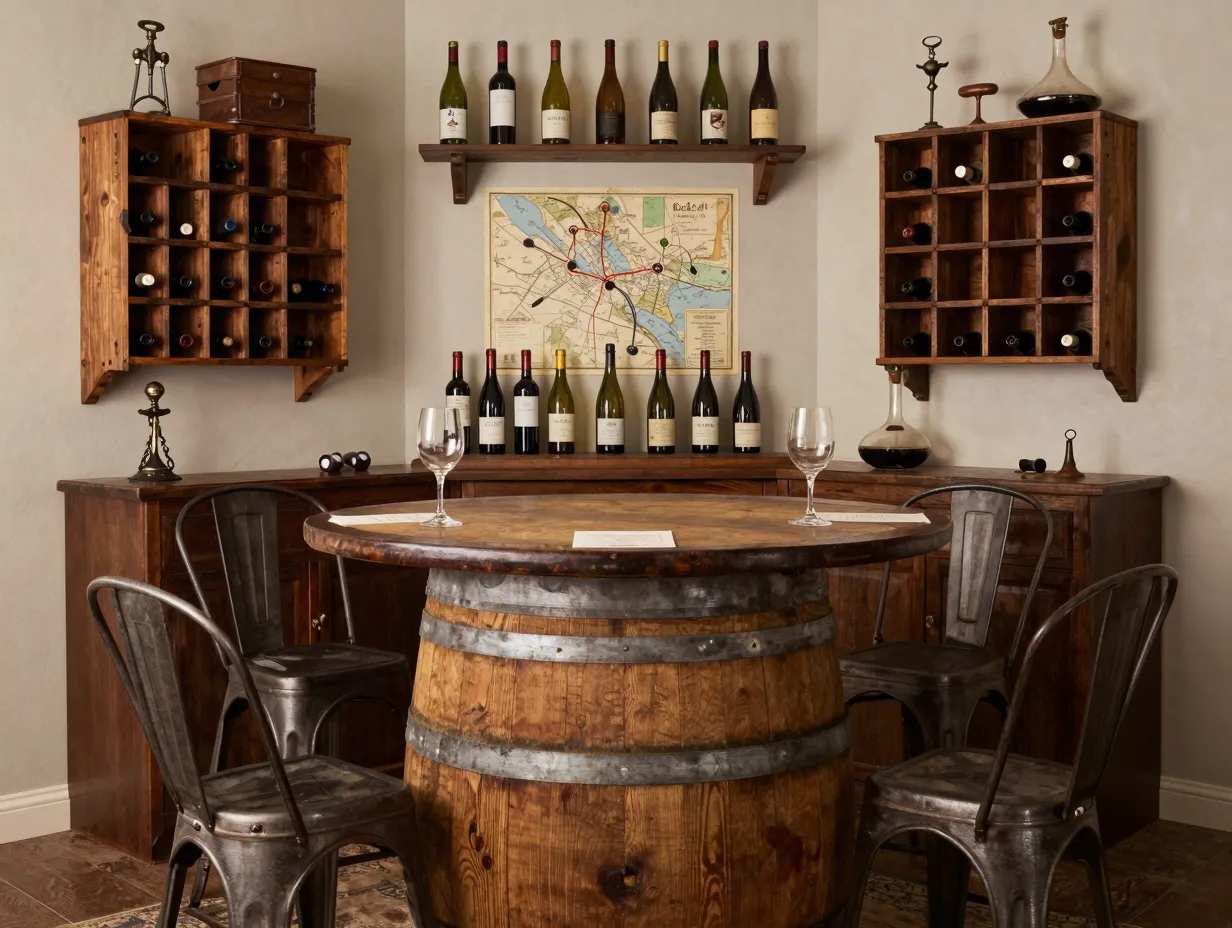
Some homeowners want more than storage — they want a destination. The barrel-accented tasting room cellar combines functional wine storage with a dedicated space for opening, tasting, and sharing bottles with guests.
The defining feature of this design is the incorporation of actual wine barrels — repurposed as tables, stools, display pedestals, or even decorative wall elements. A family I know in Napa converted their garage into a tasting room cellar using barrels sourced directly from a local winery. The barrels cost almost nothing, and the result looks like a private winery cave.
Essential elements of the tasting room cellar:
- Central barrel table or bar-height tasting counter
- Wine barrel stools or wrought-iron bar chairs
- Wall-mounted racking on at least two sides
- A dedicated display area for special bottles or magnums
- Antique wine-related accessories: vintage corkscrews, old wine maps, antique decanters [4]
Lighting in this space deserves special attention. A layered approach — overhead recessed lights for general illumination, under-shelf LED strips for the racking, and pendant lights over the tasting table — creates both function and drama [6].
6. The Mediterranean Grotto Cellar
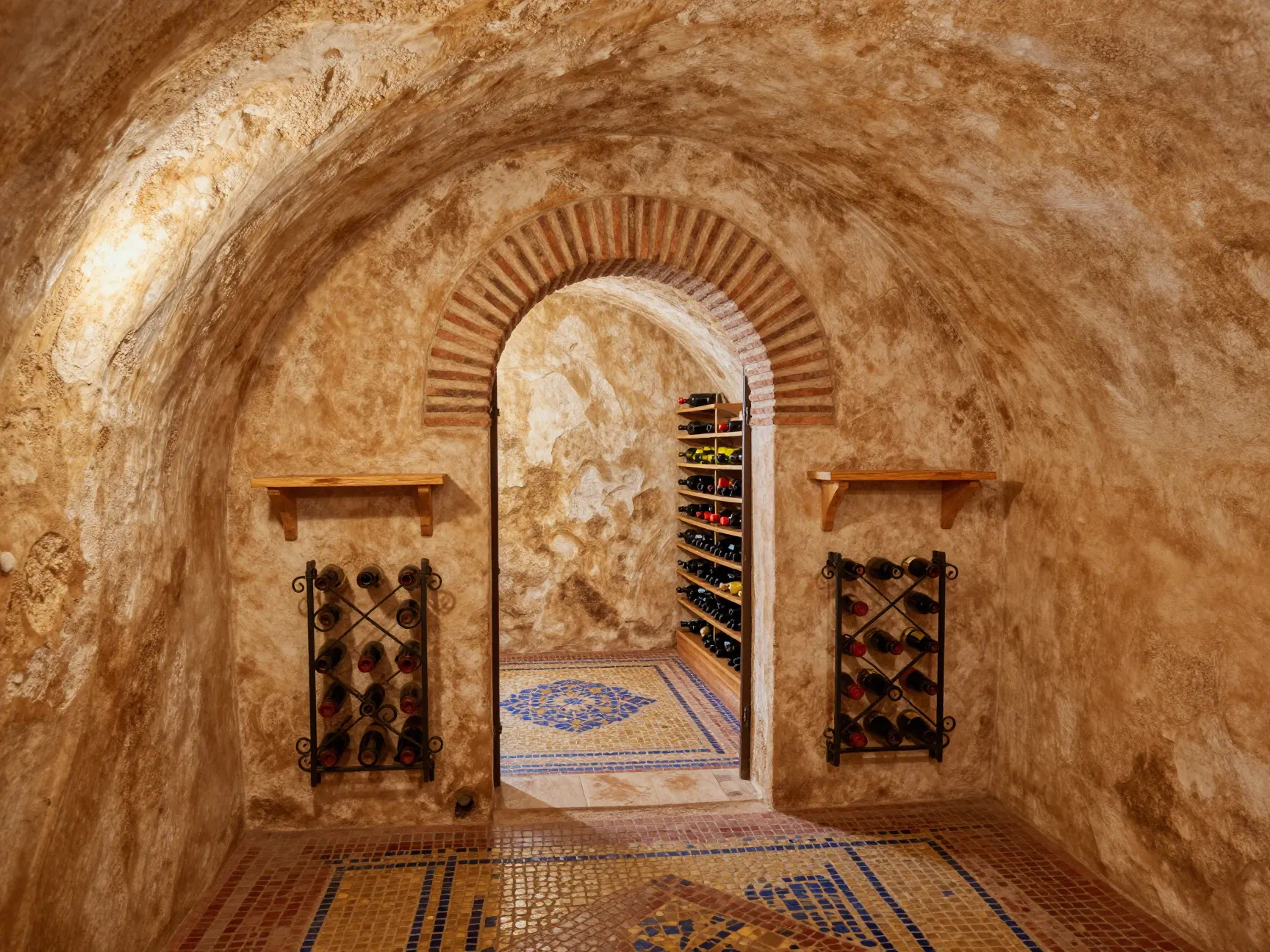
Inspired by the wine caves of southern Italy, Greece, and coastal Spain, the Mediterranean grotto cellar leans into rough plaster walls, arched doorways, and terracotta accents. It is warmer in palette than the French stone vault style, with more color and organic texture.
Signature elements of the Mediterranean grotto:
- Hand-troweled plaster walls in warm ochre, cream, or terracotta tones
- Carved stone or brick arches framing doorways and alcoves
- Mosaic tile floor details in blue, gold, or earthy red
- Wrought-iron wine racks with scrollwork detailing
- Olive wood or cypress accents in shelving and furniture
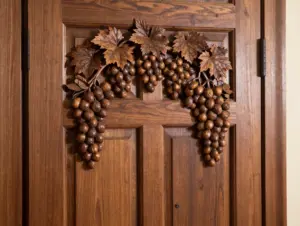
The carved arch detail is particularly important in this style. Arched openings — even shallow decorative ones built into the walls — create the sense of depth and antiquity that defines the Mediterranean aesthetic [4]. These can be constructed relatively affordably using drywall and plaster, making this style accessible even without a large budget.
7. The Industrial-Rustic Hybrid Cellar
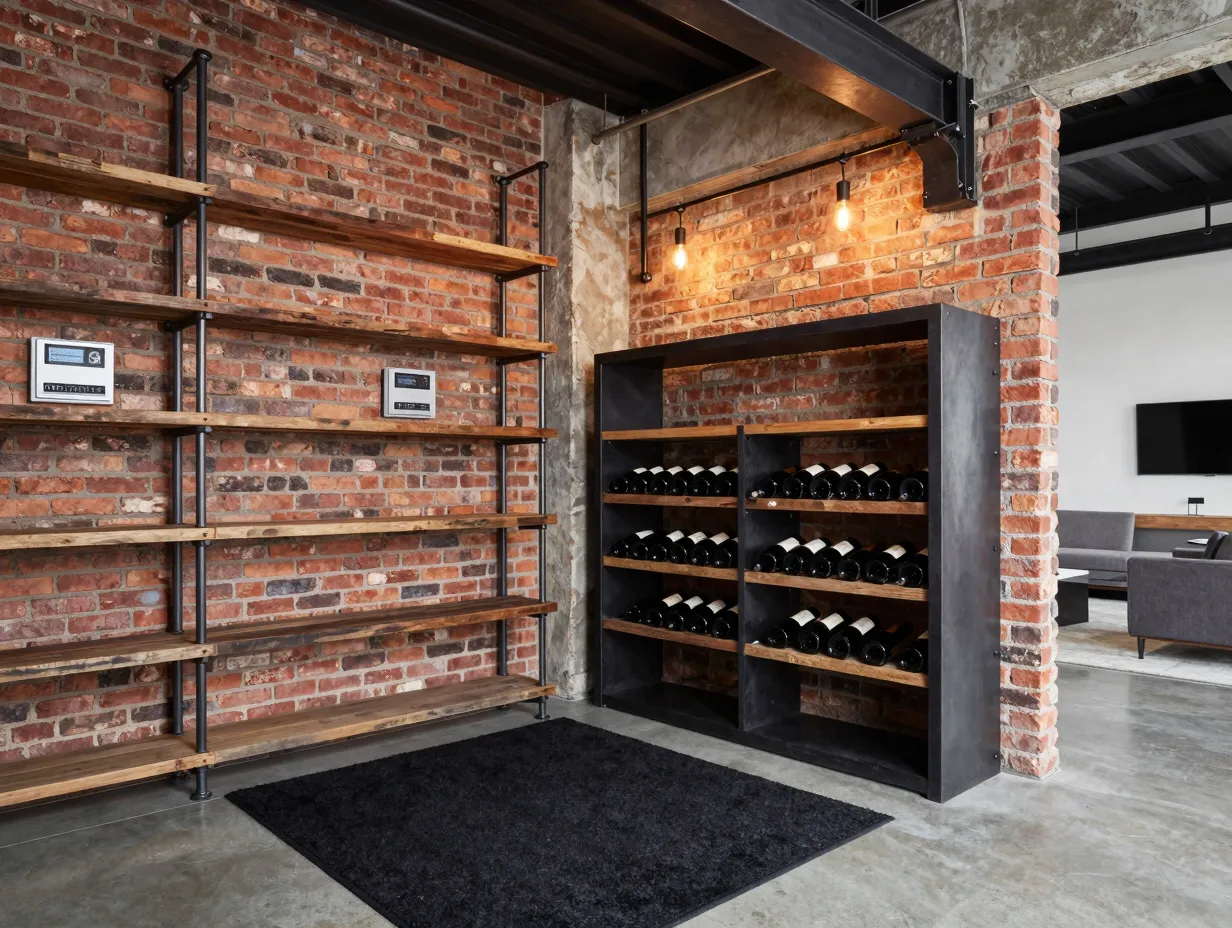
Not every homeowner wants pure old-world romance. Some prefer a design that acknowledges the present while honoring the past. The industrial-rustic hybrid cellar does exactly that, combining raw materials like exposed brick and reclaimed wood with steel racking, pipe fittings, and concrete floors.
This style works especially well in:
- Urban lofts and converted warehouse homes
- Modern farmhouses with clean-lined architecture
- Homes where the wine cellar is adjacent to a contemporary kitchen or living space
Key material combinations:
- Exposed brick walls with steel pipe and reclaimed wood shelving
- Polished concrete floor with area rug for warmth
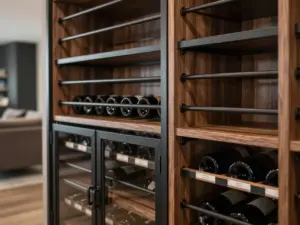
- Black powder-coated steel racking with horizontal bottle display
- Edison bulb pendant lights on black metal conduit
The industrial-rustic style allows for modern wine storage technology — precision climate control, humidity monitoring, smart lighting — to be integrated openly rather than concealed [3]. Control panels and sensors become part of the aesthetic rather than eyesores.
8. The Personalized Heritage Cellar
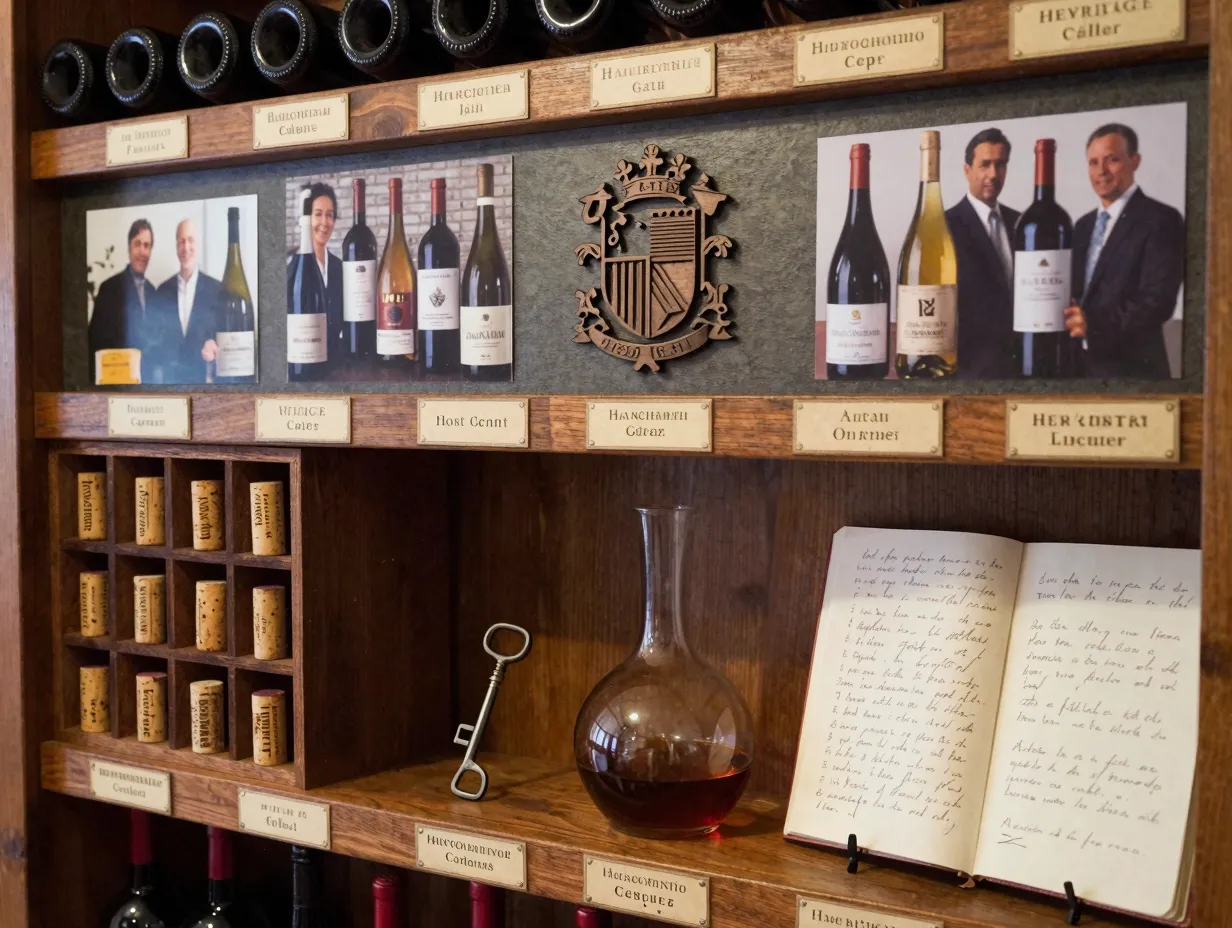
Of all the designs in this list, the personalized heritage cellar is the most emotionally resonant. This approach treats the wine cellar as a family archive — a space that tells the story of where you have been, what you have tasted, and who you have shared bottles with [4].
Personalization elements that define this style:
- A custom label display wall featuring corks, labels, or photos from memorable bottles
- A family crest or monogram carved into the wood or stone
- A dedicated section for wines from a meaningful region or producer
- Antique accessories with personal history — a grandfather’s wine key, a decanter from a trip abroad
- A handwritten cellar book or digital display showing tasting notes
The racking and materials in this style can follow any of the other designs on this list. What makes it distinct is the intentional layering of personal narrative into every corner of the space. One designer I interviewed described it as “building a room that your grandchildren will want to explore.”
Climate control remains non-negotiable here, particularly if the collection includes wines meant for long-term aging [6]. Investing in a reliable, energy-efficient system protects both the wine and the memories attached to it.
9. The Eco-Conscious Rustic Cellar
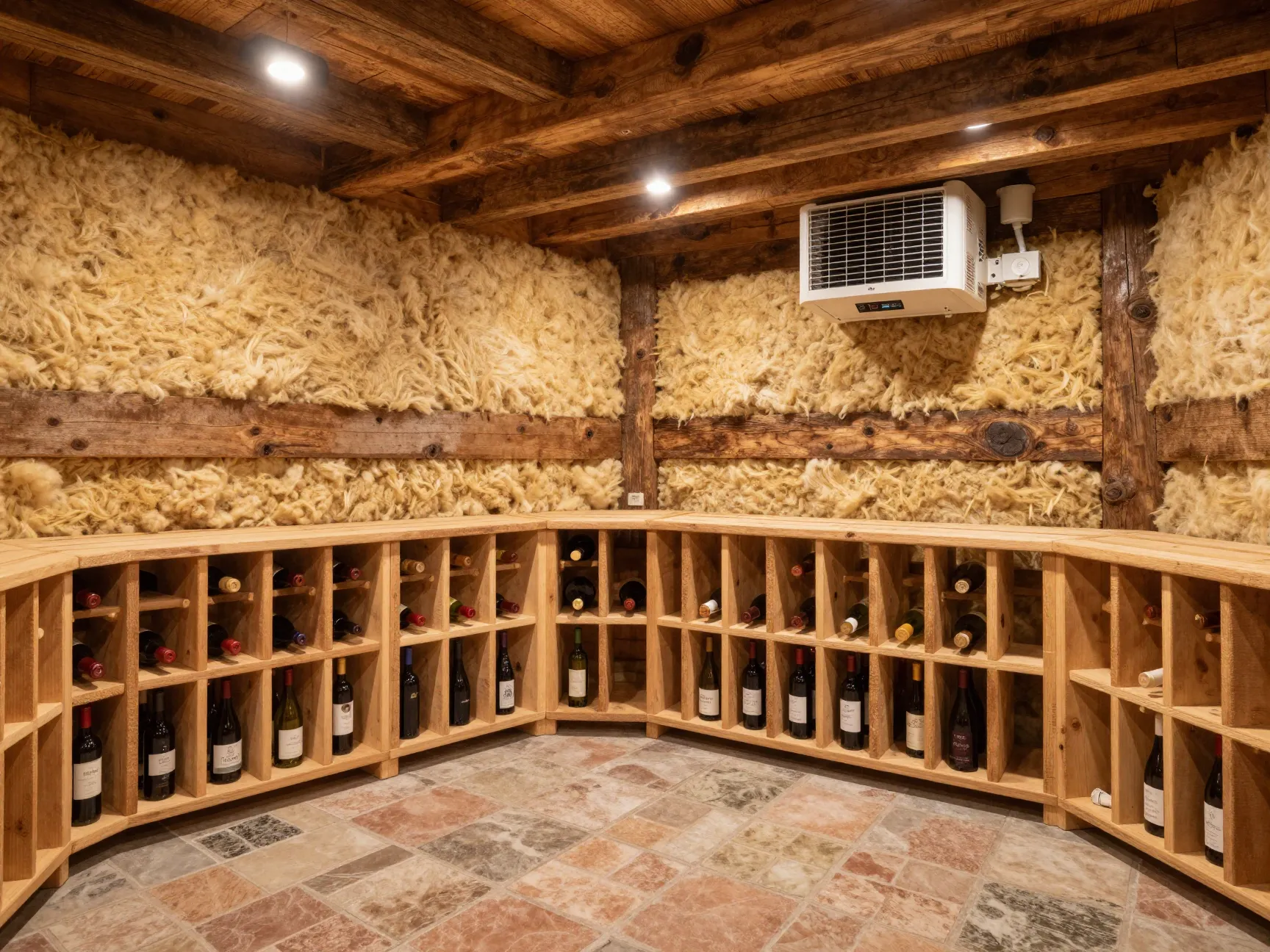
The final design on this list reflects a growing priority among homeowners in 2026: sustainability. The eco-conscious rustic cellar combines the visual warmth of traditional old-world design with materials and systems chosen for their minimal environmental impact [6].
Sustainable design choices for this style:
| Category | Eco-Friendly Option | Benefit |
|---|---|---|
| Wood | FSC-certified reclaimed lumber | Reduces deforestation [1] |
| Insulation | Sheep’s wool or recycled denim batts | Non-toxic, high R-value |
| Climate control | Variable-speed inverter cooling unit | Up to 40% less energy use [6] |
| Lighting | Full LED system with motion sensors | Minimal heat, low power draw [2] |
| Flooring | Reclaimed brick or recycled glass tile | Diverts material from landfill |
The eco-conscious cellar does not sacrifice aesthetics for principle. Reclaimed materials are inherently rustic, natural insulation products are invisible once installed, and LED lighting can be tuned to produce the warm amber glow that defines old-world atmosphere [2]. This design proves that the most responsible choice and the most beautiful choice are often the same choice.
How to Choose the Right Design for Your Home
With nine distinct styles to consider, the decision can feel overwhelming. Here is a simple framework to narrow your options:
Step 1: Assess your space. A dedicated basement room supports designs 1, 5, 6, and 8. A compact nook or alcove is ideal for design 3. An open-plan home with visible storage suits design 4.
Step 2: Define your collection size. Under 200 bottles: designs 3 or 7. 200 to 1,000 bottles: designs 2, 4, or 9. Over 1,000 bottles: designs 1, 5, or 6.
Step 3: Set your tone. Pure romance and history: designs 1 or 6. Modern sensibility with rustic warmth: designs 4 or 7. Personal and narrative-driven: design 8. Values-led: design 9.
Step 4: Budget realistically. Reclaimed wood and glass enclosure designs (2, 4) offer strong visual impact at moderate cost. Full stone vault and tasting room designs (1, 5) require larger investments but deliver the highest perceived value.
The Role of Lighting in Rustic Wine Cellar Design
No element transforms a wine cellar more dramatically than lighting, and it deserves its own focused discussion. The difference between a cellar that feels like a storage room and one that feels like a destination is almost always the quality of light [2].
A layered lighting approach includes three levels:
- Ambient lighting — recessed fixtures or overhead pendants that provide general illumination without harsh shadows
- Task lighting — under-shelf LED strips that illuminate bottle labels and make selection easy
- Accent lighting — spotlights or sconces that highlight architectural features like stone arches, barrel displays, or carved details [6]
Warm color temperatures (2700K to 3000K) are essential in rustic cellars. Cool white light destroys the old-world atmosphere immediately. Dimmer controls allow the same space to function as a working cellar during the day and a moody, intimate gathering space in the evening.
One important technical note: UV light damages wine over time. All lighting in direct contact with bottles should be UV-filtered LED, which produces no heat and no harmful radiation [2].
Conclusion
The 9 Rustic Wine Cellar Designs That Bring Old-World Charm to Your Home covered in this guide share a common truth: the best wine spaces are not just about storage. They are about creating a place where time slows down, where the act of choosing a bottle becomes a small ritual, and where guests feel transported somewhere older and more deliberate than the rest of the house.
Here are your actionable next steps:
- Walk through your home today and identify one underutilized space — a basement corner, an under-stair alcove, a spare closet — that could become a wine cellar.
- Choose two or three designs from this list that resonate with your personal style and your home’s existing aesthetic.
- Request consultations from at least two custom cellar builders in your area. Bring photos of the designs that inspire you.
- Prioritize climate control in your budget before aesthetics. A beautiful cellar that ruins your wine is a failure. A functional cellar with modest finishes is a success.
- Start small if needed. A 50-bottle reclaimed wood nook built well is more satisfying — and more valuable — than a 500-bottle cellar built poorly.
Old-world charm is not something you buy. It is something you build, carefully and with intention. The designs in this guide give you a starting point. What you do with them is your own story to tell.
References
[1] Style Guide – https://www.customwinecellar.com/resources/style-guide?utm_source=openai
[2] Wine Cellar With Rustic Style – https://newinterior.ai/interior-design/wine-cellar-with-rustic-style?utm_source=openai
[3] This Years Wine Cellar Design Trends – https://moderncellars.com/blogs/inspiration/this-years-wine-cellar-design-trends?utm_source=openai
[4] Rustic Wine Cellar Designs For Contemporary Wine Storage Space – https://www.winecellarsbycoastal.com/custom-wine-cellars/rustic-wine-cellar-designs-for-contemporary-wine-storage-space.aspx?utm_source=openai
[5] Wine Cellar Design Trends – https://www.wineenthusiast.com/basics/buying-and-collecting/wine-cellar-design-trends/?utm_source=openai
[6] The Complete Guide To Custom Wine Cellar Design Trends For 2026 – https://baroque-design.com/the-complete-guide-to-custom-wine-cellar-design-trends-for-2026/?utm_source=openai