9 Luxurious Custom Wine Room Ideas Every Collector Will Envy
A serious wine collection stored in a spare closet is a tragedy. According to industry data, improper storage conditions — fluctuating temperatures, excess light, and inadequate humidity — can destroy a bottle’s value and flavor profile within months. Yet the global market for custom wine storage and cellar design continues to grow rapidly, driven by collectors who understand that how you store your wine is just as important as what you buy.
Disclosure: This post contains affiliate links. As an Amazon Associate, we earn from qualifying purchases, and at no extra cost to you.
This guide to 9 Luxurious Custom Wine Room Ideas Every Collector Will Envy goes beyond basic shelving and temperature gauges. Whether you have a dedicated room, a glass-enclosed alcove, or a compact corner to work with, these ideas will help you transform your collection into a showpiece. From bespoke cabinetry and advanced climate systems to integrated tasting counters and cigar humidors, every concept here is rooted in real design projects and expert craftsmanship.
Key Takeaways
- Custom wine rooms can be built in surprisingly small footprints without sacrificing capacity or luxury
- Premium materials like walnut, white oak, and mahogany are the foundation of lasting, high-end wine storage
- Advanced, silent climate control systems are non-negotiable for serious collectors
- Glass enclosures allow wine rooms to become living-space focal points while maintaining ideal conditions
- Integrated features like tasting counters and cigar humidors elevate a wine room from functional to extraordinary
What Makes a Custom Wine Room Truly Luxurious
Before diving into the specific ideas, it helps to understand what separates a luxury custom wine room from a standard wine rack. The difference is not simply price. It is the convergence of three elements: precision engineering, premium materials, and intentional design.
A truly luxurious wine room protects your investment. It maintains temperature between 55 and 58 degrees Fahrenheit and relative humidity between 60 and 70 percent, consistently, year-round. It also reflects your personal taste and integrates seamlessly with your home’s architecture [4].
Companies like Leessa in London approach each project by ensuring every element — from the timber species selected to the finish on the hardware — is chosen with quality and longevity in mind [2]. That philosophy is the baseline for everything that follows.
9 Luxurious Custom Wine Room Ideas Every Collector Will Envy
1. The Bespoke Space-Maximizing Wine Room
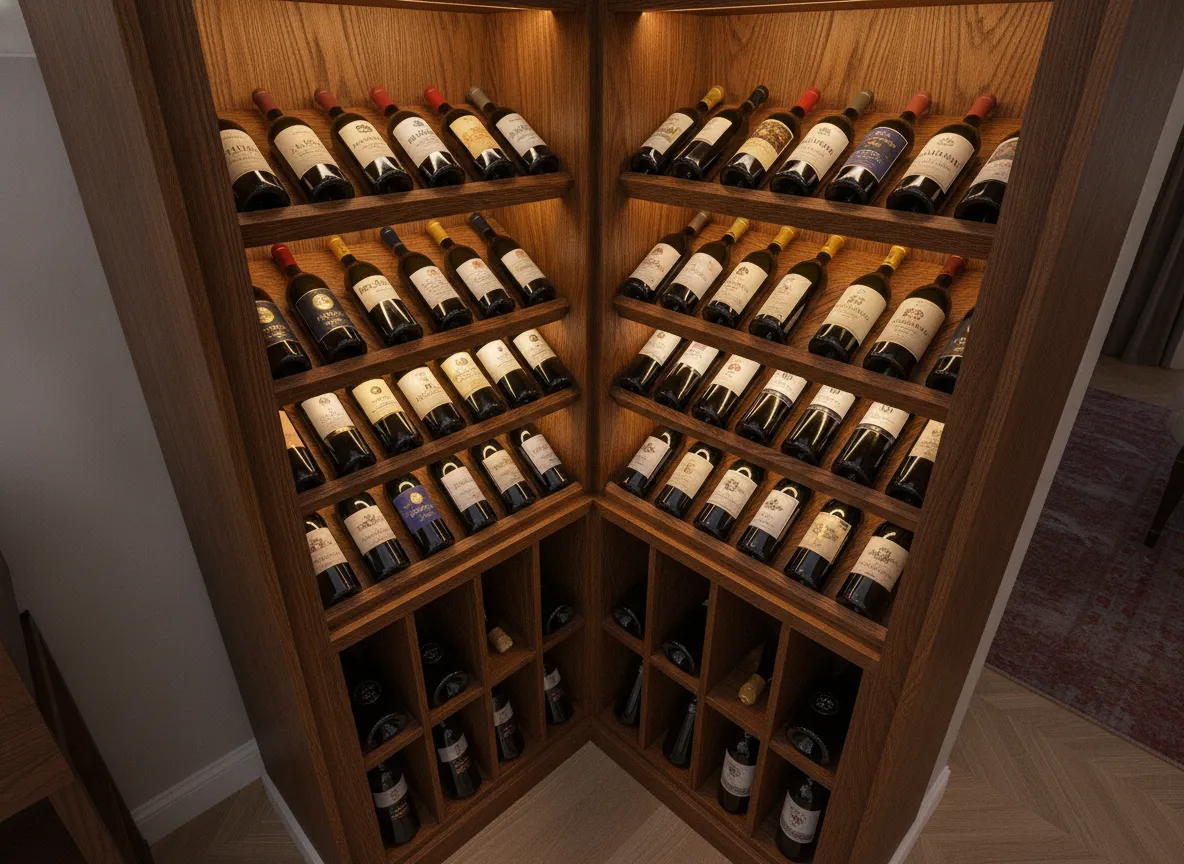
One of the most impressive feats in custom wine room design is achieving maximum capacity in a minimal footprint. A standout project documented by Cellar Maison used a space of just 1.2 by 1.8 meters — roughly the size of a large wardrobe — to accommodate 285 bottles [1]. The design included specialized shelving for Champagne magnums alongside standard Bordeaux bottles, with every cubic centimeter of space accounted for.
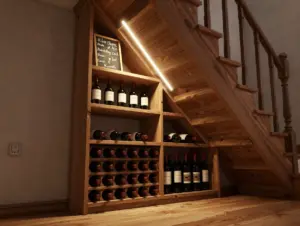
The lesson here is that luxury is not about square footage. It is about intelligent planning. Custom designers use software to map bottle placement, rack angles, and structural load before a single piece of timber is cut. If you have a small alcove, a converted closet, or an underutilized corner, a skilled designer can turn it into a high-capacity, visually stunning wine room.
Key design features to request:
- Angled display rows for label-forward presentation
- Dedicated Champagne and magnum shelving
- Floor-to-ceiling racking to use vertical space fully
- Custom-depth shelves matched to your specific bottle types
2. The Glass-Enclosed Living Space Wine Room
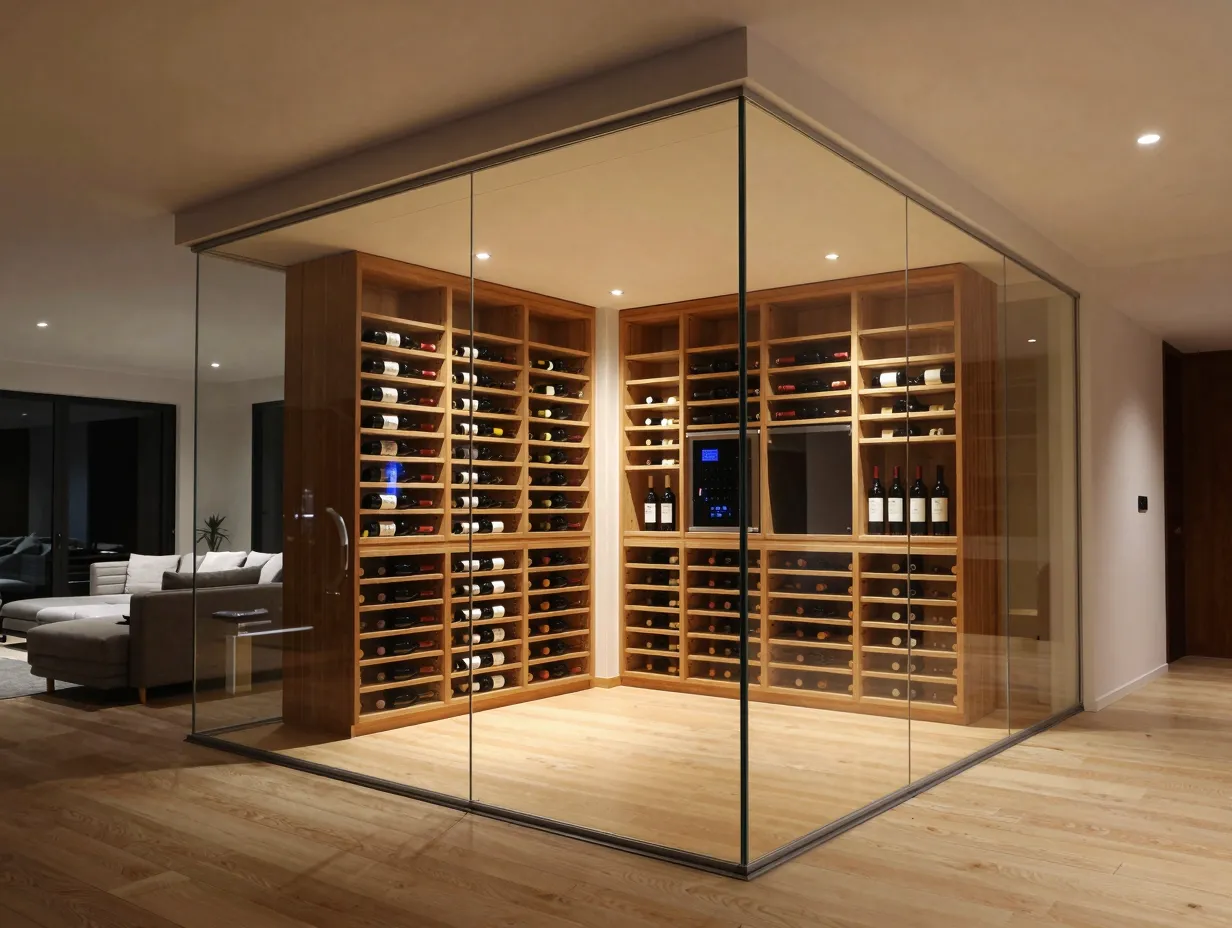
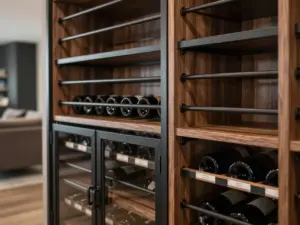
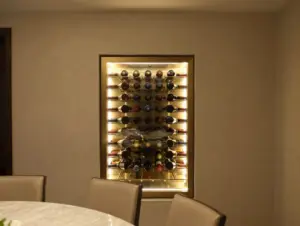
Glass-enclosed wine rooms are among the most visually dramatic options available. Rather than hiding your collection behind a door, this design integrates the wine room directly into your living area — a kitchen, dining room, or open-plan lounge — using frameless or minimally framed glass panels [3].
The effect is striking. Guests see the collection the moment they walk in. The bottles become art. The racking becomes sculpture. And because the enclosure is sealed and connected to a dedicated cooling unit, the climate inside remains perfectly controlled regardless of the ambient temperature outside.
Heritage Vine has executed this concept with precision, pairing frameless glass enclosures with integrated cooling systems and custom racking designed to maximize both storage and visual impact [3]. The result is a wine room that functions as a feature wall, a conversation piece, and a fully operational cellar simultaneously.
Best suited for: Open-plan homes, modern apartments, restaurant-style residential kitchens
3. The Modern Minimalist Wine Room
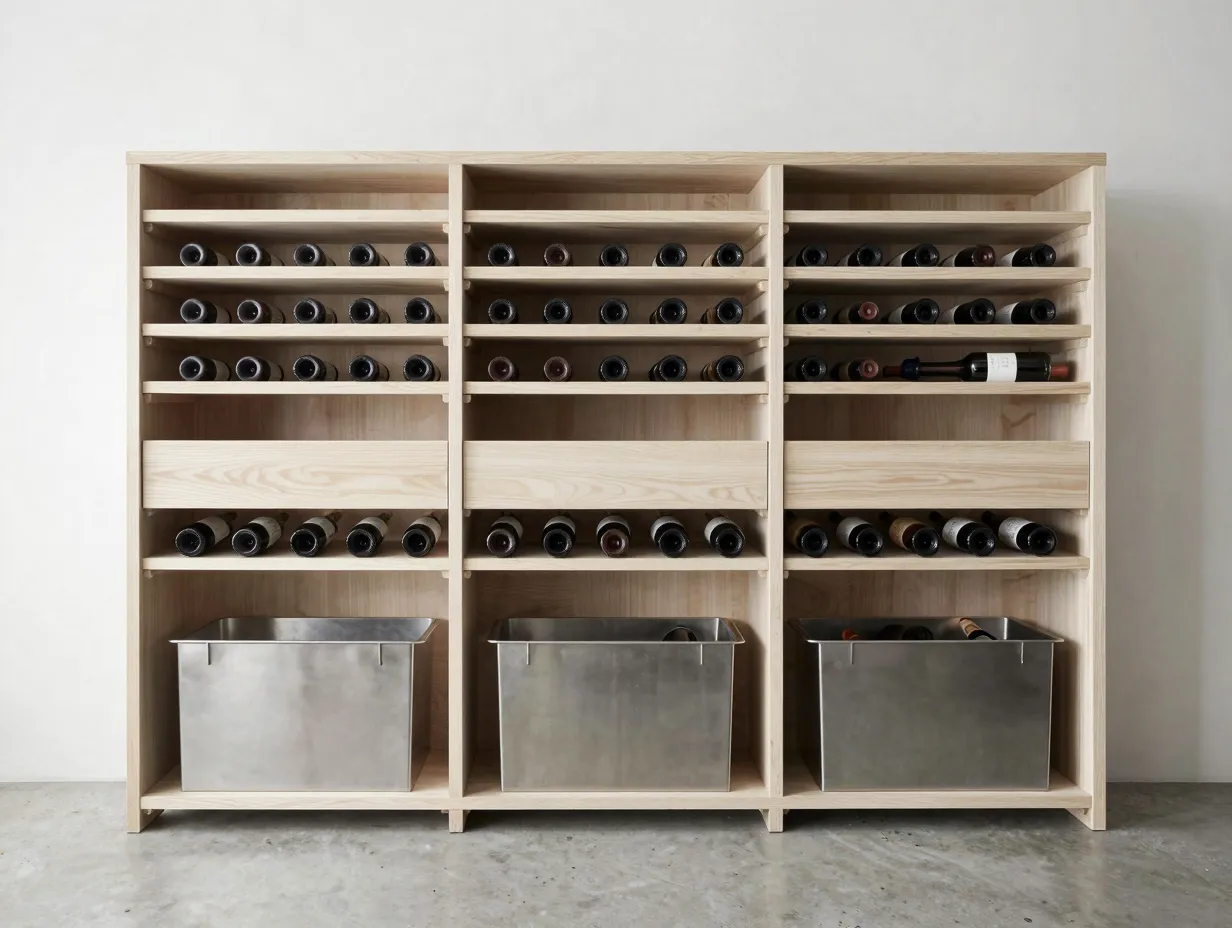
Not every collector wants the traditional dark-wood, candlelit cellar aesthetic. A growing number of collectors prefer clean lines, light tones, and materials that complement contemporary interiors. The modern minimalist wine room delivers exactly that.
Heritage Vine designs these rooms with horizontal, label-forward rows that allow you to read every bottle at a glance [3]. Floating display sections create visual breathing room. Minimalist bin storage handles bulk stock without clutter. The finishes tend toward lighter wood tones — white oak is particularly popular — paired with brushed metal hardware and glass accents.
This style works especially well in homes with Scandinavian or mid-century modern interiors. The wine room does not compete with the rest of the space. It completes it.
“The best wine rooms feel like they were always part of the house. They do not announce themselves. They belong.”
Material palette for a minimalist wine room:
- White oak or ash timber racking
- Brushed stainless or matte black metal accents
- Frameless or thin-profile glass panels
- Concrete or light stone flooring
4. The Integrated Tasting Counter Wine Room
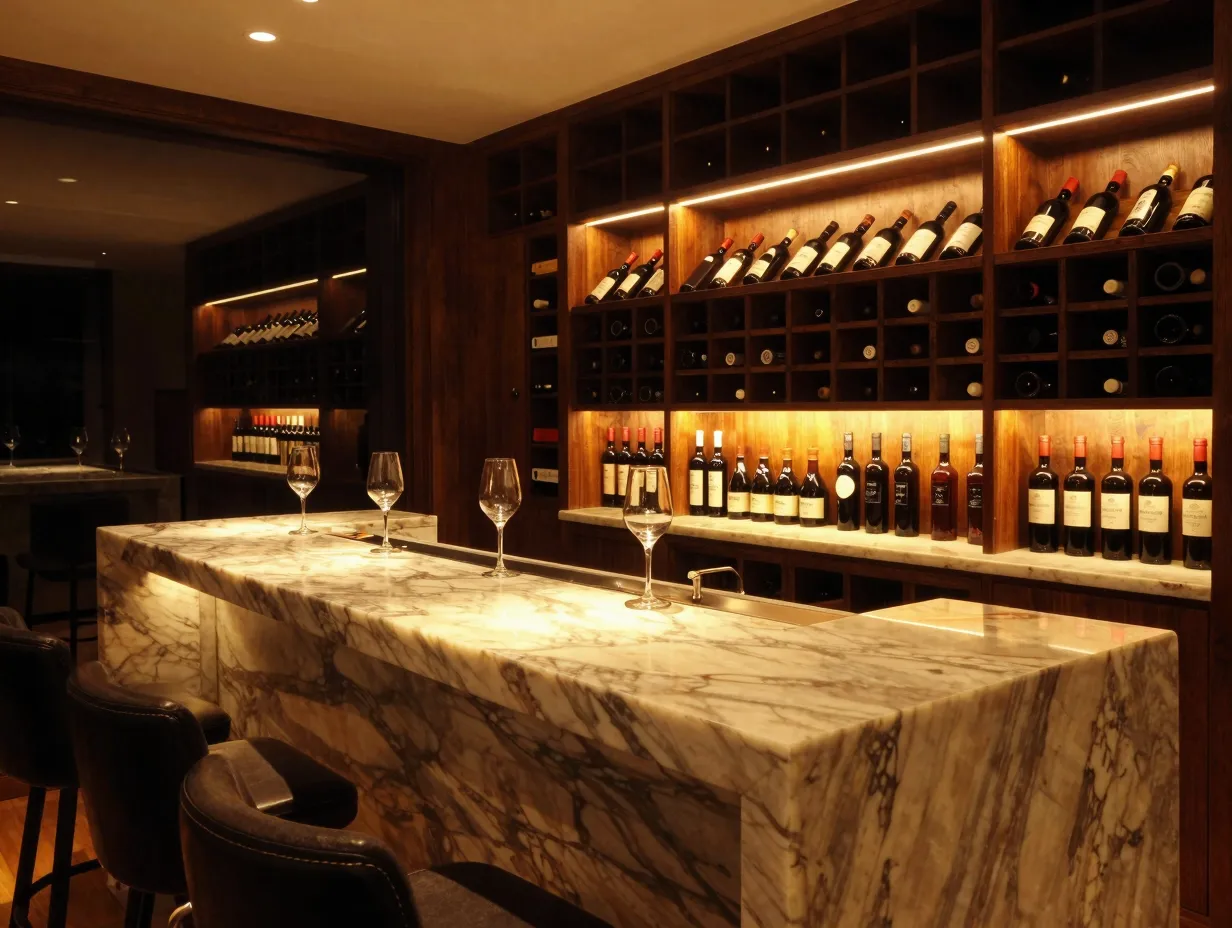
A wine room that only stores bottles is only half a wine room. The most sophisticated custom builds include a dedicated tasting area — a space where you can open, pour, and enjoy your wine without leaving the room.
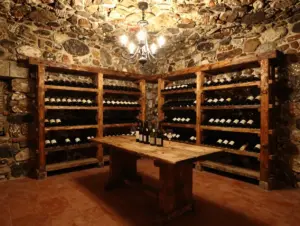
A project documented by Wine Guardian at Crystal Cove featured a tasting countertop built directly into the wine room, complemented by LED lighting calibrated to create an inviting, warm atmosphere [5]. The countertop was positioned at bar height, allowing guests to stand and taste while surrounded by the collection. It transformed the room from a storage facility into an experience.
When planning a tasting counter, consider:
- Counter material: Marble, quartzite, and walnut slab are all popular choices
- Lighting: Warm LED strips under shelves and above the counter create ambiance without UV damage to bottles
- Seating: Bar stools or a small built-in bench maximize comfort in compact spaces
- Glassware storage: Overhead hanging racks or built-in glass cabinets keep stemware accessible
5. The Premium Hardwood Wine Room
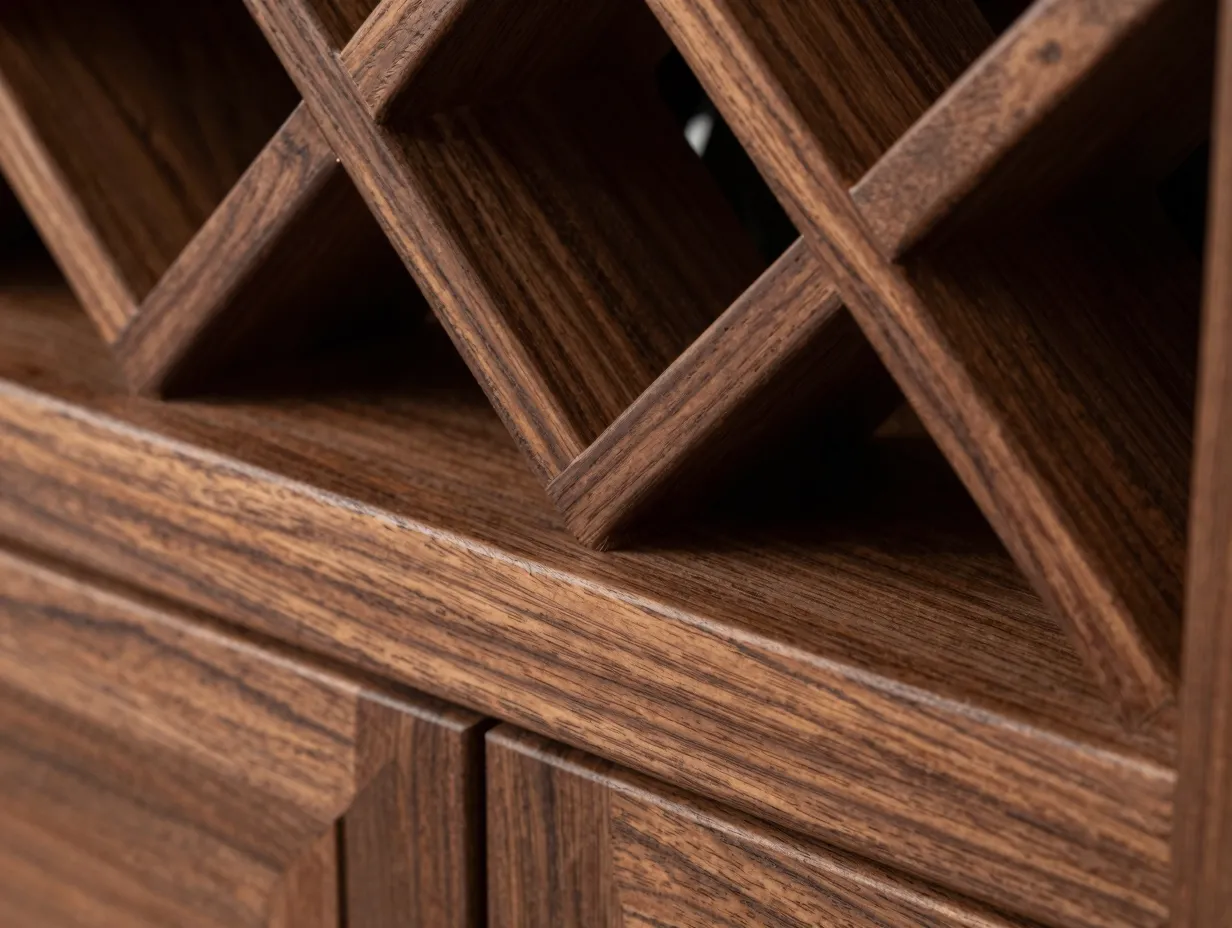
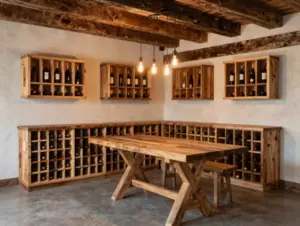
The material you choose for your racking and cabinetry defines the character of your wine room more than almost any other decision. Premium hardwoods — walnut, white oak, mahogany, and redwood — are the gold standard for a reason [4].
Walnut offers a rich, dark grain that photographs beautifully and ages gracefully. White oak is lighter, more contemporary, and highly durable. Mahogany is a classic choice for traditional cellar aesthetics, with a warm reddish tone that deepens over time. Redwood is naturally resistant to moisture and insects, making it a practical choice for high-humidity environments.
Leessa emphasizes that the selection of materials is never an afterthought. Every piece of timber is chosen for grain consistency, structural integrity, and compatibility with the room’s overall design language [2]. The craftsmanship applied to those materials — joinery, finishing, hardware installation — is what separates a luxury wine room from a flat-pack solution.
Hardwood comparison table:
| Wood Species | Tone | Best For | Durability |
|---|---|---|---|
| Walnut | Dark, rich | Traditional and transitional | Excellent |
| White Oak | Light, neutral | Modern and minimalist | Excellent |
| Mahogany | Warm red-brown | Classic cellar aesthetic | Very good |
| Redwood | Medium, warm | High-humidity environments | Excellent |
6. The Advanced Climate Control Wine Room
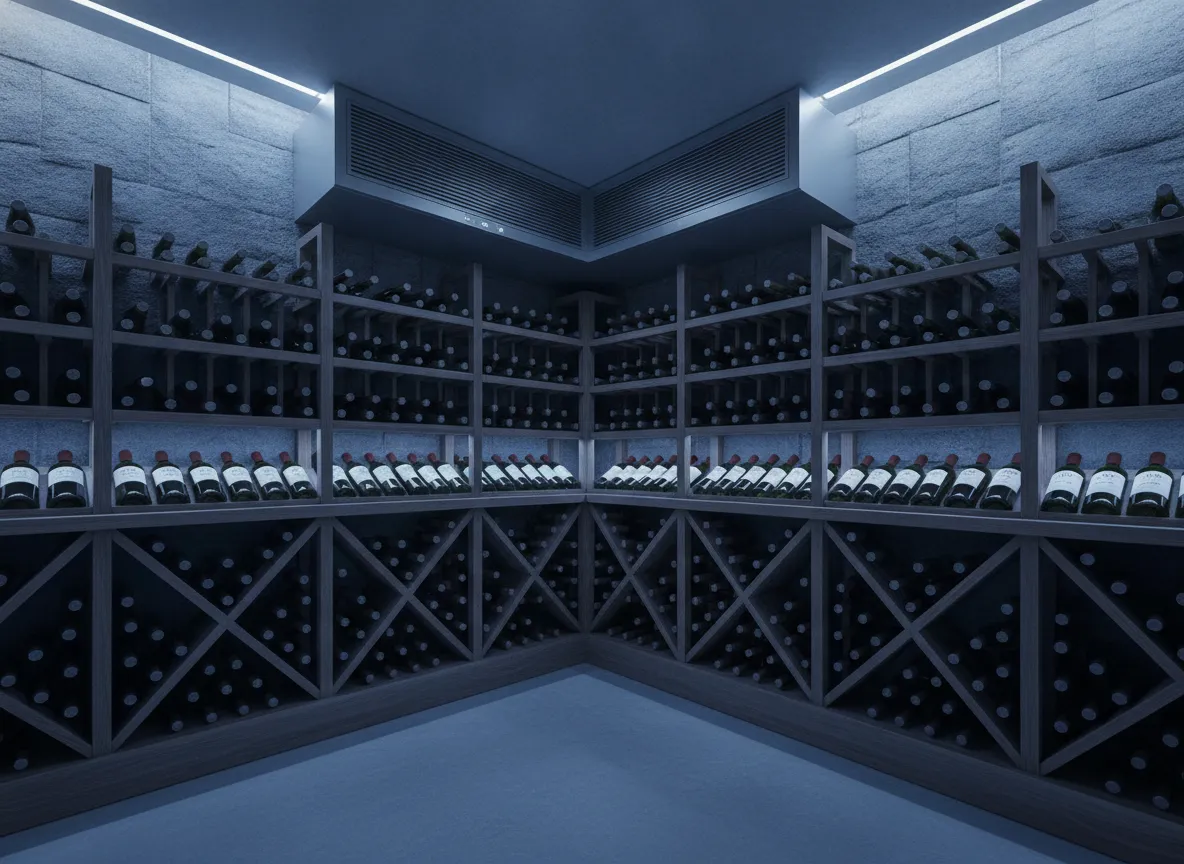
A wine room without proper climate control is just a room with bottles in it. Temperature fluctuations, excess humidity, and vibration are the three primary enemies of a maturing wine collection. A luxury custom wine room addresses all three with precision engineering.
Heritage Vine integrates silent, ducted climate systems that are calibrated to the specific environmental conditions of the installation location [4]. In a city like Houston, where ambient humidity is already high, the system must manage both cooling and dehumidification simultaneously. In a dry climate, a humidifier component is added. The system runs quietly — often inaudibly — and maintains conditions within a narrow tolerance band, 24 hours a day.
Key climate control specifications to discuss with your designer:
- Temperature range: 55 to 58 degrees Fahrenheit (13 to 14 degrees Celsius)
- Humidity range: 60 to 70 percent relative humidity
- Vibration isolation: Compressor units should be mounted away from the racking
- Redundancy: Consider a backup cooling unit for large or high-value collections
- Monitoring: Smart sensors with mobile alerts for temperature or humidity deviations
7. The Architecturally Integrated Wine Room
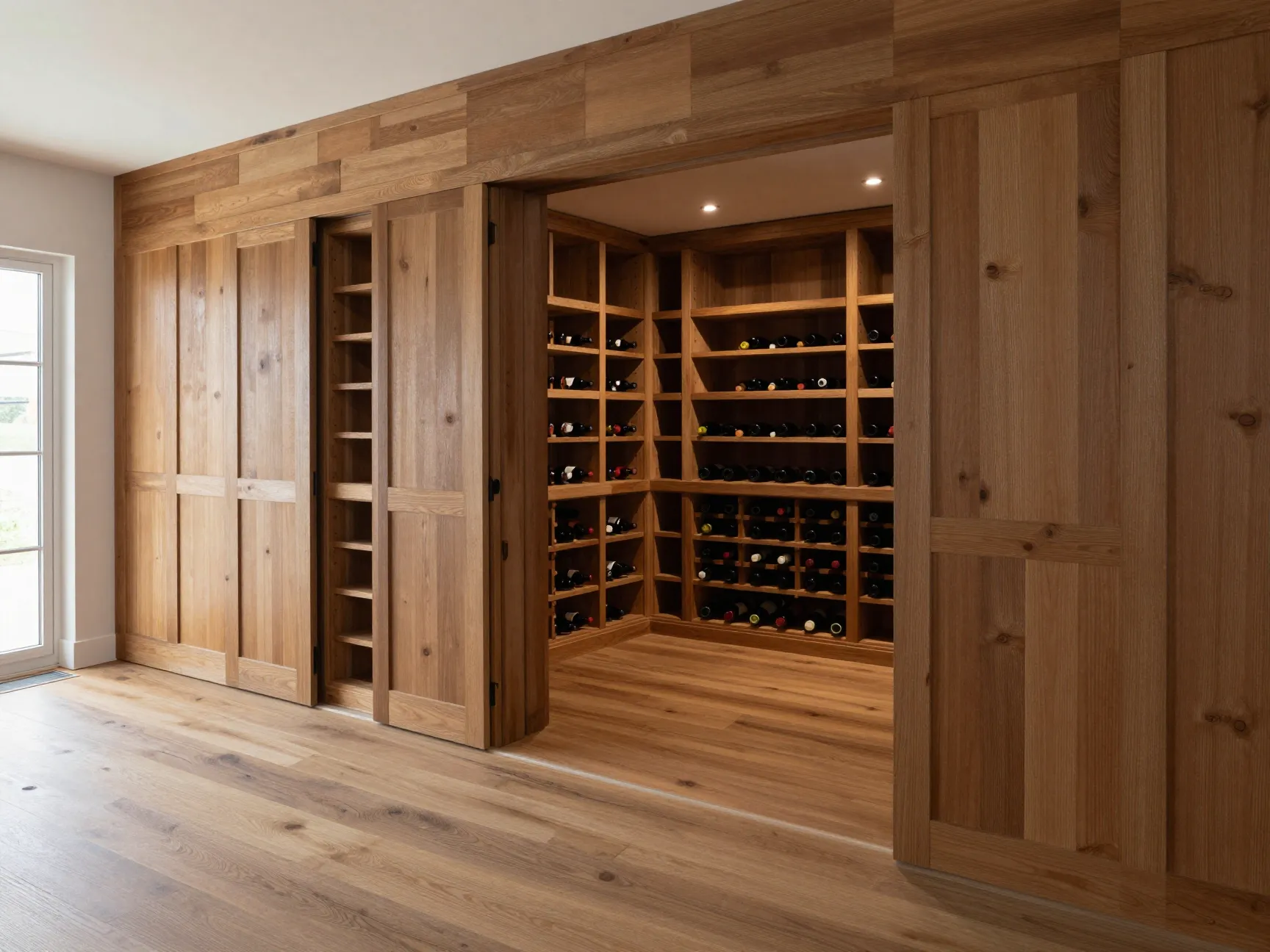
The most seamless wine rooms do not feel like additions. They feel like they were designed into the home from the very beginning. Achieving this requires close collaboration between the wine room designer and the home’s architect or interior designer.
Custom wine rooms designed to integrate with existing architecture might use the same flooring material as the adjacent room, continue a wall treatment like exposed brick or board-and-batten paneling into the cellar space, or align cabinetry heights with surrounding built-ins [4]. The transition from living space to wine room becomes invisible, or at least intentional.
Leessa’s approach to bespoke design specifically prioritizes this kind of integration. Each project begins with a thorough assessment of the existing space, ensuring that the wine room solution complements rather than competes with the home’s design aesthetic [2].
Design integration checklist:
- Match or complement existing flooring materials
- Align racking heights with surrounding cabinetry
- Use consistent hardware finishes throughout adjacent spaces
- Coordinate lighting color temperature with the rest of the home
8. The Cigar Humidor Combination Wine Room
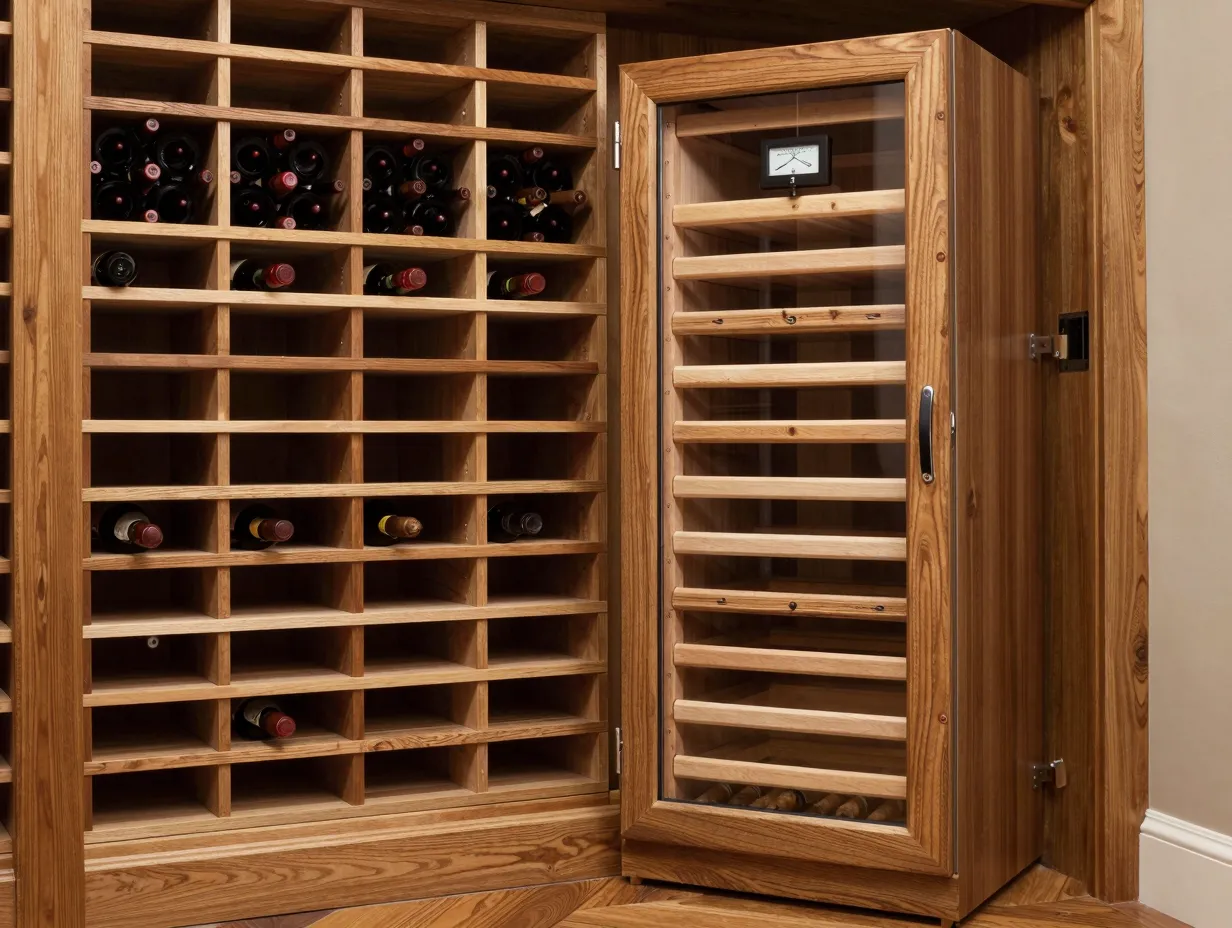
For collectors who appreciate both fine wine and premium cigars, combining a wine room with a dedicated cigar humidor is a natural evolution. The two pursuits share a common philosophy: both require precise environmental control, quality storage, and patient aging.
The Cellar Maison project referenced earlier demonstrated how effectively these two elements can coexist in a single bespoke space [1]. The cigar humidor was built as a dedicated cabinet within the wine room, maintaining its own humidity levels — typically higher than those ideal for wine — through a separate sealed compartment with its own humidification system.
This dual-purpose approach is particularly popular in home study rooms, private lounges, and entertainment spaces where a collector might want to enjoy both pleasures in the same setting. The visual effect of a beautifully crafted humidor cabinet alongside floor-to-ceiling wine racking is undeniably compelling.
Important note: The humidor must be fully sealed from the wine storage area. Tobacco aromas can penetrate cork and affect wine flavor over time if the two environments are not properly separated.
9. The Showcase Collection Wine Room
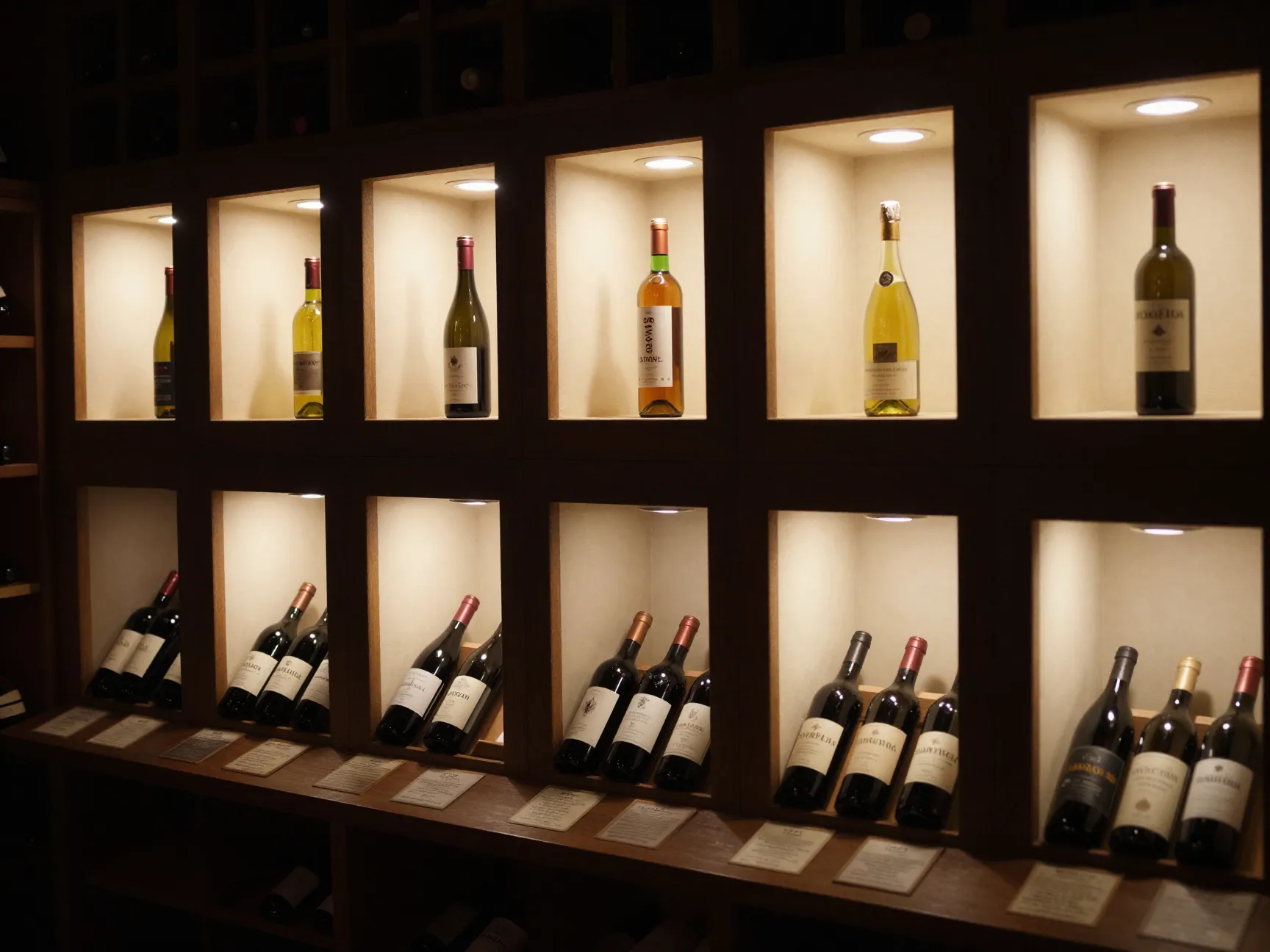
Some collectors have bottles they never intend to drink — trophy wines, vertical collections, investment-grade bottles that represent decades of patient acquisition. These deserve more than standard racking. They deserve a showcase.
The showcase collection wine room treats select bottles the way a museum treats art. Individual display niches with accent lighting highlight specific bottles. Angled, label-forward display rows allow every label to be read and admired. Some designs incorporate backlit panels or illuminated glass shelves that make the bottles glow from within.
Heritage Vine’s floating display sections are a strong example of this concept in practice [3]. By elevating certain bottles above the standard racking — literally and figuratively — the design creates a visual hierarchy that communicates value and intention. Your most prized bottles are not buried in a bin. They are on display, celebrated, and protected.
Showcase design elements:
- Individual illuminated niches for trophy bottles
- Angled label-forward display rows for key sections
- Backlit glass shelving for visual drama
- Engraved or printed labels identifying specific regions or vintages
- Lockable display cases for the most valuable bottles
How to Choose the Right Custom Wine Room for Your Home
With 9 Luxurious Custom Wine Room Ideas Every Collector Will Envy now mapped out, the next step is deciding which direction suits your specific situation. Here is a practical framework for making that decision.
Start with your collection size and growth trajectory. A collector with 150 bottles who adds 30 per year has very different needs than one with 800 bottles and a stable acquisition pace. Design for where you will be in five years, not where you are today.
Consider your home’s architecture. A glass enclosure works beautifully in a modern open-plan home but may feel incongruous in a Victorian terrace. An architecturally integrated cellar works best when planned alongside other renovation work.
Define your primary use case. Is this a storage-first room, or do you entertain frequently and want a tasting experience? The answer drives decisions about counter space, seating, and lighting.
Set a realistic budget. Custom wine rooms range from modest four-figure builds to six-figure architectural statements. Premium materials, advanced climate systems, and bespoke joinery all add cost — but they also add longevity and value to your home.
Work with specialists. A general contractor can build a room. A specialist wine room designer can build the right room. The difference in outcome is significant.
Conclusion
A well-designed custom wine room is one of the most satisfying investments a serious collector can make. It protects the financial and emotional value of your collection, elevates your home’s aesthetic, and transforms the act of choosing a bottle into a genuine pleasure.
The 9 Luxurious Custom Wine Room Ideas Every Collector Will Envy covered in this guide span a wide range of styles, budgets, and spatial constraints. Whether you are drawn to the drama of a glass-enclosed living space display, the warmth of a premium hardwood traditional cellar, or the dual-purpose sophistication of a wine and cigar room, there is a custom solution that fits your vision.
Your actionable next steps:
- Audit your current collection — size, bottle types, and projected growth over five years
- Identify the space in your home best suited to a custom wine room installation
- Research specialist wine room designers in your region and request portfolio reviews
- Define your non-negotiables: climate control specifications, material preferences, and must-have features
- Request detailed proposals from at least two or three designers before committing
The bottles you have spent years acquiring deserve better than a spare room shelf. In 2026, the tools, materials, and design expertise to build something truly extraordinary are more accessible than ever. Start the conversation with a specialist today.
References
[1] Cellar Showcase Bespoke Wine Room With Cigar Humidor – https://www.cellarmaison.com/article/cellar-showcase-bespoke-wine-room—with-cigar-humidor?utm_source=openai
[2] Wine Rooms – https://www.leessa.london/wine-rooms/?utm_source=openai
[3] Wine Rooms – https://www.heritagevine.com/cellars/wine-rooms/?utm_source=openai
[4] houstonwinecellardesign – https://www.houstonwinecellardesign.com/?utm_source=openai
[5] Vintage Cellars Crystal Cove Wine Room Project Gallery – https://wineguardian.com/wine-blog/project-gallery/vintage-cellars-crystal-cove-wine-room-project-gallery/?utm_source=openai