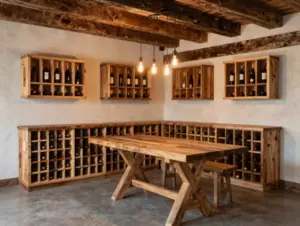
9 Genius Basement Wine Cellar Ideas to Transform Your Underground Space
A properly built basement wine cellar can increase a home’s resale value by up to 10 percent, according to real estate professionals who specialize in luxury properties. Yet most homeowners look at their dark, unfinished basement and see only a storage problem rather than a premium opportunity. These 9 genius basement wine cellar ideas to transform your underground space will change the way you think about what lies beneath your feet.
Disclosure: This post contains affiliate links. As an Amazon Associate, we earn from qualifying purchases, and at no extra cost to you.
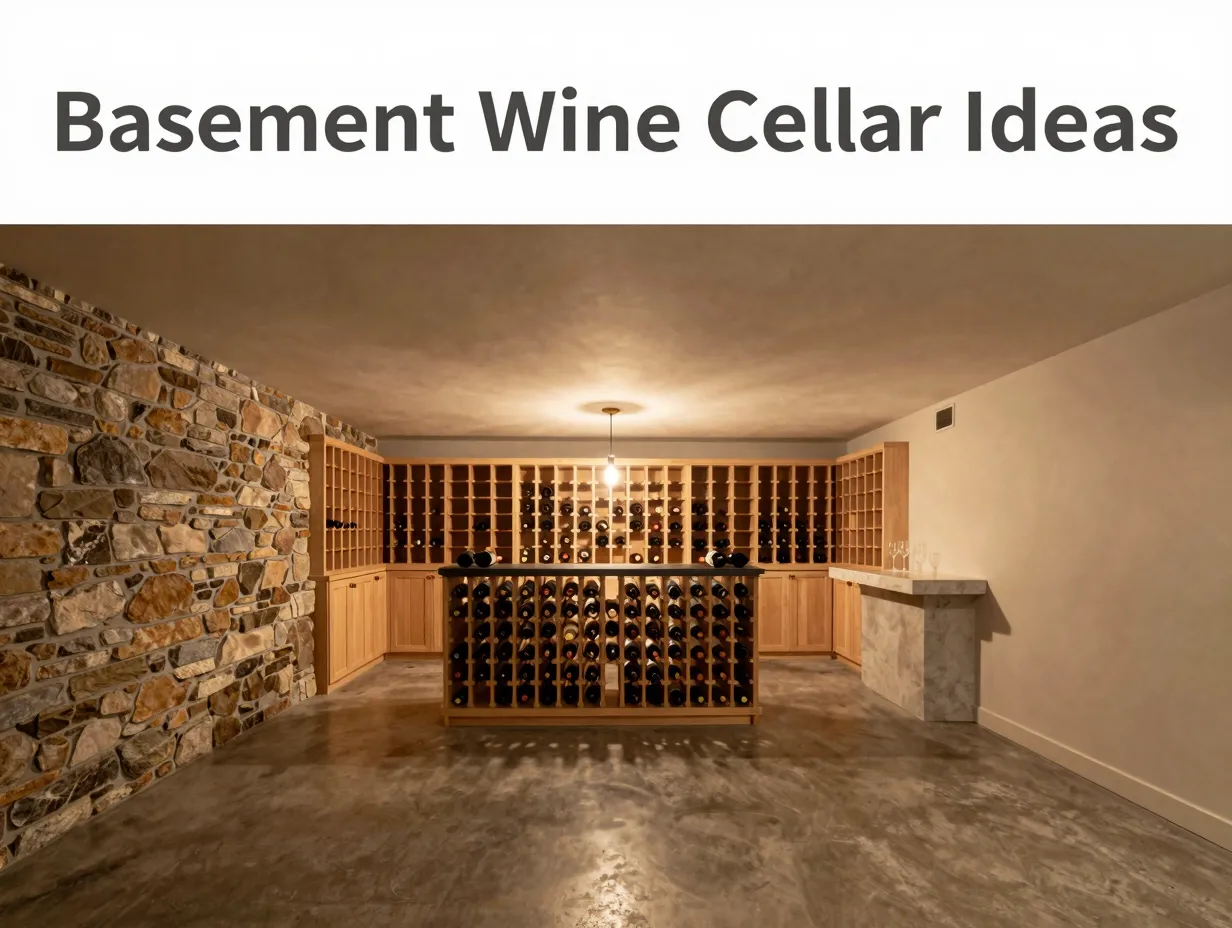
Whether you have 50 square feet or 500, a modest budget or an open checkbook, the right design strategy turns a forgotten basement corner into the most impressive room in your home. I have spent years researching wine storage solutions, speaking with cellar designers, and visiting custom installations across the country. What I found consistently is that the best cellars share a handful of core principles, executed in wildly different styles.
Key Takeaways
- Basements are naturally suited for wine storage because of their stable, cool temperatures and insulation from outdoor weather swings
- Climate control, vapor barriers, and proper insulation are non-negotiable foundations before any aesthetic choices are made
- Even a small under-stair nook or closet can become a fully functional wine cellar with smart racking and lighting
- Design styles range from rustic and traditional to sleek contemporary, and the best cellars match the home’s existing aesthetic
- Budget ranges vary widely, from a DIY build around $500 to $3,000, up to custom high-end installations exceeding $20,000
Why Your Basement Is the Perfect Starting Point
Before diving into the 9 genius basement wine cellar ideas to transform your underground space, it helps to understand why basements are the ideal location in the first place.
Basements maintain a naturally cool and stable environment that protects wine from the temperature swings that ruin bottles stored in kitchens or garages. The earth surrounding the foundation acts as a natural insulator, keeping temperatures consistent regardless of the season outside [1]. This thermal stability is exactly what wine needs during long-term aging.
That said, basements also carry risks. Humidity can creep too high, encouraging mold growth that damages labels and degrades corks. Installing vapor barriers and ensuring proper insulation are critical first steps before you invest in any racking or lighting [2].
The ideal wine storage conditions:
| Factor | Target Range |
|---|---|
| Temperature | 55 to 58 degrees Fahrenheit |
| Humidity | 60 to 70 percent relative humidity |
| Light exposure | Minimal, UV-filtered preferred |
| Vibration | As low as possible |
With those fundamentals in place, the creative work begins. Here are the nine ideas that deliver the most dramatic results.
9 Genius Basement Wine Cellar Ideas to Transform Your Underground Space
1. The Classic Rustic Stone Cellar
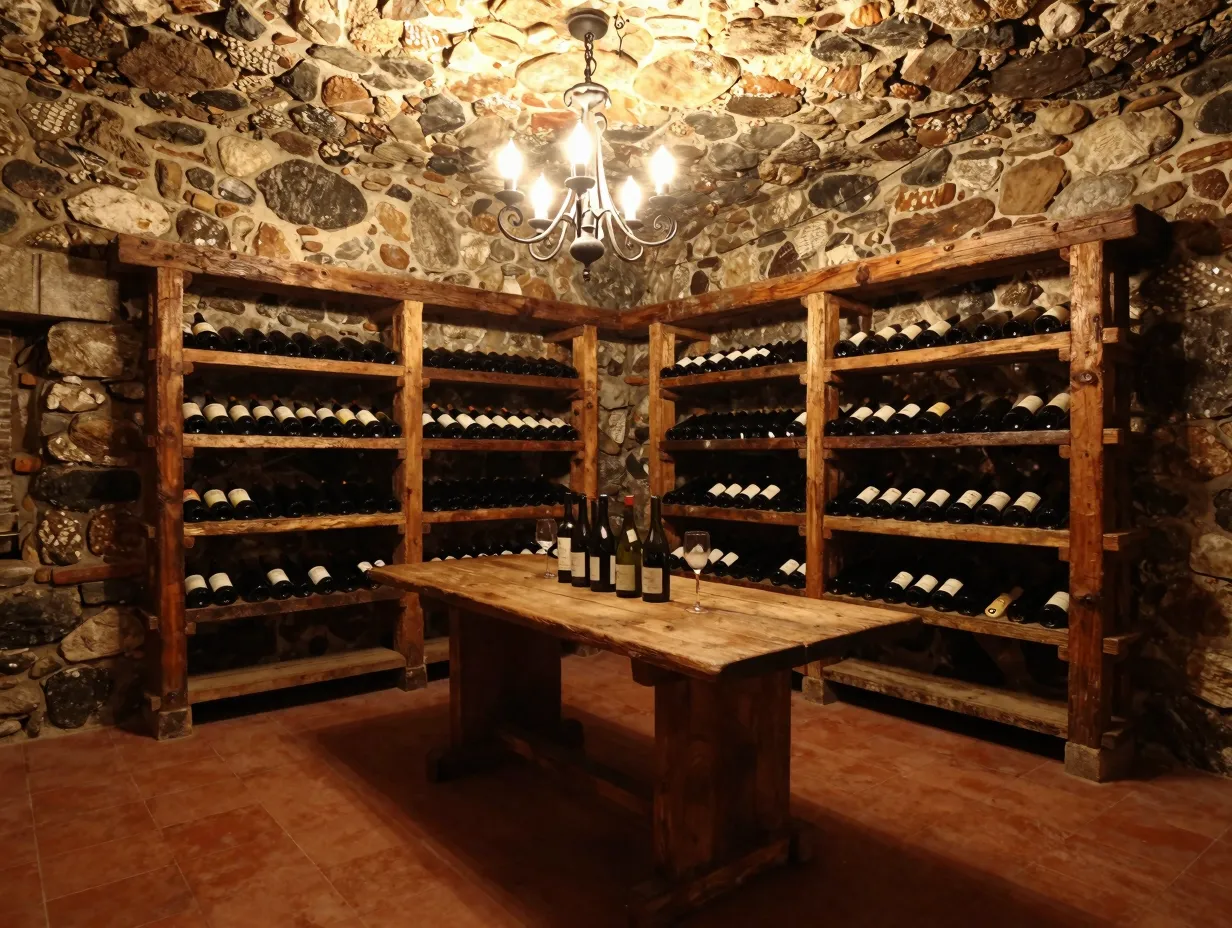
The rustic stone cellar is the archetype most people picture when they close their eyes and imagine a wine room. Exposed stone or brick walls, heavy timber racking, and warm incandescent lighting create a space that feels like it was carved out of a Bordeaux chateau.
This style works especially well in older homes where the original foundation walls are already stone or brick. Rather than covering those walls with drywall, you preserve and highlight them. Add reclaimed wood racks, a wrought iron chandelier, and a rough-hewn tasting table, and the transformation is complete.
Key materials for a rustic cellar:
- Reclaimed barn wood or aged oak for racking
- Natural stone or exposed brick walls
- Wrought iron hardware and light fixtures
- Terracotta or slate flooring
The rustic approach pairs beautifully with traditional wine regions like Burgundy, Bordeaux, and Rioja. If your collection leans Old World, your cellar should too.
2. The Sleek Contemporary Glass-Walled Cellar
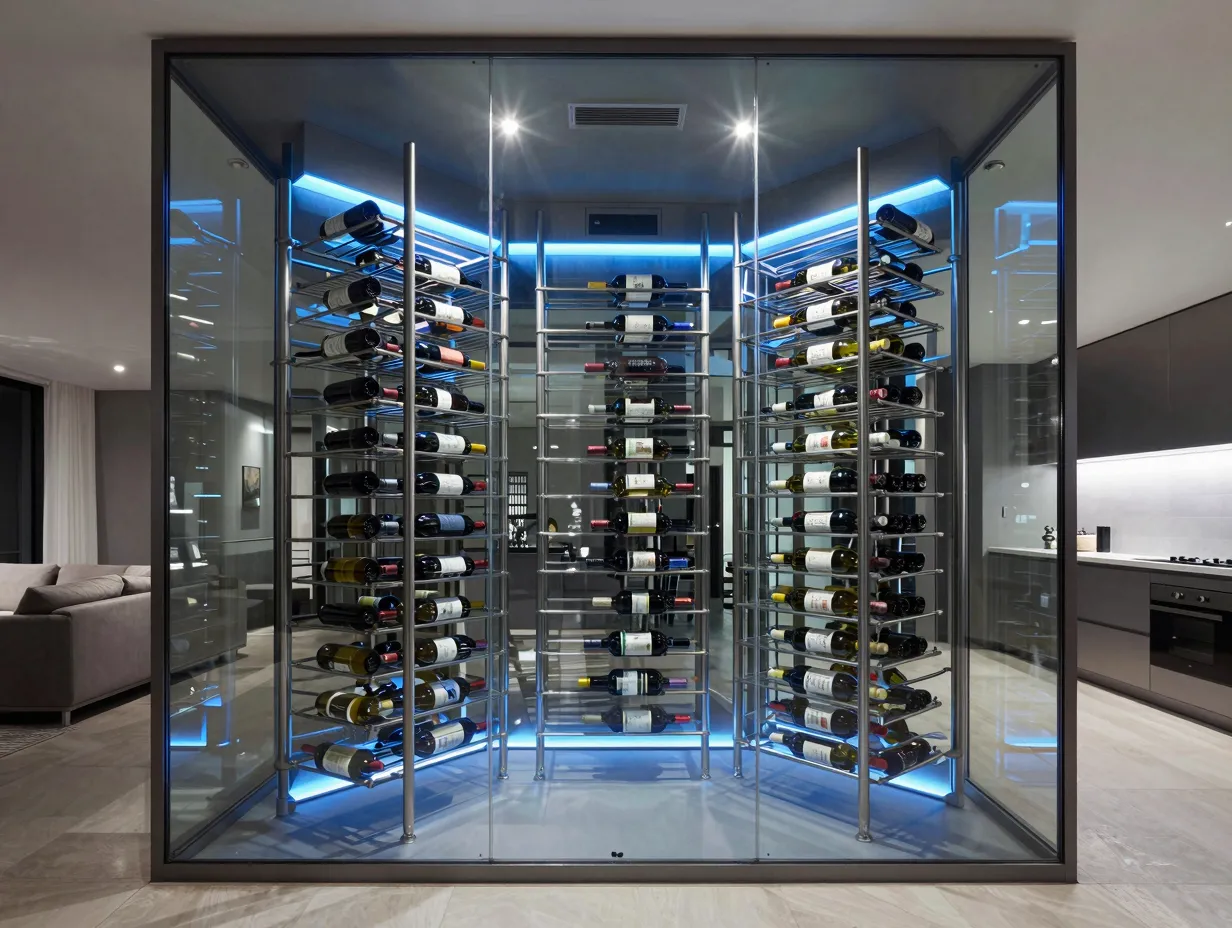
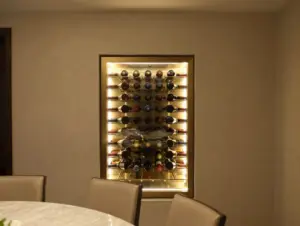
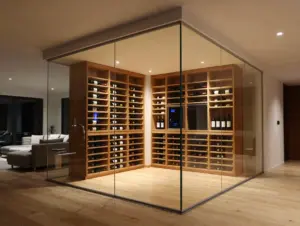
Contemporary wine cellars flip the rustic script entirely. Instead of hiding the collection behind solid walls, they put it on full display behind floor-to-ceiling glass panels. The result is a showpiece that is visible from adjoining living spaces, turning your wine collection into living art.
Metal racking systems, often made from stainless steel or powder-coated aluminum, replace traditional wood in this style. Cable-suspended bottle displays are particularly popular because they appear to float the bottles in mid-air [3]. LED strip lighting along the racking perimeter adds a dramatic glow without generating the heat that incandescent bulbs produce.
I visited a home in Chicago where the owner had installed a glass-walled cellar directly adjacent to the open-plan kitchen. Guests at dinner parties would inevitably drift over to press their faces against the glass and admire the collection. That visual impact alone justified the investment.
Contemporary cellar checklist:
- Tempered glass walls or panels
- Stainless steel or aluminum racking
- LED lighting with dimmer controls
- Minimalist hardware and clean sightlines
- Climate control unit concealed within the design
3. The Under-Stair Wine Nook
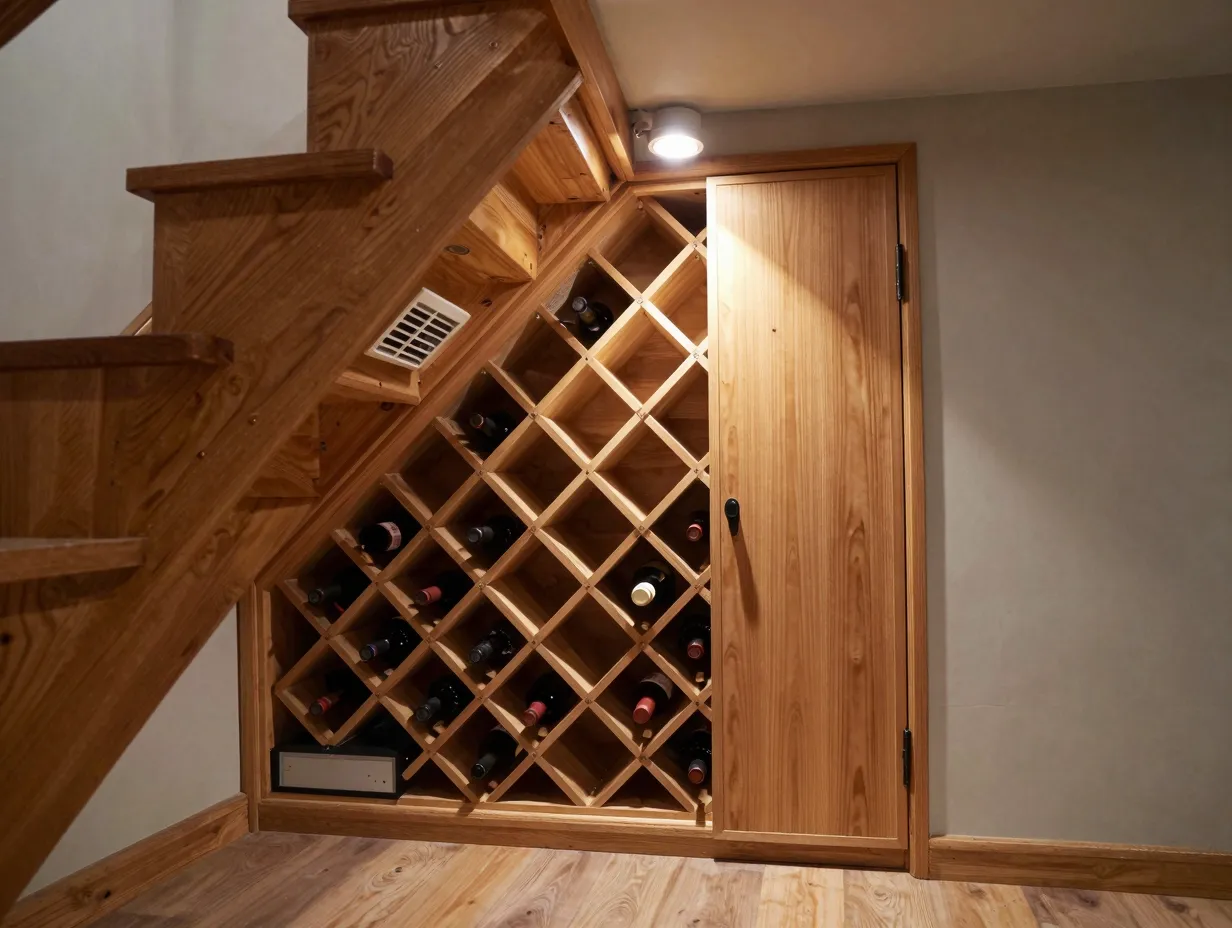
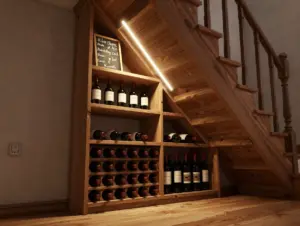
Not every homeowner has an entire basement room to dedicate to wine storage. The under-stair nook is one of the most space-efficient solutions available, turning what is typically wasted triangular space into a fully functional cellar [4].
Custom racking built to fit the exact geometry of the staircase can hold anywhere from 100 to 500 bottles, depending on the staircase size. Diamond bins for bulk storage of everyday wines combine well with individual bottle slots for special bottles you want to access easily.
The under-stair cellar works best when it is climate-controlled as a sealed unit. A small through-the-wall cooling unit or a mini-split system maintains proper temperature without requiring a full room build-out [1].
“The most elegant wine storage solutions are often the ones that solve two problems at once: they store wine properly and they reclaim space that was doing nothing.”
Under-stair nook tips:
- Seal the space completely with an insulated door
- Use a small dedicated cooling unit rated for the cubic footage
- Install motion-activated lighting to avoid leaving bulbs on
- Choose pull-out or angled racking for easier bottle access in tight corners
4. The Tasting Room Cellar Combination
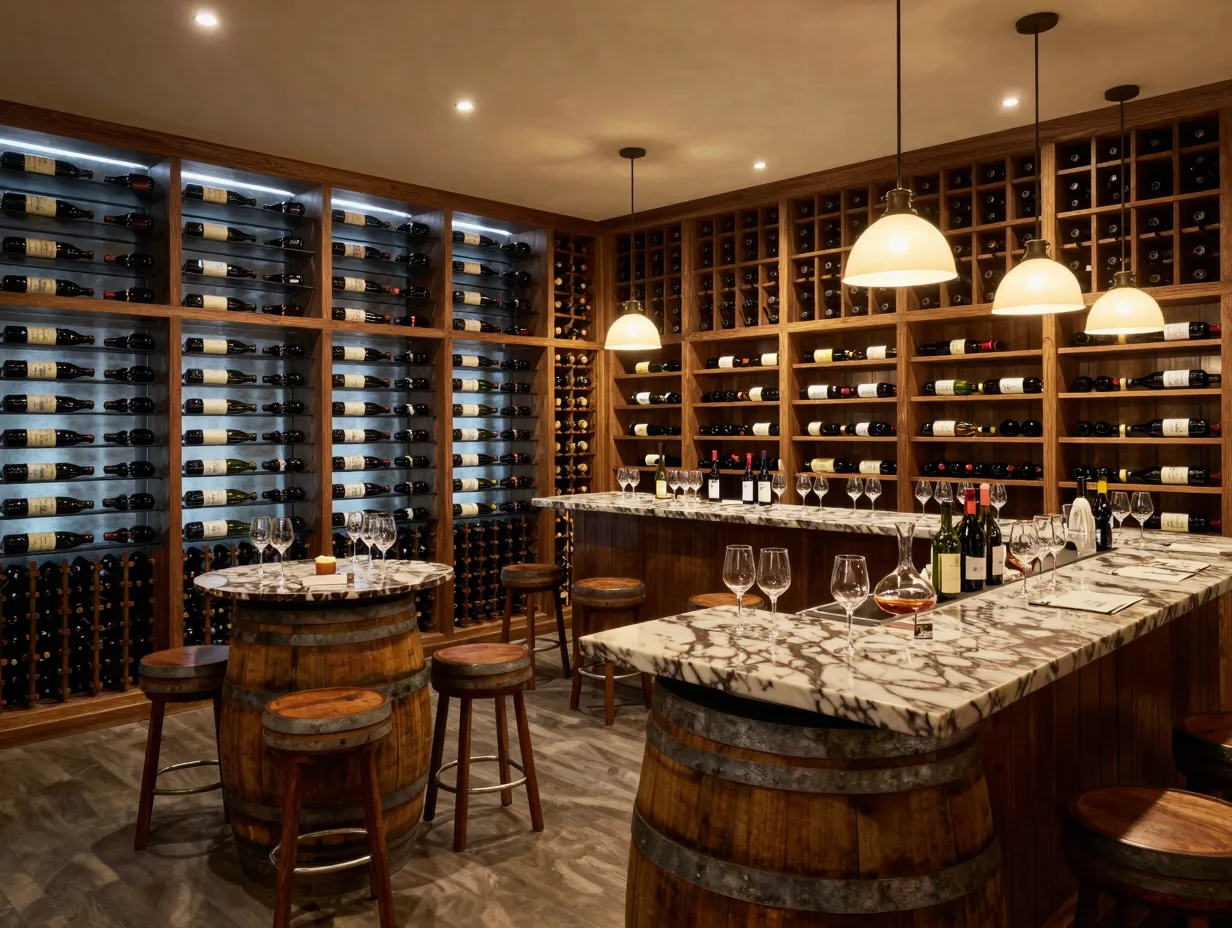
A wine cellar that doubles as a tasting room is the ultimate entertaining upgrade. Rather than simply storing bottles, you create a destination within your home where guests gather to open, pour, and discuss what is in the glass.
The key is designing the space with two distinct zones: a storage zone with proper racking and climate control, and a tasting zone with comfortable seating, a bar counter or island, and appropriate lighting [7]. A marble or granite countertop along one wall serves as both a tasting surface and a display area for open bottles.
Barrel-style tables and stools made from reclaimed wine barrels are a popular choice for the tasting zone. They reinforce the wine theme without feeling forced. Pendant lighting over the tasting area creates a warm, intimate atmosphere that is different from the cooler, more functional lighting over the racks.
Tasting room cellar layout ideas:
| Zone | Key Elements |
|---|---|
| Storage zone | Floor-to-ceiling racking, climate control, UV-filtered lighting |
| Tasting zone | Bar counter, seating, pendant lighting, glassware storage |
| Transition area | Display shelving, open bottle storage, decanting space |
5. The Hidden Speakeasy Entrance

Few design details generate more conversation than a concealed entrance. Hiding your wine cellar behind a bookcase that swings open, a panel disguised as part of the wall, or even a false refrigerator door adds a layer of intrigue that transforms a functional room into an experience [7].
The speakeasy concept draws on Prohibition-era nostalgia and works in both traditional and contemporary homes. In a traditional home, a bookcase door lined with leather-bound volumes is the natural choice. In a contemporary space, a seamless panel with a hidden push-latch mechanism creates a cleaner effect.
From a practical standpoint, concealed doors also help with climate control. A well-sealed hidden door reduces air exchange between the cellar and the rest of the basement, making it easier to maintain stable temperature and humidity.
Popular hidden entrance options:
- Bookcase door with working shelves
- Flush wall panel with push-latch hardware
- False wine rack that pivots open
- Barn door disguised as decorative wall art
6. The Modular Metal Racking System
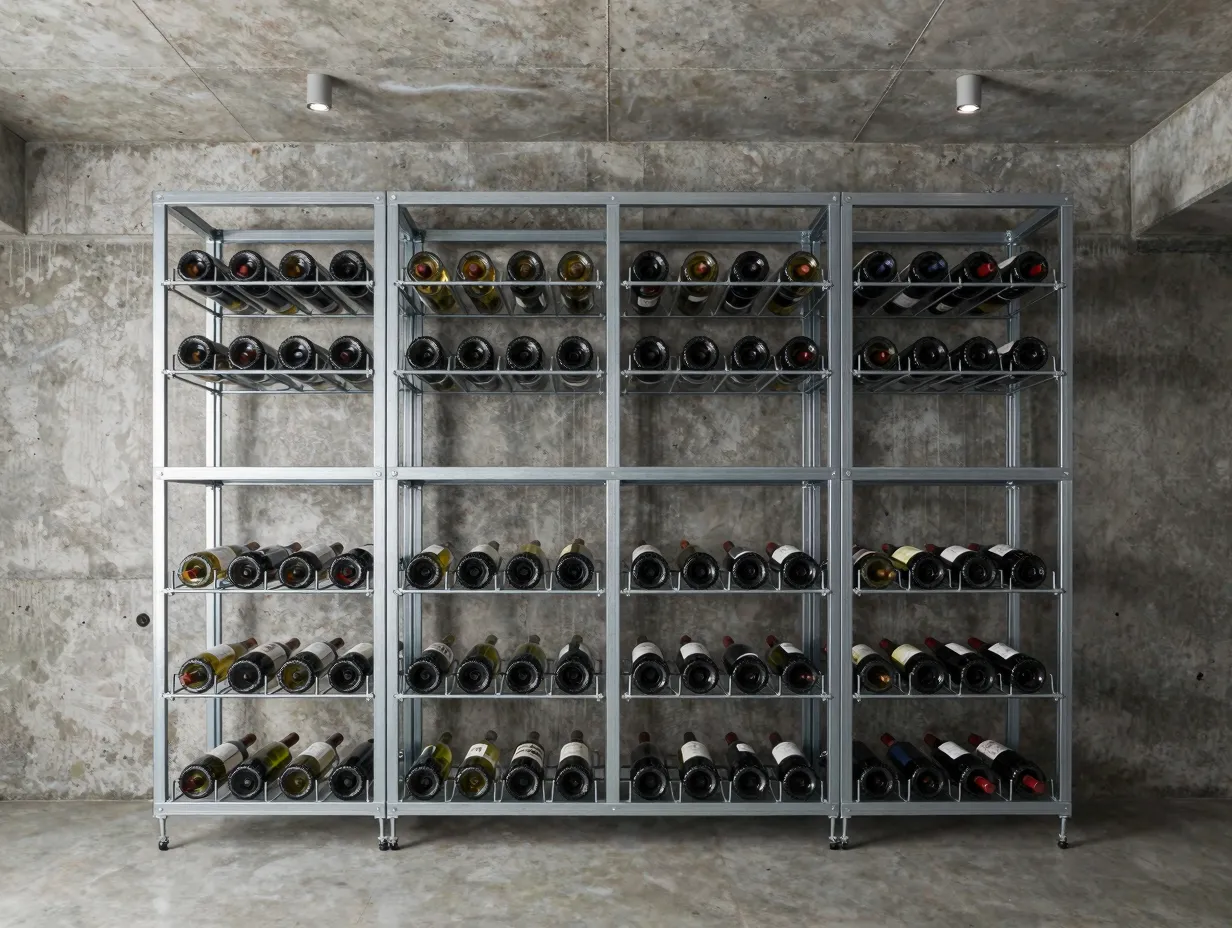
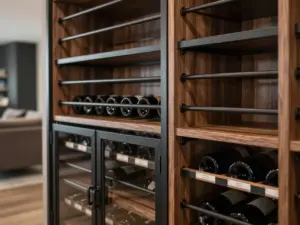
Modular metal racking has become one of the most popular choices for homeowners who want flexibility without sacrificing style. Unlike custom wood builds, modular systems can be reconfigured as your collection grows or your priorities change [3].
These systems typically use powder-coated steel or aluminum frames with individual bottle cradles that slot in at any angle. The open design allows air to circulate freely around each bottle, which supports proper aging. The industrial aesthetic pairs well with contemporary and transitional design styles.
The cost advantage is significant. A modular metal system for a 500-bottle cellar can cost a fraction of what a fully custom wood build would run. For collectors who are still building their cellar and want to avoid a large upfront commitment, modular is the smart starting point.
Modular vs. custom wood racking comparison:
| Factor | Modular Metal | Custom Wood |
|---|---|---|
| Cost | Lower | Higher |
| Flexibility | High | Low |
| Aesthetic | Contemporary/Industrial | Traditional/Rustic |
| Installation | DIY-friendly | Professional recommended |
| Longevity | Very high | Very high |
7. The Natural Material Luxury Cellar
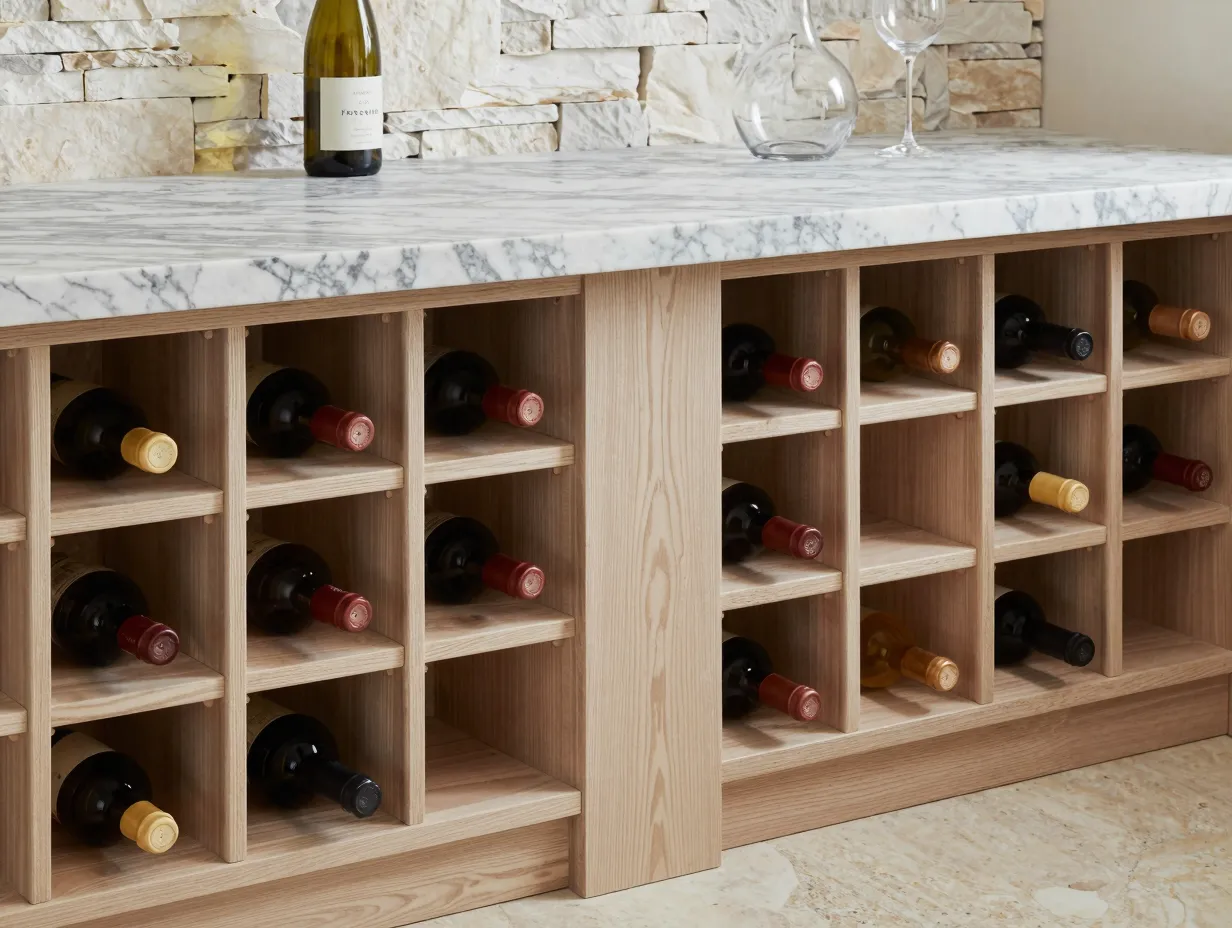
For homeowners who want their wine cellar to feel like a high-end spa or boutique hotel, natural materials are the answer. White oak racking, marble countertops, limestone flooring, and hand-plastered walls create a sensory environment that elevates every visit to the cellar [6].
Natural white oak has become the wood of choice for premium cellar builds because of its tight grain, resistance to moisture, and warm, neutral tone. Unlike pine or redwood, which were traditional cellar woods, white oak does not impart strong odors that can affect wine over time.
Marble countertops serve both aesthetic and functional purposes. The cool stone surface is ideal for decanting and serving, and it adds a visual richness that no other material quite matches. Pairing white marble with warm oak creates a contrast that feels both luxurious and grounded.
Premium natural materials for a luxury cellar:
- White oak or walnut for racking and cabinetry
- Carrara or Calacatta marble for countertops
- Limestone or slate for flooring
- Hand-plastered or limewashed walls for texture
The cost for a luxury natural material cellar typically falls in the $15,000 to $30,000 range, depending on size and the specific materials chosen [2].
8. The Climate-Controlled Closet Conversion
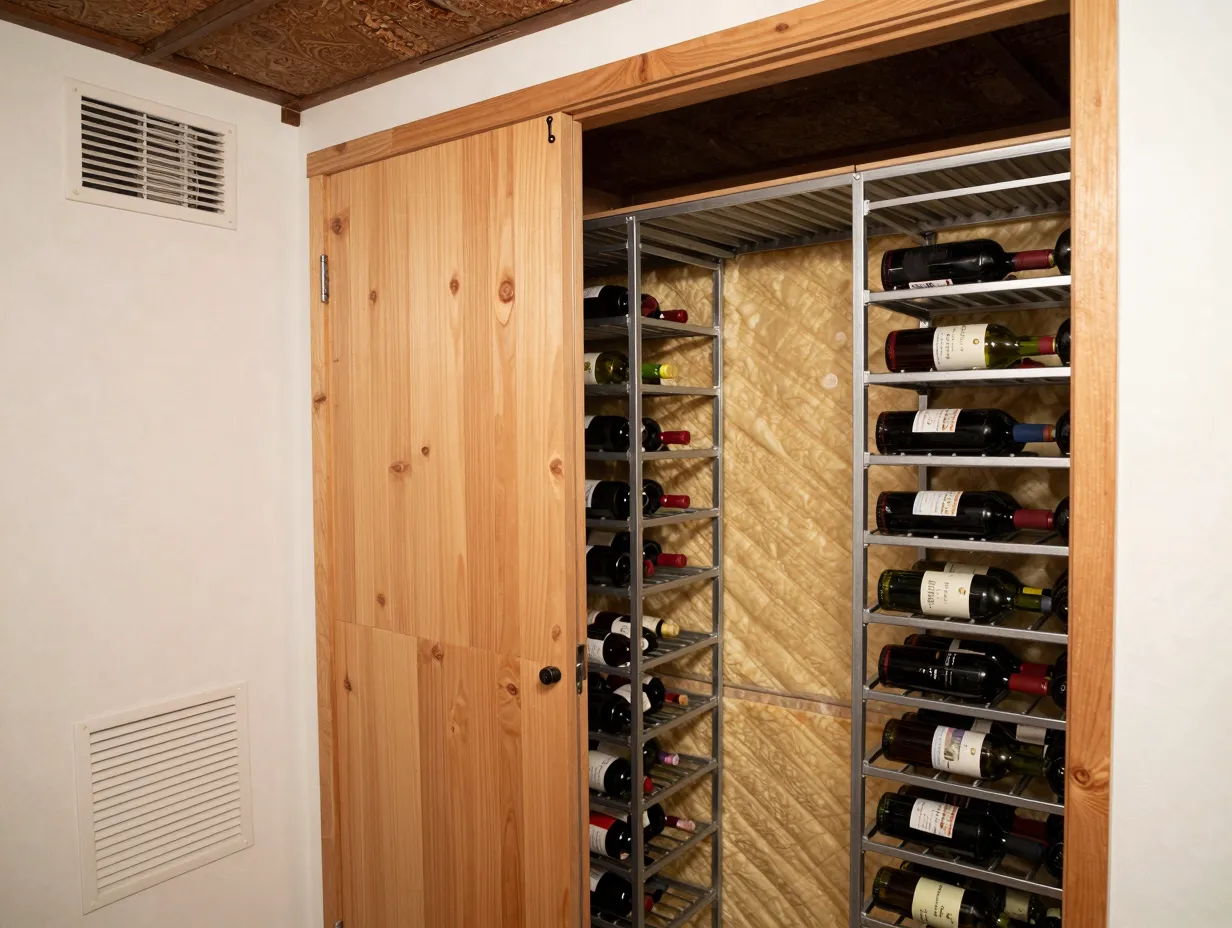
A standard basement closet, often used for holiday decorations or forgotten sports equipment, can become a perfectly functional wine cellar with the right modifications. This is one of the most budget-friendly approaches among these 9 genius basement wine cellar ideas to transform your underground space.
The conversion process involves four main steps. First, insulate all walls, the ceiling, and the floor with closed-cell spray foam or rigid foam board to create a thermal envelope. Second, install a vapor barrier to manage moisture. Third, add a dedicated cooling unit sized for the closet’s cubic footage. Fourth, install racking that maximizes the available wall space [2].
A typical basement closet measuring 4 feet by 6 feet can hold between 200 and 300 bottles with efficient racking. That is a meaningful collection for most casual to intermediate collectors.
Closet conversion budget breakdown:
| Item | Estimated Cost |
|---|---|
| Insulation materials | $200 to $500 |
| Vapor barrier | $50 to $150 |
| Cooling unit (small) | $500 to $1,500 |
| Racking (modular) | $300 to $800 |
| Door upgrade (insulated) | $200 to $600 |
| Total estimated range | $1,250 to $3,550 |
9. The Ambient Lighting Feature Cellar
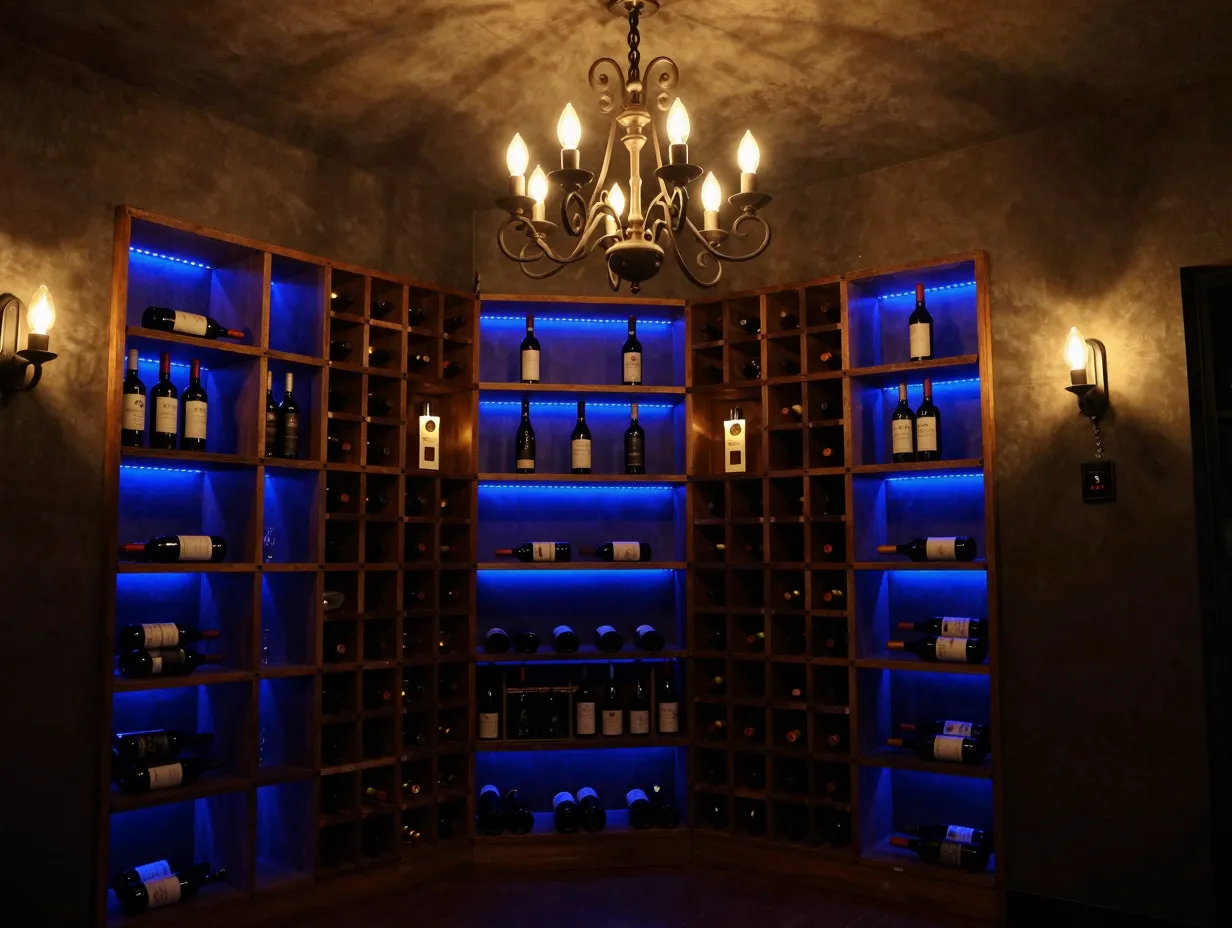
Lighting is the single most underestimated element in wine cellar design. Most homeowners think about it last, after the racking and climate systems are already in place. The best cellar designers think about it first.
Chandeliers, wall sconces, LED strip lighting, and recessed spotlights each create a completely different atmosphere [5]. A wrought iron chandelier with Edison bulbs transforms a rustic cellar into something theatrical. LED strips tucked behind racking create a backlit glow that makes bottles appear to float. Recessed spotlights aimed at specific display areas highlight trophy bottles or art pieces.
The critical rule with cellar lighting is to avoid UV light, which degrades wine over time. Standard incandescent bulbs are UV-free but generate heat. LED bulbs are the better choice because they produce minimal heat and can be selected in UV-free variants.
Lighting types and their effects:
| Lighting Type | Atmosphere | UV Risk | Heat Output |
|---|---|---|---|
| Edison bulb chandelier | Warm, theatrical | Low | Moderate |
| LED strip lighting | Modern, dramatic | Very low | Very low |
| Recessed spotlights | Focused, clean | Low (LED) | Very low |
| Wall sconces | Intimate, traditional | Low | Low to moderate |
A layered lighting plan that combines ambient, accent, and task lighting gives you full control over the cellar’s mood. Install dimmer switches on all circuits so you can adjust the atmosphere for a quiet solo visit or a lively tasting party.
Budgeting for Your Basement Wine Cellar
Understanding the cost landscape before you commit to a design is essential. The range is genuinely wide, and the right budget depends entirely on your goals.
A DIY cellar using modular racking, basic insulation, and a small cooling unit can come together for as little as $500 to $3,000. Mid-range builds with professional installation, better materials, and a more capable climate system typically run $5,000 to $15,000. High-end custom cellars with luxury materials, bespoke racking, and premium climate systems routinely exceed $20,000 [2].
One thing I consistently advise: do not cut corners on the climate control system. A beautiful cellar with inadequate cooling will ruin your wine. Spend what you need to on the functional elements first, then allocate remaining budget to aesthetics.
Integrating Your Cellar With Your Home’s Overall Design
The most successful wine cellars feel like a natural extension of the home rather than a separate project bolted on as an afterthought. If your home has a modern farmhouse aesthetic, your cellar should reflect that with shiplap walls, black metal accents, and warm wood tones. If your home is sleek and contemporary, glass walls and metal racking are the natural fit [3].
This integration extends to the entrance. A cellar door that matches the home’s interior doors, hardware that coordinates with the rest of the basement finishes, and lighting that feels consistent with the home’s overall palette all contribute to a cohesive result.
Conclusion
These 9 genius basement wine cellar ideas to transform your underground space represent a spectrum of approaches, from the modest closet conversion to the full luxury tasting room. The common thread running through all of them is intentionality: every great cellar starts with a clear vision of how it will be used, what it should look like, and what the wine inside it needs to thrive.
Your actionable next steps:
- Measure your available basement space and identify the best location based on existing temperature and moisture conditions
- Decide on a budget range using the cost framework above, and allocate at minimum 30 percent of that budget to climate control and insulation
- Choose a design style that aligns with your home’s existing aesthetic, using the style guide principles from this article
- Research local wine cellar specialists or, for smaller builds, gather quotes from general contractors experienced in insulated room construction
- Start with the functional infrastructure and layer in the aesthetic elements as your budget allows
A basement wine cellar is one of the few home improvements that you will use and enjoy every single day. Do it right, and it will become the room your guests remember long after the evening ends.
References
[1] Basement Cellar Building Guide – https://www.iwawine.com/custom-wine-cellars/resources/basement-cellar-building-guide?utm_source=openai
[2] How To Build A Wine Cellar In Basement – https://breezaireusa.com/blogs/wine-cellar-design-installation/how-to-build-a-wine-cellar-in-basement?utm_source=openai
[3] Style Guide – https://www.customwinecellar.com/resources/style-guide?utm_source=openai
[4] Small Wine Cellar Design Ideas – https://winecellarauthority.com/blogs/wine-cellar-design-and-construction/small-wine-cellar-design-ideas?utm_source=openai
[5] Wine Cellar Design Trends – https://www.wineenthusiast.com/basics/buying-and-collecting/wine-cellar-design-trends/?utm_source=openai
[6] Wine Cellar Ideas For Basements – https://www.customwinecellarsatlanta.com/wine-cellar-ideas-for-basements/?utm_source=openai
[7] 11 Basement Wine Cellar Ideas For Ct Spaces – https://summit-cellars.com/11-basement-wine-cellar-ideas-for-ct-spaces/?utm_source=openai