8 Breathtaking Stone Wine Cellar Designs for Timeless Elegance
A properly designed stone wine cellar can increase a home’s resale value by as much as 10 percent, according to real estate specialists who track luxury property features. That single fact stopped me mid-renovation when I was planning my own basement conversion. Suddenly, what I had assumed was a personal indulgence became a sound investment — and the material I kept returning to, in every design board and every site visit, was stone.
Disclosure: This post contains affiliate links. As an Amazon Associate, we earn from qualifying purchases, and at no extra cost to you.
The 8 breathtaking stone wine cellar designs for timeless elegance explored in this guide represent the full spectrum of what stone can do for a wine storage space: from raw, cave-like authenticity to sleek, gallery-worthy modern rooms. Whether you are building from scratch or refreshing an existing cellar, these designs offer a clear creative roadmap. Natural stone is not merely decorative; it regulates humidity, absorbs vibration, and ages beautifully — qualities that happen to mirror what great wine does in the bottle.
Key Takeaways
- Stone is both a functional and aesthetic material for wine cellars, naturally moderating temperature and humidity.
- The right stone finish — rough-cut, honed, or polished — determines whether a cellar reads as rustic, transitional, or contemporary.
- Combining stone with glass, wood, or metal creates layered designs that feel curated rather than formulaic.
- Faux stone panels offer a budget-conscious path to the same visual impact as natural stone.
- Compact spaces, including under-stair areas, can accommodate stunning stone cellar designs without sacrificing elegance.
Why Stone Remains the Gold Standard for Wine Cellar Design
Before diving into the 8 breathtaking stone wine cellar designs for timeless elegance, it helps to understand why stone keeps winning against competing materials. Concrete, drywall, and engineered wood have their place, but none of them carry the thermal mass, the sensory richness, or the cultural weight of natural stone.
Stone walls absorb heat slowly and release it even more slowly, which smooths out the temperature fluctuations that damage wine over time. Limestone, in particular, has been used in French cave cellars for centuries precisely because of this property. When you walk into a well-built stone cellar, you feel the temperature drop before you even reach for the door handle — that is thermal mass doing its job.
Beyond physics, there is the matter of storytelling. Wine is a product steeped in history, terroir, and tradition. A stone cellar communicates that the owner takes the collection seriously. Designers are increasingly incorporating natural materials like stone and wood into wine cellars to create warm, inviting spaces, reflecting a broader movement toward organic aesthetics in interior design [1].
Choosing the Right Stone Type
| Stone Type | Finish Options | Best Design Style | Relative Cost |
|---|---|---|---|
| Limestone | Rough-cut, honed | Rustic, Traditional | Moderate |
| Slate | Riven, cleft | Industrial, Transitional | Moderate |
| Basalt | Honed, polished | Contemporary, Modern | High |
| Marble | Polished, brushed | Luxury, Classical | Very High |
| Fieldstone | Natural, tumbled | Farmhouse, Rustic | Moderate |
| Travertine | Filled, unfilled | Mediterranean, Classic | Moderate-High |
The 8 Breathtaking Stone Wine Cellar Designs for Timeless Elegance
1. The European Cave Cellar
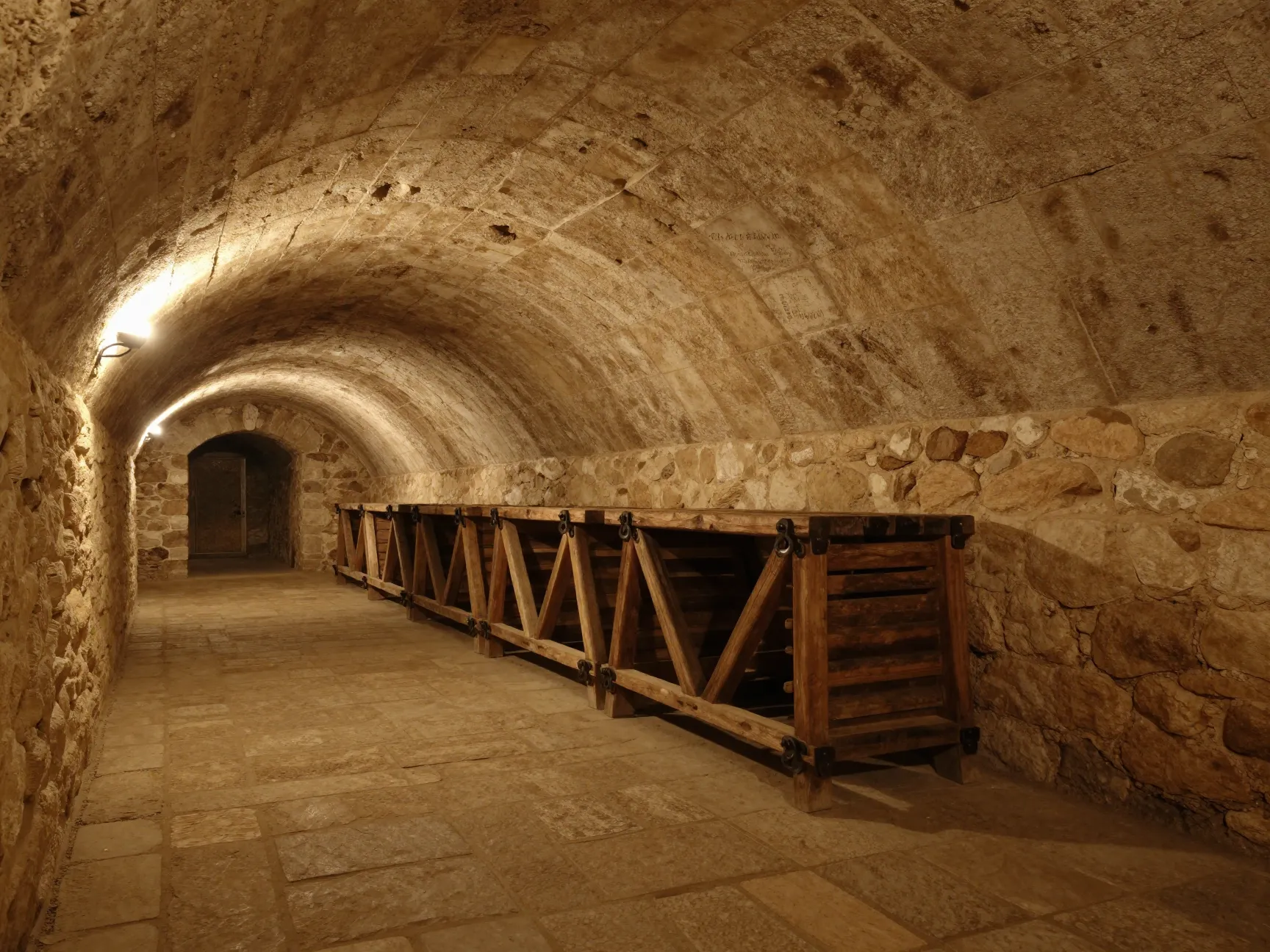
The oldest wine storage tradition in the world is also one of the most visually compelling. European cave-style cellars replicate the underground grottos of Burgundy and Rioja, where wine has been kept for generations in naturally cool, stone-lined chambers.
Key design elements:
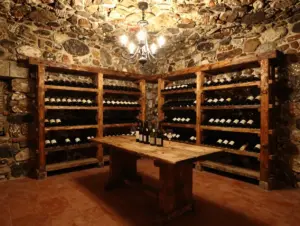
- Barrel-vaulted ceilings in rough-cut limestone or fieldstone
- Exposed mortar joints with intentional irregularity
- Reclaimed wood racking paired with hand-forged iron hardware
- Flagstone or cobblestone floors laid in a modular rustic pattern
Rustic wine cellars emphasize natural materials in their most authentic forms. Reclaimed wood racking, exposed stone walls, and hand-forged metal details create a space reminiscent of European wine caves, celebrating the timeless tradition of winemaking [4].
The trick to pulling this off in a modern home is restraint. Every element should look like it was found, not purchased. I recommend sourcing reclaimed fieldstone from demolition salvage yards rather than buying new stone that has been artificially distressed.
“The best stone cellars feel like they were discovered, not designed.”
2. The Honed Limestone Gallery
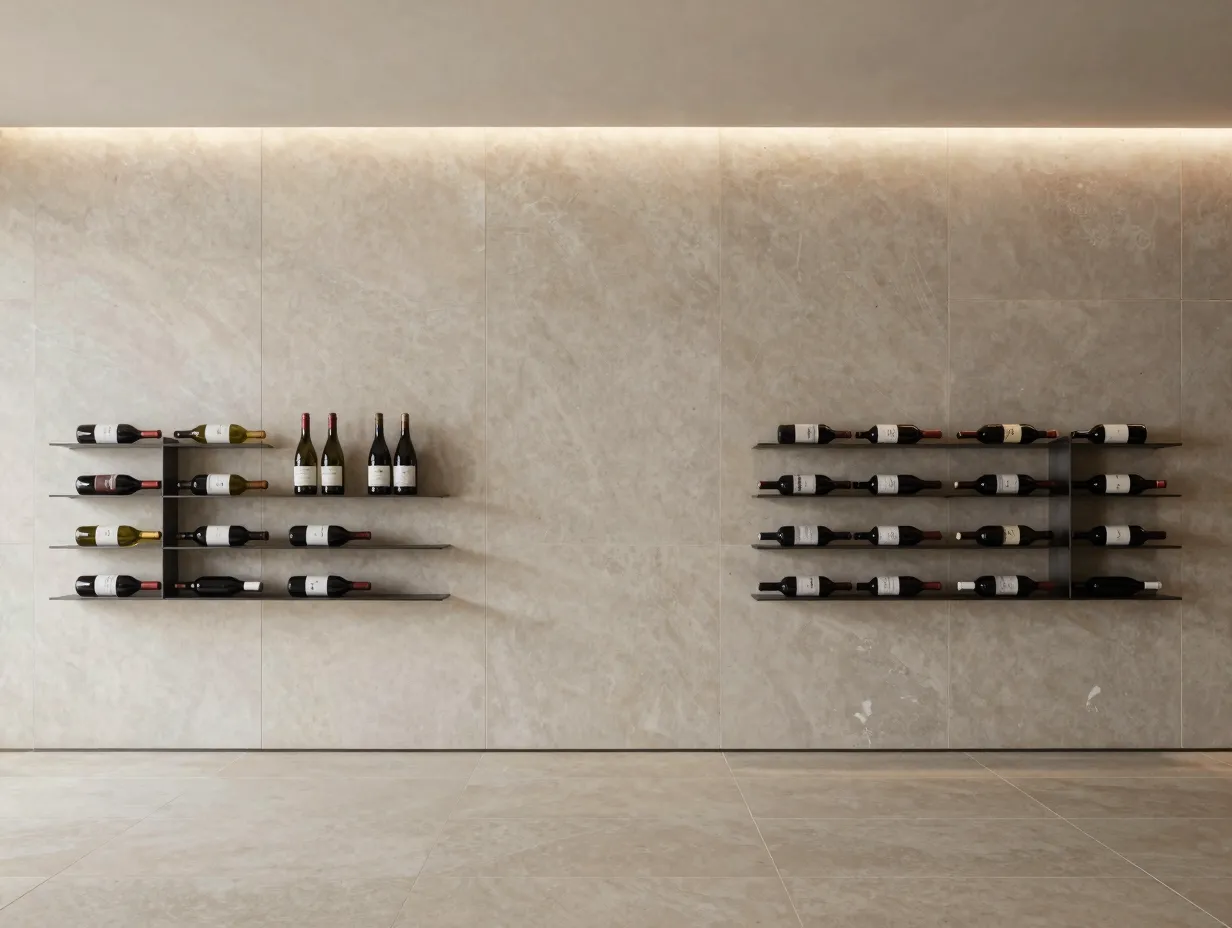
For collectors who prefer a quieter, more refined atmosphere, the honed limestone gallery offers sophistication without ostentation. Honed stone has a matte, smooth surface that absorbs light rather than reflecting it, creating a calm, almost meditative environment.
Key design elements:
- Floor-to-ceiling honed limestone wall panels
- Integrated LED strip lighting recessed into stone reveals
- Minimal metal wine racking in brushed steel or blackened iron
- Continuous limestone floor tiles in a classic grid pattern
Traditional cellars may feature rough-cut limestone walls and riven slate floors, while contemporary designs might opt for honed basalt floors and polished marble surfaces [6]. The honed limestone gallery sits comfortably between these two poles — warm enough to feel welcoming, refined enough to feel intentional.
This style works especially well in urban homes where the cellar doubles as a tasting room. The clean lines and neutral palette let the wine labels become the visual art.
3. The Glass-and-Stone Hybrid
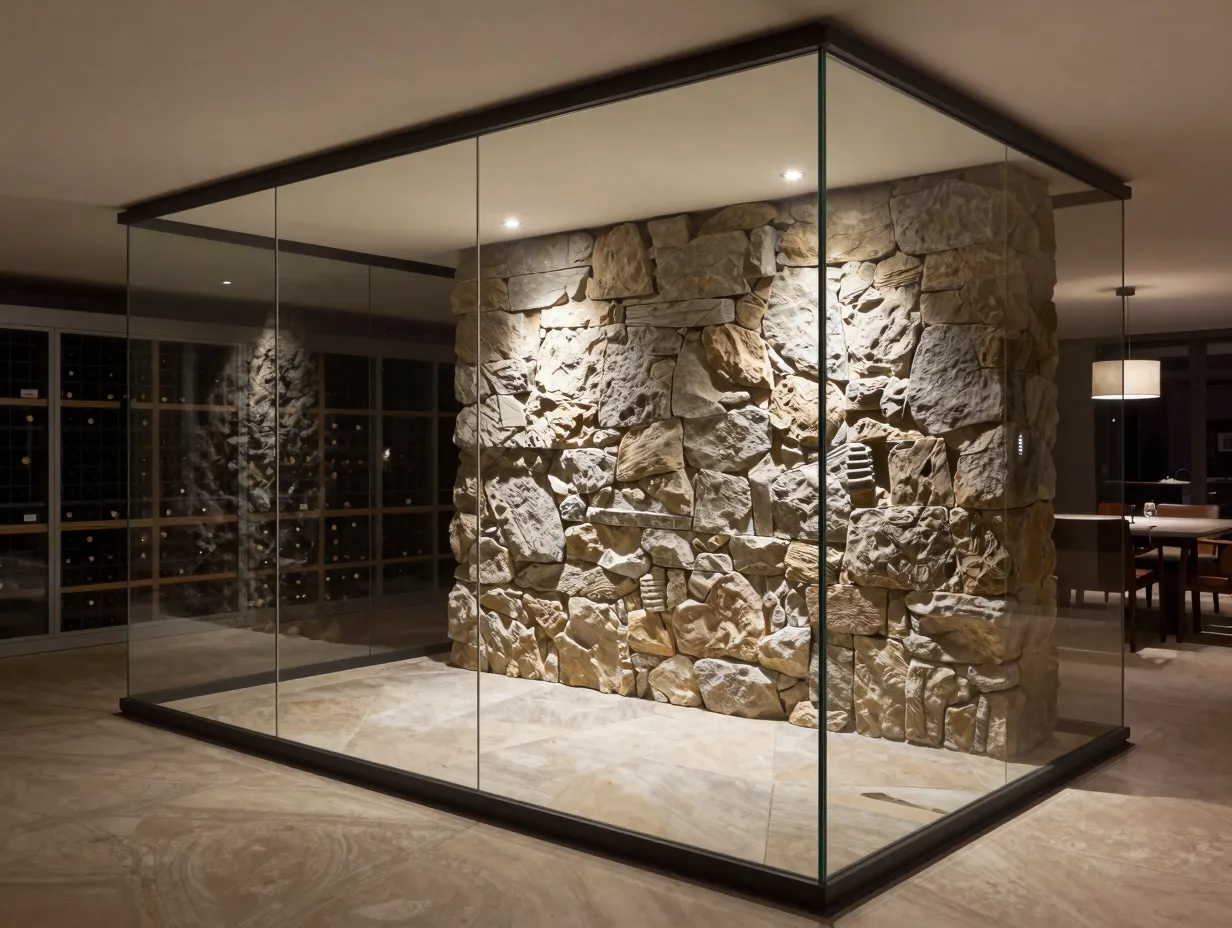
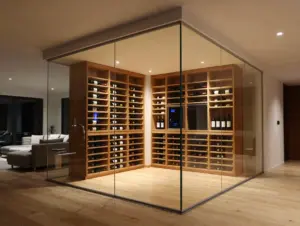
One of the most dramatic shifts in wine cellar design over the past decade has been the embrace of transparency. Modern wine cellars often feature glass enclosures complemented by stone elements, allowing for a transparent display of the wine collection while maintaining a connection to traditional materials [3].
Key design elements:
- Frameless or steel-framed glass walls on one or two sides
- Stone accent walls — typically rough limestone or stacked slate — as the visual anchor
- Climate-controlled glass enclosure with visible stone interior
- Polished concrete or stone tile flooring visible through the glass
The contrast between the cool transparency of glass and the warm texture of stone is what makes this design so compelling. From the outside, looking into a glass-and-stone cellar feels like peering into a living display case. From the inside, the stone walls create an intimate, grounded atmosphere despite the openness.
This design is particularly effective when the cellar is positioned adjacent to a dining room or kitchen, turning the collection into a daily conversation piece.
4. The Rustic Fieldstone Vault
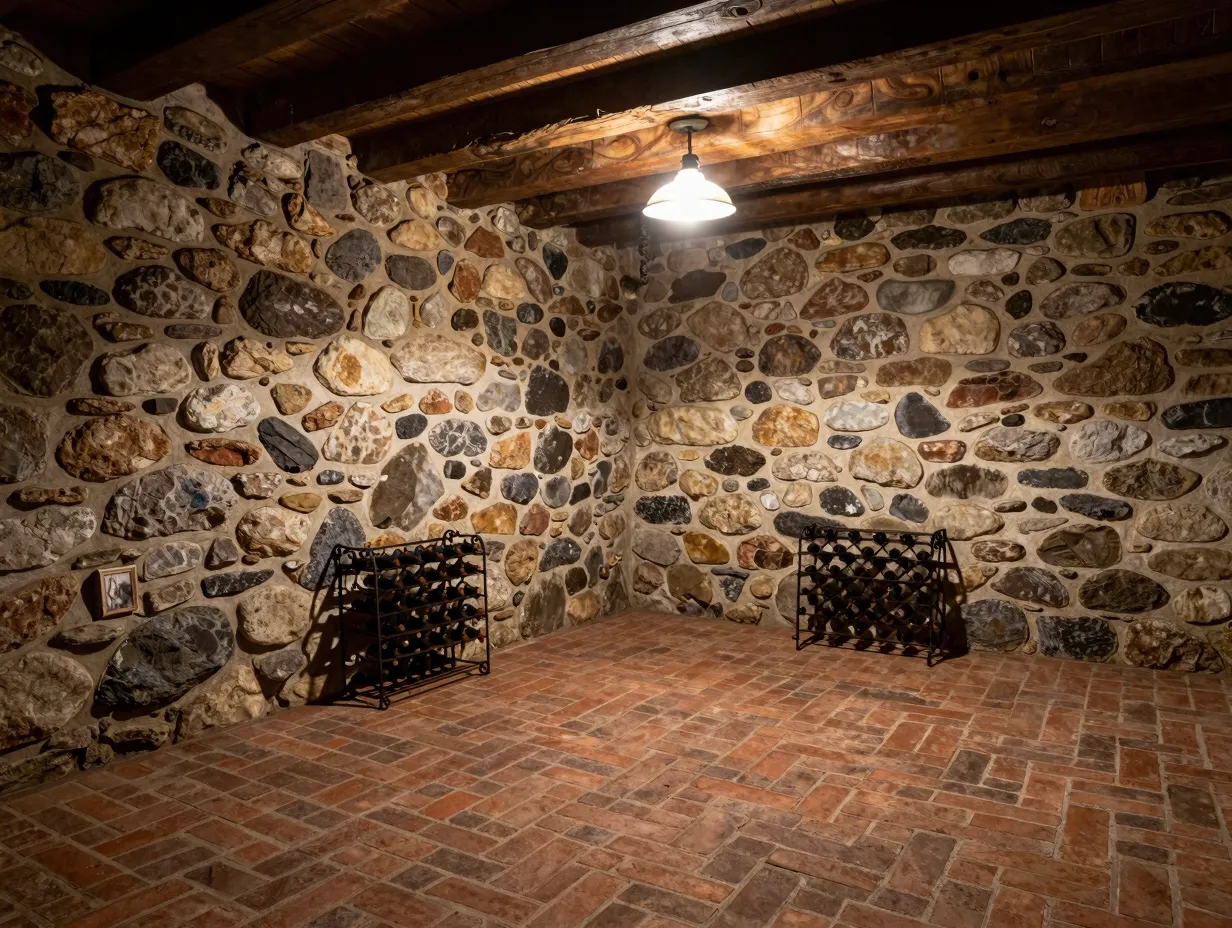
Where the European cave cellar leans into history, the rustic fieldstone vault leans into geography. Fieldstone — the rounded, naturally weathered rock gathered from fields and riverbeds — carries a distinctly American vernacular quality. It speaks of farmhouses, barns, and the kind of honest craftsmanship that does not need to announce itself.
Key design elements:
- Irregular fieldstone walls with wide mortar joints
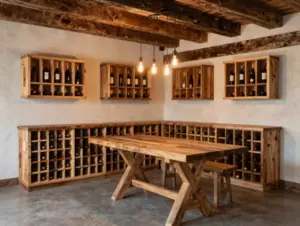
- Exposed wooden beam ceiling joists
- Brick or cobblestone floor in a classic herringbone pattern
- Wrought iron wine racks and vintage-style pendant lighting
Various stone laying patterns are employed to enhance the visual appeal of wine cellars. Popular designs include the classic brick pattern, modern grid pattern, elegant herringbone, and rustic modular pattern — each offering a unique aesthetic that caters to different stylistic preferences [2].
The herringbone floor pattern, in particular, adds a layer of visual complexity that rewards close inspection. When laid in reclaimed brick or tumbled slate, it anchors the entire room with a sense of age and authenticity.
5. The Contemporary Basalt and Steel Cellar
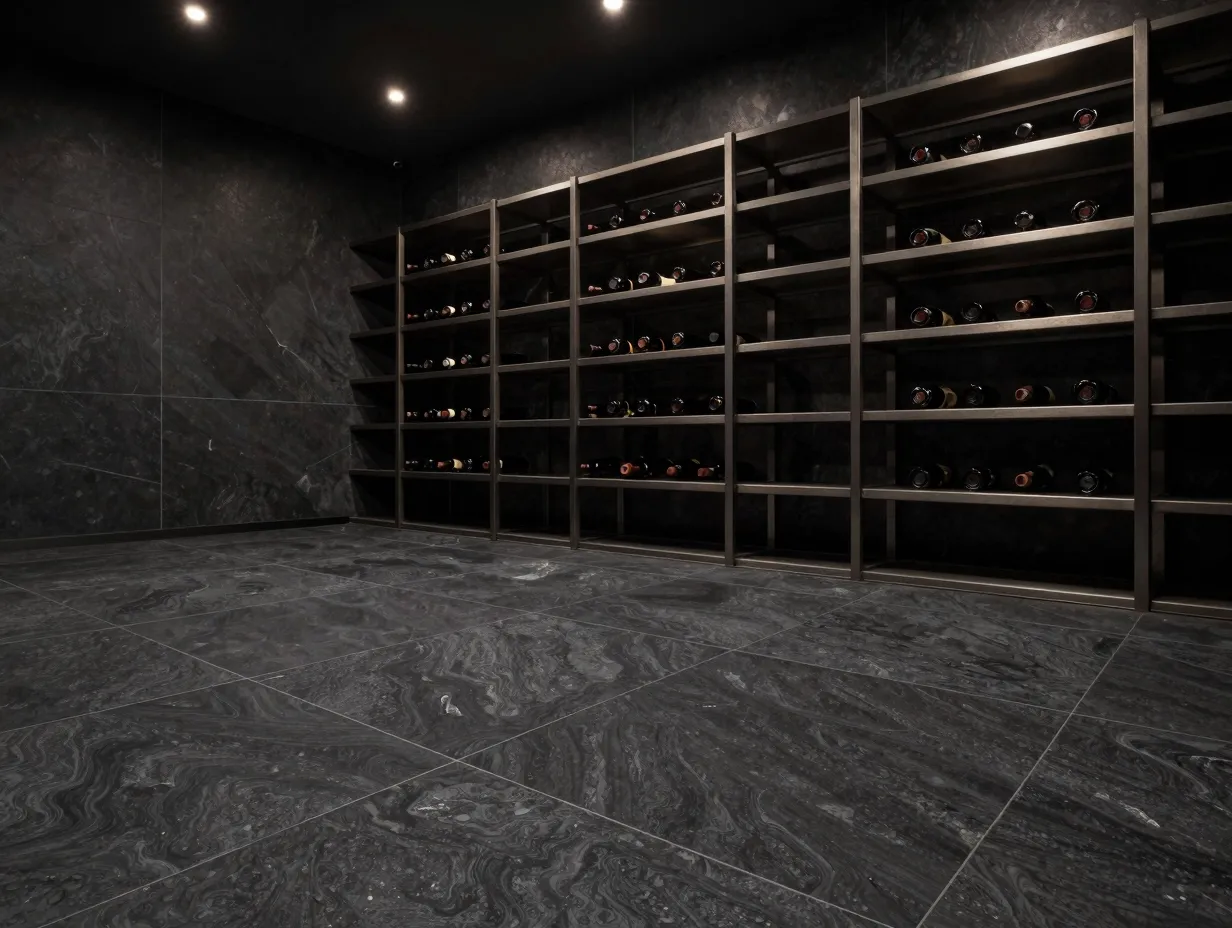
Not every wine collector wants their cellar to look like it belongs in a French chateau. For those with a modern sensibility, the combination of honed basalt and brushed steel creates a wine room that feels as current as it does timeless.
Key design elements:
- Large-format honed basalt floor tiles (600mm x 600mm or larger)
- Basalt or dark limestone feature wall as the focal point
- Modular steel wine racking systems in a matte or satin finish
- Recessed architectural lighting with precise beam angles
The deep, near-black tones of basalt create a dramatic backdrop that makes wine labels pop visually. This is a cellar designed to be shown off — it photographs beautifully and impresses guests without relying on nostalgia.
One important technical note: dark stone absorbs heat, so climate control systems need to be sized accordingly. Work with a mechanical engineer who understands the thermal properties of the specific stone you choose.
6. The Marble Accent Wall Cellar
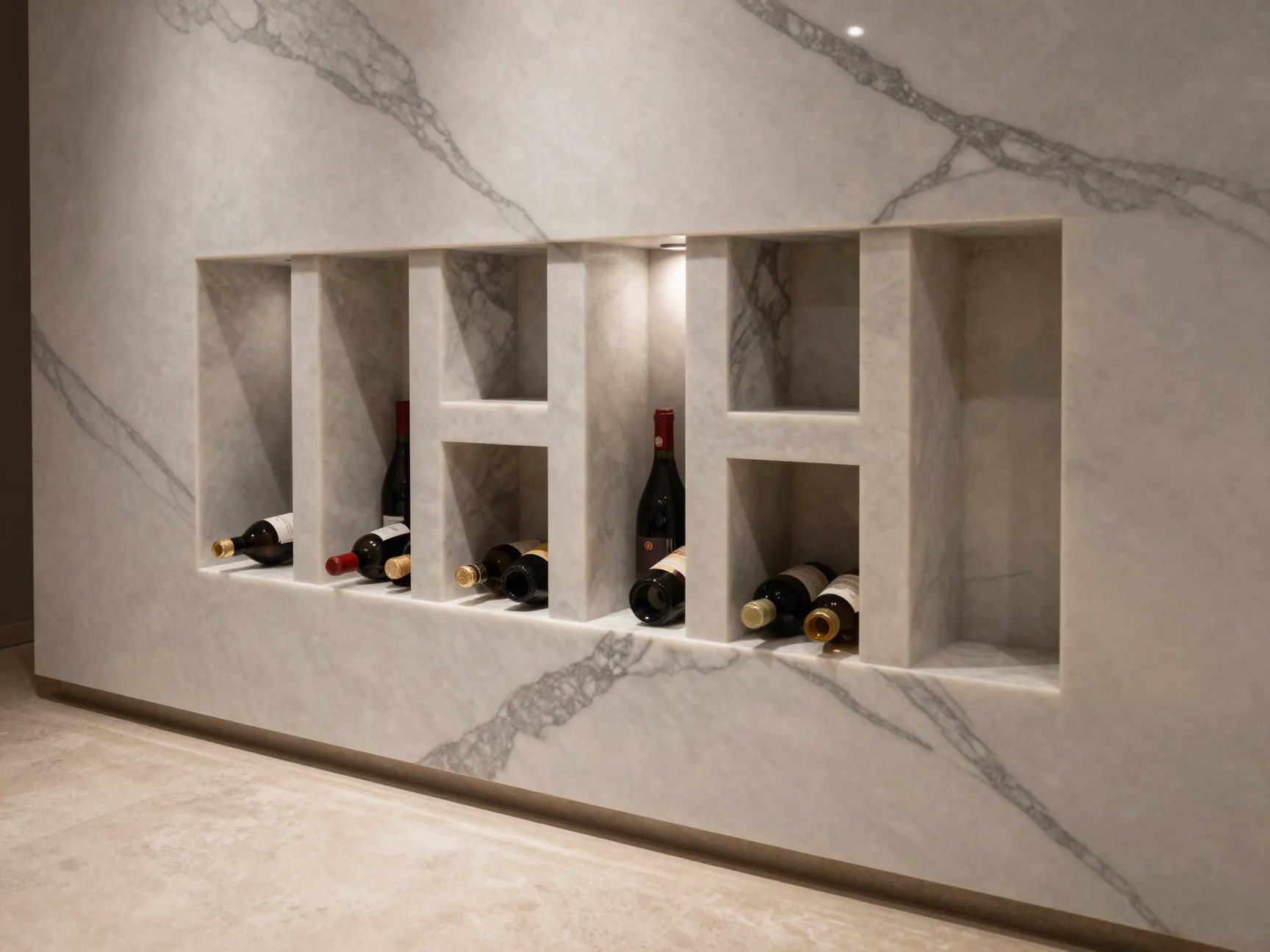
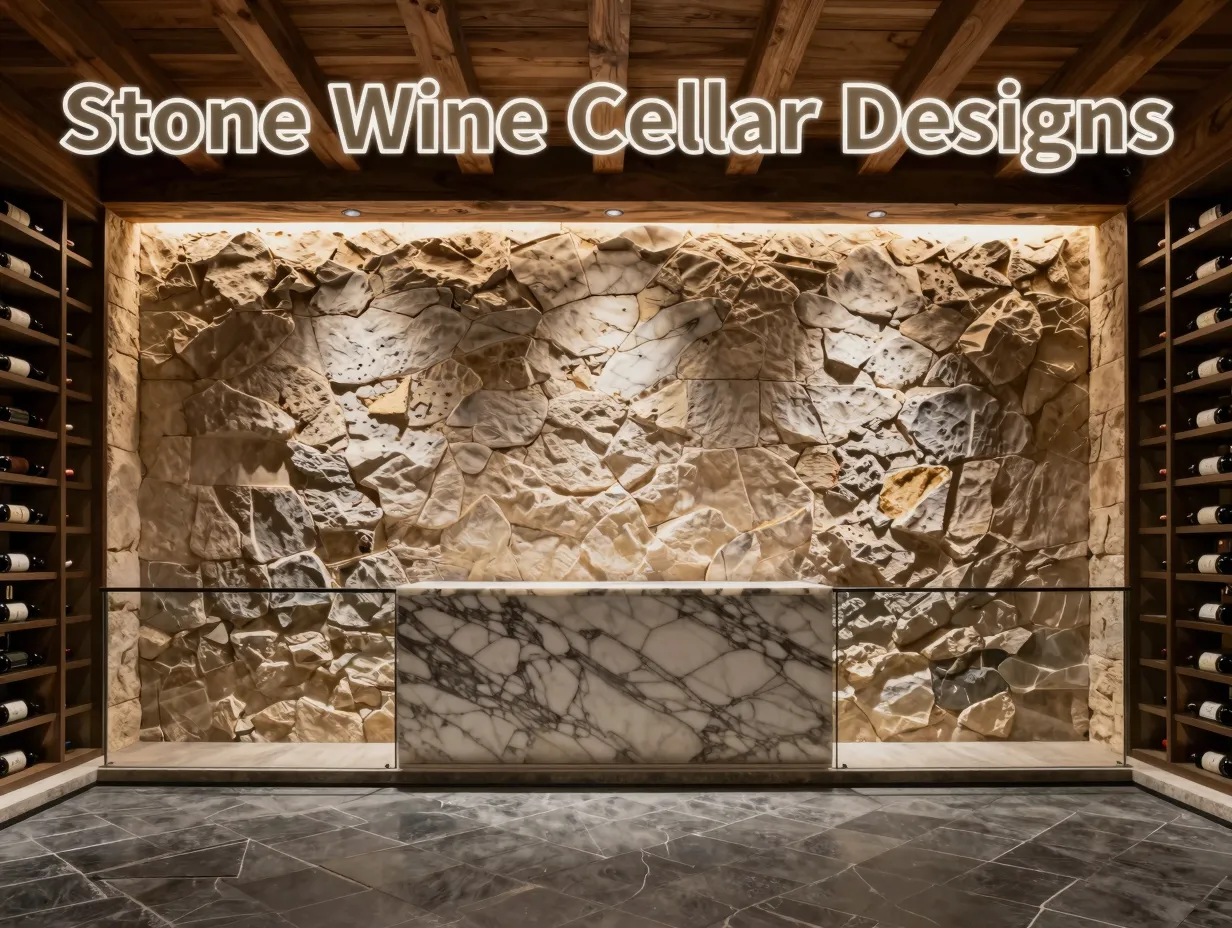
Marble in a wine cellar might seem counterintuitive — it is a material more associated with bathrooms and hotel lobbies than with underground storage. But used strategically, as a single accent wall or a feature behind a central display rack, marble transforms a cellar into something genuinely extraordinary.
Key design elements:
- One statement marble wall (Calacatta, Nero Marquina, or Emperador) behind the primary display
- Neutral stone flooring — honed limestone or travertine — to balance the marble’s drama
- Custom stone fabrication for wine display niches cut directly into the marble wall
- Integrated lighting that highlights the stone’s natural veining
Tailored stone elements, such as chiseled limestone walls and bespoke metal wine racking, are crafted to create sculptural, stone-forward designs for refined wine collections [7]. The same principle applies to marble: the stone itself becomes the sculpture, and the wine racking is secondary.
Pro tip: Choose a marble with strong directional veining and book-match the slabs on the feature wall. The symmetrical pattern created by book-matching turns the wall into a piece of abstract art.
7. The Faux Stone Budget Cellar
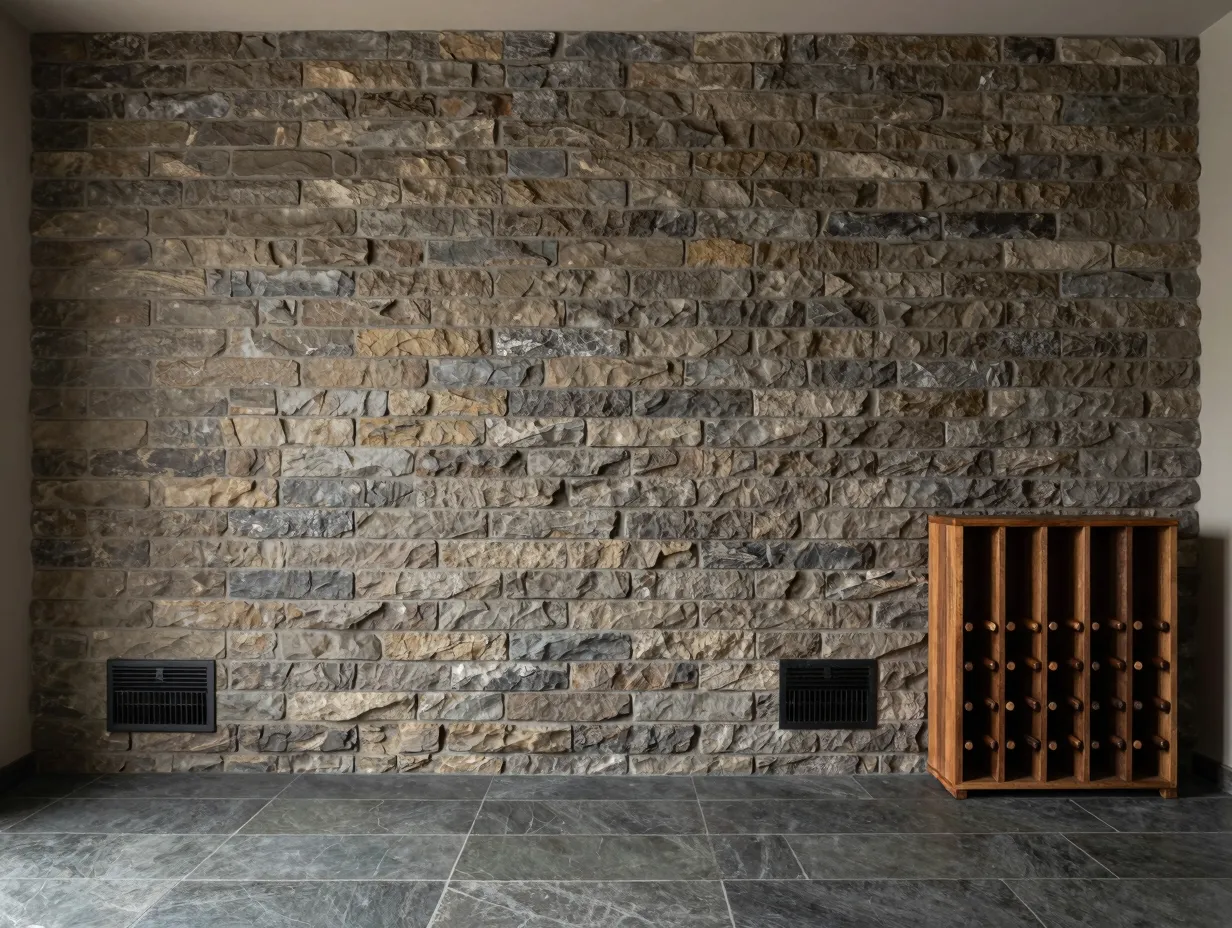
Here is the honest truth that most design guides skip over: not everyone has the budget for natural stone, and that is perfectly fine. High-quality faux stone or brick panels offer an authentic look and provide a cost-effective solution for creating sophisticated wine cellars [5].
Key design elements:
- Faux stone or brick panels in a realistic texture and color
- Real stone flooring (even a modest slate tile) to ground the space with genuine material
- Quality wine racking in wood or metal to complement the stone aesthetic
- Proper climate control and insulation behind the panels
The critical success factor with faux stone is selectivity. Use it on the walls where texture and color matter most, but invest in at least one genuine stone element — a slate floor, a limestone threshold, a marble countertop for a tasting ledge — to give the space authentic material weight.
I have visited faux stone cellars that fooled me completely until I touched the wall. The technology has advanced significantly, and the best panels cast deep shadows that read as genuine relief texture even under close inspection.
8. The Under-Stair Stone Nook
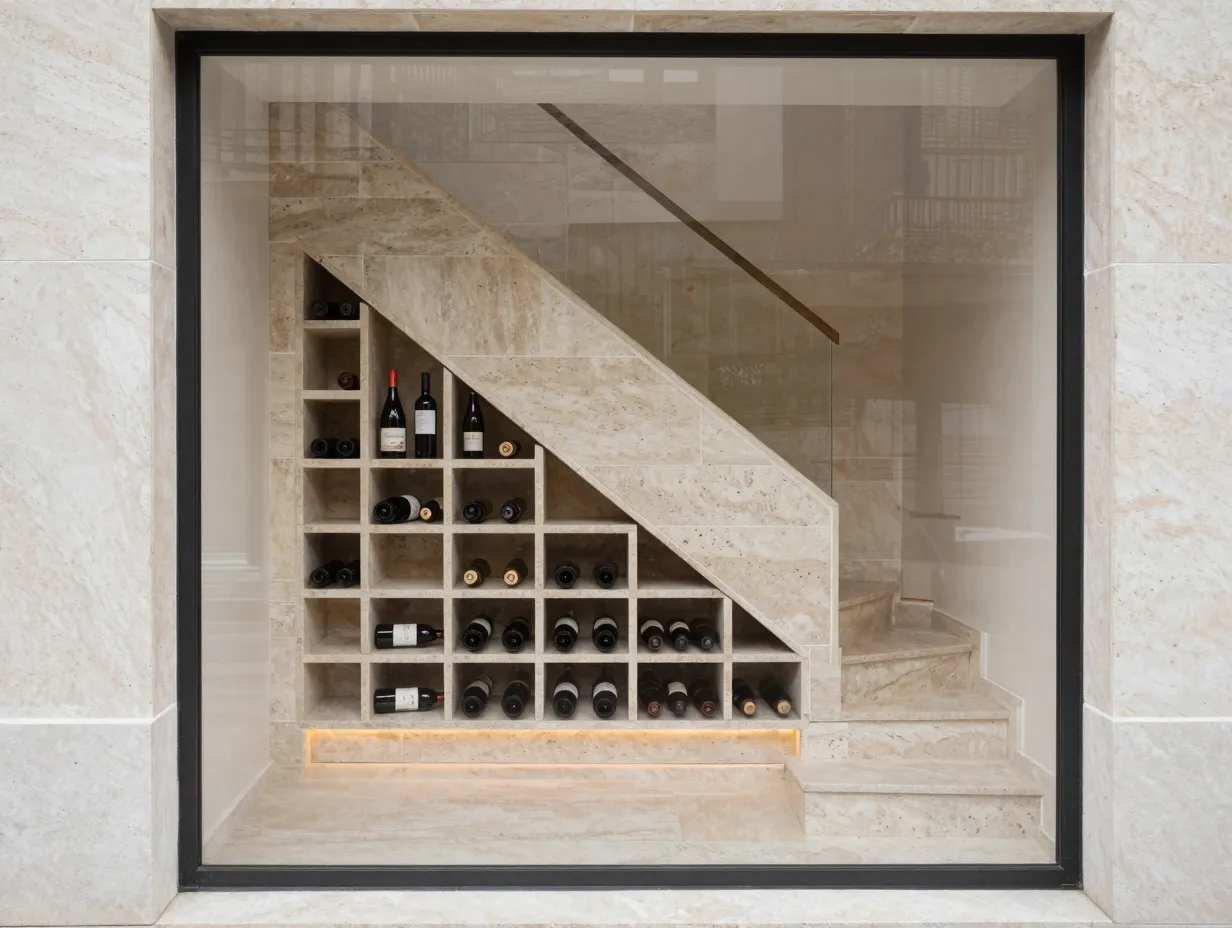
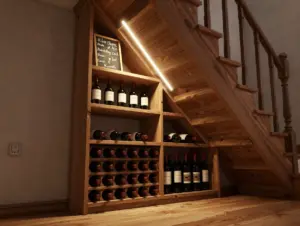
The most creative design on this list is also the most space-efficient. Innovative designs incorporate stone elements into compact spaces, such as under-stair areas, allowing for elegant wine storage solutions in homes with limited space [1].
Key design elements:
- Stone-clad walls within the triangular under-stair cavity
- Custom-fitted wine racking that follows the stair geometry
- A small stone threshold or step detail to signal the transition into the storage zone
- Recessed lighting to illuminate both the stone texture and the wine labels
The under-stair stone nook works because it transforms dead space into a focal point. In an open-plan home, a well-executed under-stair cellar with stone walls becomes a design feature that guests notice immediately — not because it is large, but because it is precise.
Design considerations for under-stair cellars:
- Insulate the cavity thoroughly before applying stone to maintain stable temperatures
- Use lighter stone colors (cream limestone, pale travertine) to prevent the small space from feeling oppressive
- Install a glass door or partial glass panel to maintain the visual connection to the stone interior
How to Match Stone Design to Your Collection Size
The scale of your wine collection should influence your stone design choices as much as your aesthetic preferences do.
Small collections (under 200 bottles): Focus on a single dramatic stone element — a feature wall or a stone-framed display niche. The under-stair stone nook or the marble accent wall cellar are ideal.
Medium collections (200-1,000 bottles): You have enough volume to justify a dedicated room. The honed limestone gallery or the glass-and-stone hybrid give you display capacity without overwhelming the space.
Large collections (1,000+ bottles): Scale demands authenticity. The European cave cellar or the rustic fieldstone vault provide the visual mass and storage depth that large collections require.
Practical Considerations Before You Build
Stone is heavy, cold, and porous — all qualities that are assets in a wine cellar but liabilities if you do not plan for them properly.
Structural load: A full stone wall can weigh several hundred pounds per linear foot. Consult a structural engineer before beginning any stone installation, particularly in above-grade spaces or older homes.
Moisture management: Stone is naturally porous and can wick moisture from the surrounding soil or concrete. Apply a penetrating stone sealer on all below-grade stone surfaces, and install a vapor barrier behind any stone cladding on exterior walls.
Climate control: Stone’s thermal mass works with your HVAC system, not against it. Size your cooling unit for the volume of air in the room, not the surface area of stone. A qualified wine cellar climate specialist will account for the stone’s thermal contribution in their calculations.
Lighting: Stone texture is only visible when light rakes across it at an angle. Position light sources — whether recessed cans, LED strips, or pendant fixtures — so that they graze the stone surface rather than washing it flat.
Conclusion
The 8 breathtaking stone wine cellar designs for timeless elegance covered in this guide share one quality: they all treat stone as a living material rather than a static surface. Whether you choose the ancient authenticity of a fieldstone vault, the gallery-like precision of honed limestone, or the budget-smart approach of premium faux panels, the stone you select will shape how your cellar feels for decades.
Actionable next steps to move forward:
- Define your collection size and growth trajectory before choosing a design scale.
- Request stone samples and hold them in your cellar space for 48 hours to see how they respond to the room’s light and humidity.
- Interview at least two stone fabricators and one dedicated wine cellar designer before committing to a contractor.
- Obtain a structural assessment if you are planning full stone walls in an above-grade or older structure.
- Plan your climate control system before your stone installation, not after — the two systems need to work together from the start.
Stone has been keeping wine safe and beautiful for thousands of years. There is no reason your cellar cannot carry that tradition forward.
References
[1] Wine Cellar Design Trends – https://www.wineenthusiast.com/basics/buying-and-collecting/wine-cellar-design-trends/?utm_source=openai
[2] Best Materials Cellar Flooring – https://www.iwawine.com/custom-wine-cellars/resources/best-materials-cellar-flooring?utm_source=openai
[3] This Years Wine Cellar Design Trends – https://moderncellars.com/blogs/inspiration/this-years-wine-cellar-design-trends?utm_source=openai
[4] Style Guide – https://www.customwinecellar.com/resources/style-guide?utm_source=openai
[5] How You Can Create An Authentic Looking Wine Cellar With Faux Stone Or Brick – https://genstone.com/insights/diy-project-ideas/how-you-can-create-an-authentic-looking-wine-cellar-with-faux-stone-or-brick?utm_source=openai
[6] Stone For Wine Cellars And Wine Rooms Design Guide – https://dynamicstonetools.com/blogs/news/stone-for-wine-cellars-and-wine-rooms-design-guide?utm_source=openai
[7] Wine Rooms Display Walls – https://www.thedavanigroup.com/fabrication-services/stone-fabrication/wine-rooms-display-walls/?utm_source=openai