8 Warm and Inviting Wood Wine Cellar Designs to Showcase Your Collection
A well-designed wood wine cellar does more than store bottles — it tells the story of a collector’s taste, patience, and passion. According to industry data, the global wine cellar market has grown steadily as more homeowners invest in dedicated storage that combines function with beauty [4]. The 8 warm and inviting wood wine cellar designs to showcase your collection explored in this article range from grand traditional builds to clever urban conversions, each proving that the right materials and layout can transform any space into something truly special. Whether you are a seasoned collector or just starting to build your first rack, these designs offer inspiration grounded in real trends and practical wisdom.
Disclosure: This post contains affiliate links. As an Amazon Associate, we earn from qualifying purchases, and at no extra cost to you.
I have spent years researching wine storage solutions, and one truth keeps surfacing: wood remains the material that collectors return to again and again. It is warm, forgiving, and deeply connected to the culture of wine itself.
Key Takeaways
- Traditional woods like mahogany, redwood, and oak remain the top choices for durable, aesthetically timeless wine cellars [1]
- Modern designs blend wood with glass, metal, and stone to create contrast and visual depth [2]
- Space-saving layouts such as under-staircase conversions make wood wine cellars viable in urban homes [4]
- Integrated tasting areas and layered LED lighting elevate a cellar from storage to social experience [5]
- Right-sizing your cellar to match your actual collection is a growing priority among serious collectors [6]
Why Wood Remains the Gold Standard for Wine Cellar Design
Before diving into the 8 warm and inviting wood wine cellar designs to showcase your collection, it helps to understand why wood dominates this space. Wood is not simply a stylistic choice — it is a functional one. The natural porosity of hardwoods like mahogany, redwood, and oak allows them to regulate minor fluctuations in humidity, creating a more stable microenvironment for aging wine [1].
Beyond function, wood carries an emotional weight that no synthetic material can replicate. Walking into a cellar lined with rich, dark mahogany shelving triggers something primal — a sense of abundance, craft, and time well spent.
Key wood species used in wine cellar construction:
| Wood Type | Best Quality | Common Use |
|---|---|---|
| Mahogany | Rot resistance, rich color | Full racking systems |
| Redwood | Moisture resistance | Coastal and humid climates |
| Oak | Durability, classic grain | Display racks and accents |
| Pine | Affordability | Budget-friendly builds |
| Walnut | Dark tones, premium feel | Modern hybrid designs |
Each species brings a different character to a space. Choosing the right one depends on your climate, budget, and the visual story you want to tell.
8 Warm and Inviting Wood Wine Cellar Designs to Showcase Your Collection
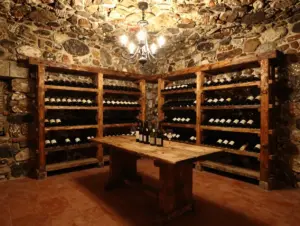
1. The Classic Mahogany Grand Cellar
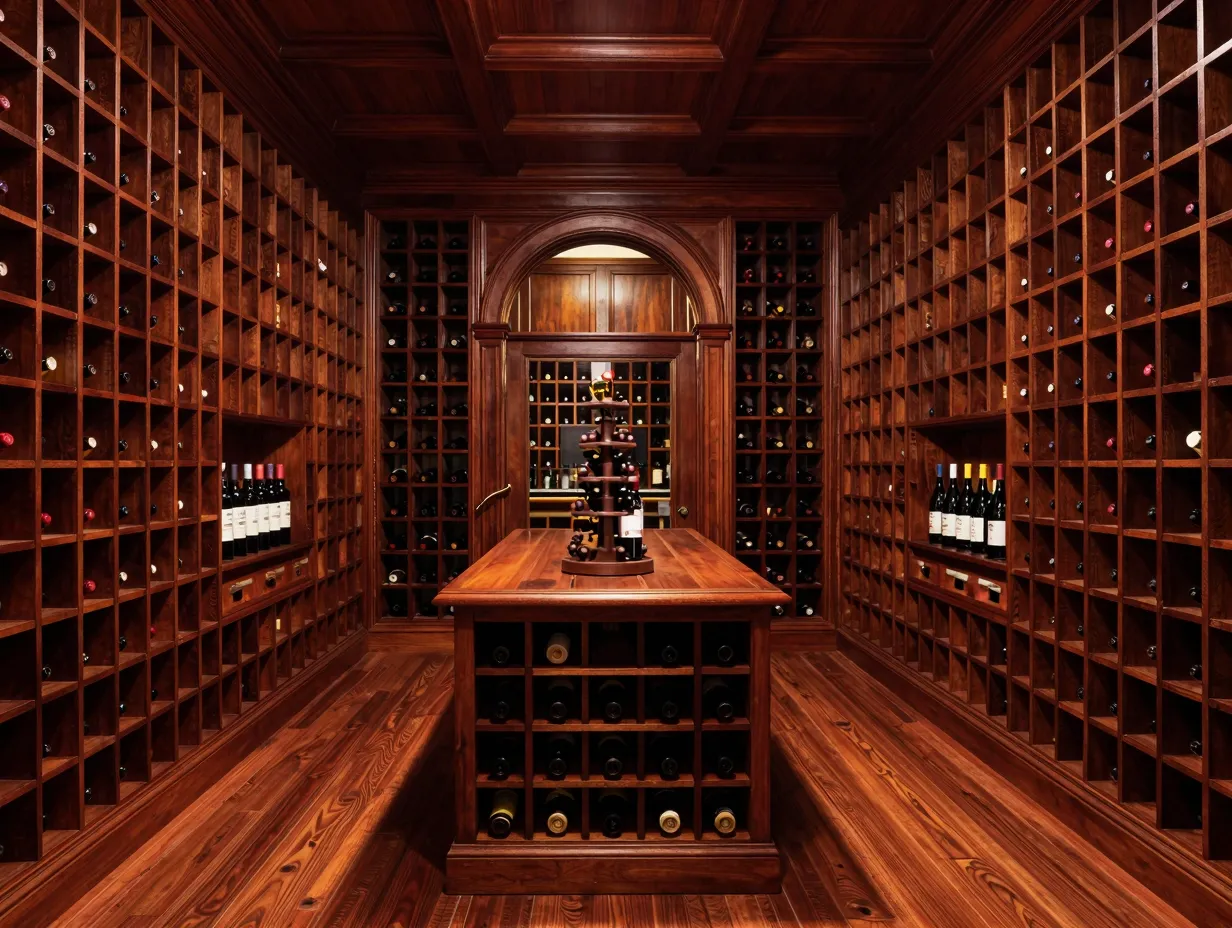
There is a reason mahogany has anchored traditional wine cellar design for generations. Its deep reddish-brown tones deepen with age, and its natural oils resist moisture without chemical treatment [1]. A classic mahogany grand cellar typically features floor-to-ceiling racking on three walls, a central island for display bottles, and a dedicated tasting table.
The layout follows a logical hierarchy: everyday bottles near the door, premium vintages deeper in the room, and showcase bottles at eye level. Arched doorways and coffered ceilings amplify the sense of occasion.
What makes this design work:
- Consistent temperature management due to thick wood mass
- High bottle capacity, often 1,000 or more
- Immediate visual impact for guests
If you are building a forever home or a high-end property, this is the design that commands respect.
2. The Redwood Coastal Retreat Cellar
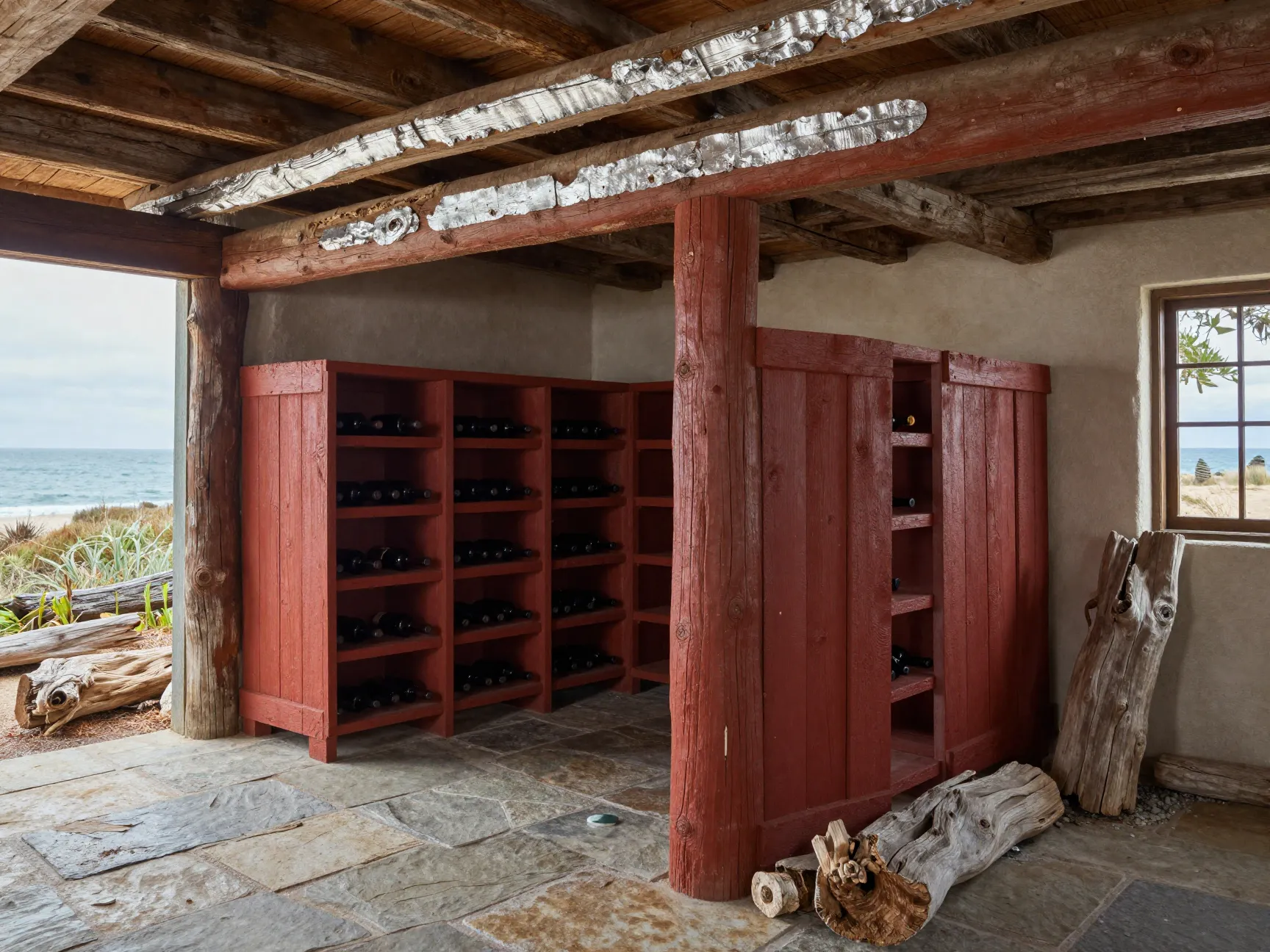
Redwood is the unsung hero of wine cellar materials. Naturally resistant to mold, rot, and insect damage, it thrives in humid coastal environments where other woods would warp or degrade [1]. A redwood coastal retreat cellar leans into its surroundings — think exposed beams, rough-sawn planks, and a palette that echoes driftwood and sea glass.
I once visited a cellar in a beachside property in Northern California where the entire room was built from reclaimed redwood. The smell alone was worth the trip. The wood had silvered slightly at the edges, giving the space a lived-in warmth that no new material could fake.
Design elements to consider:
- Rough-sawn or hand-scraped finishes for texture
- Open racking to allow air circulation
- Natural stone flooring for contrast
This design suits collectors who want their cellar to feel like an extension of the landscape outside.
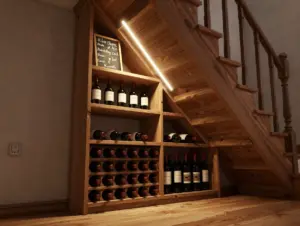
3. The Urban Under-Staircase Oak Cellar
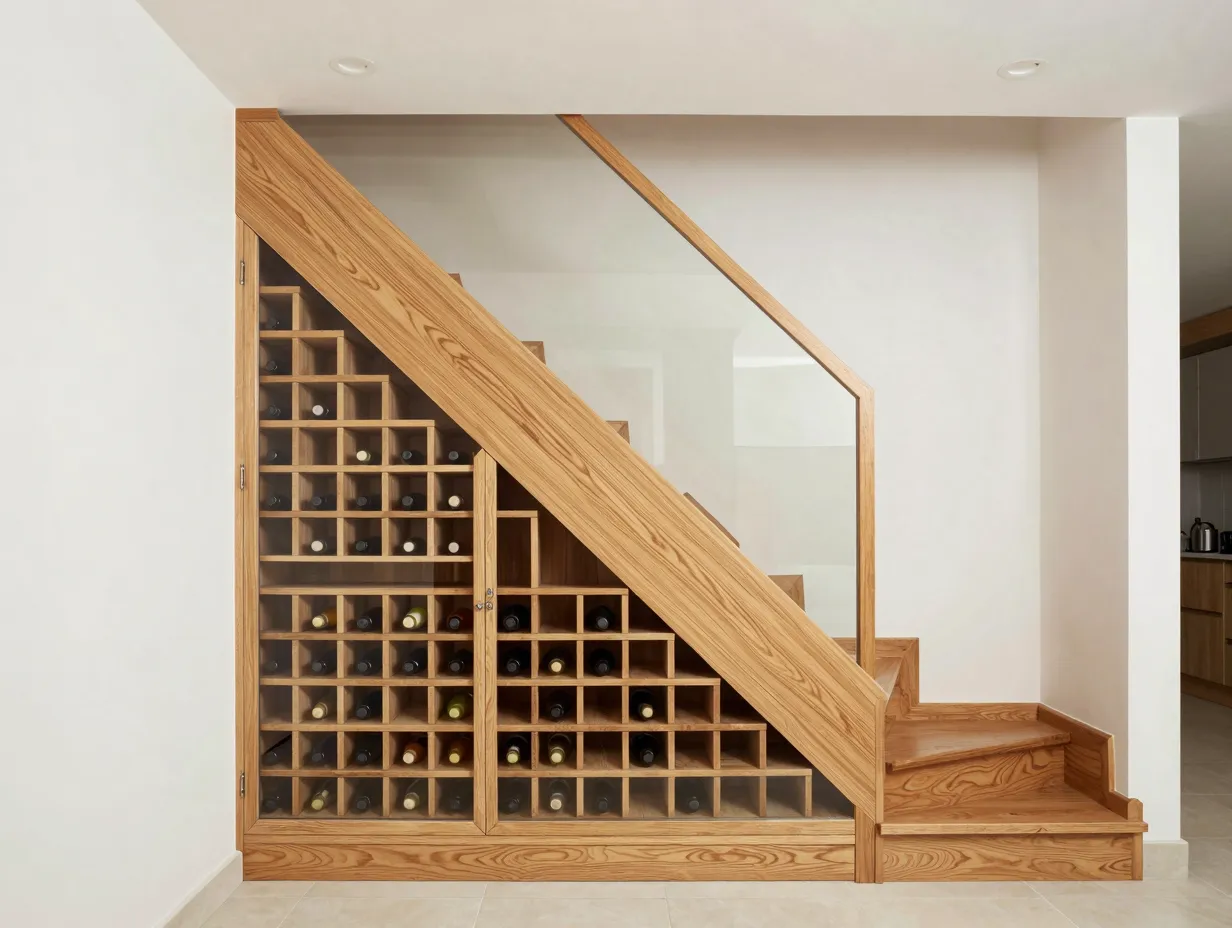
Not every collector has a basement to spare. Space-saving wine cellar designs are gaining significant traction as urban living becomes the norm [4]. The under-staircase oak cellar turns what is typically dead space into a fully functional, visually striking storage solution.
Oak’s tight grain and golden tones make it ideal for compact builds where every detail is visible. Custom-fitted racking that follows the slope of the staircase creates a geometric rhythm that looks intentional rather than improvised.
Why this design resonates with urban collectors:
- Maximizes existing square footage
- No dedicated room required
- Visible from living areas, making it a design feature
A glass panel on the front transforms this from a hidden cupboard into a display case. Passersby see the collection at a glance, which is half the point.
4. The Mixed-Material Walnut and Metal Cellar
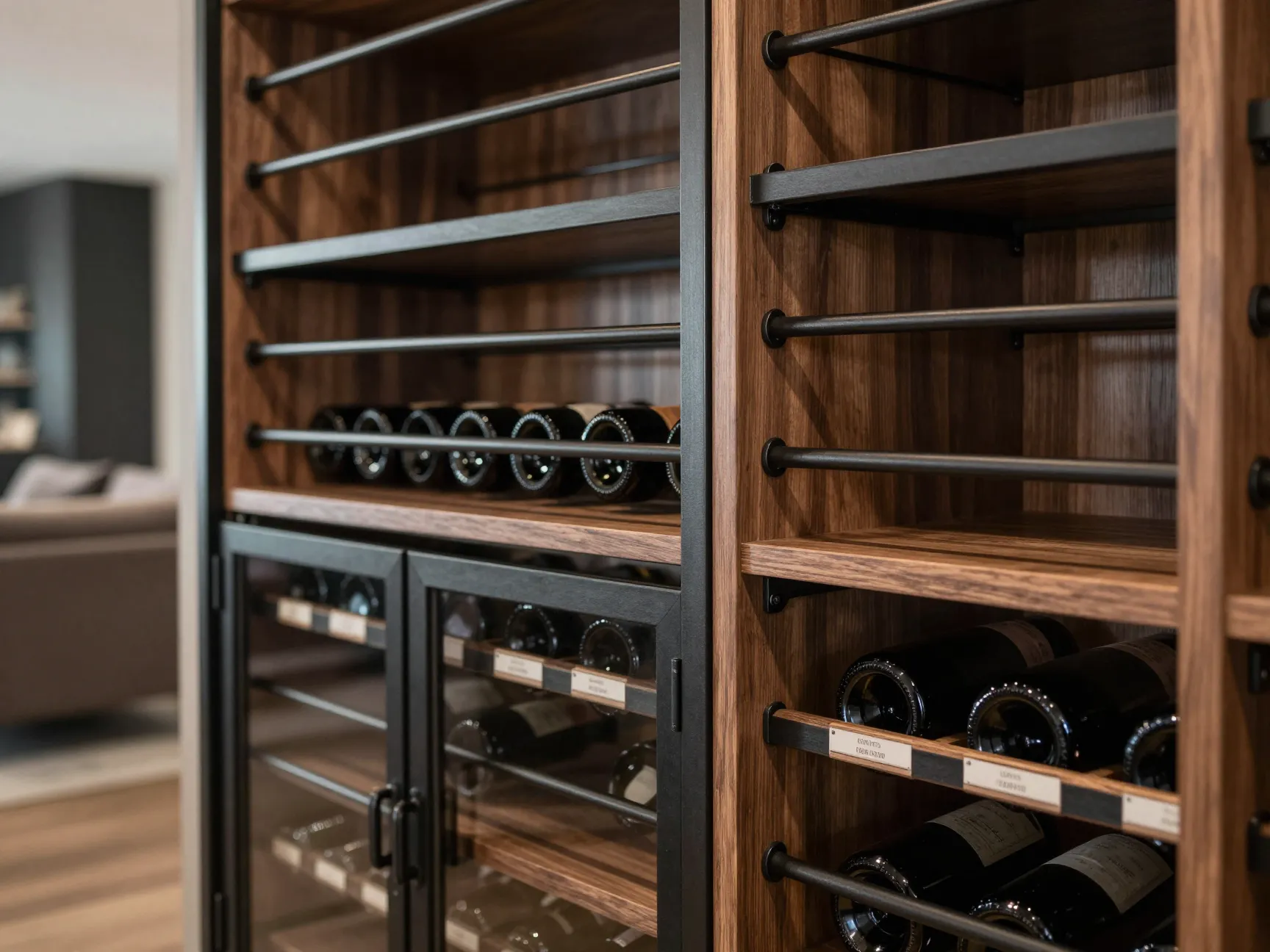
The wine world has always borrowed from art and architecture, and the mixed-material walnut and metal cellar reflects that tradition. Combining warm walnut wood with brushed steel or blackened iron creates a visual tension that feels both industrial and refined [5].
This approach is particularly effective in open-plan homes where the cellar is visible from the kitchen or dining area. The metal accents — think horizontal rails, label-forward display brackets, and slim frame doors — keep the look sharp without sacrificing warmth.
“The most compelling wine cellars are the ones that feel like they were designed for the person who owns them, not for a catalog.”
Contrast combinations that work well:
| Wood | Metal Pairing | Visual Effect |
|---|---|---|
| Walnut | Brushed brass | Warm luxury |
| Walnut | Matte black iron | Industrial edge |
| Oak | Stainless steel | Clean contemporary |
| Mahogany | Aged bronze | Old-world richness |
This design suits collectors who want their cellar to feel current without abandoning the warmth that wood provides [2].
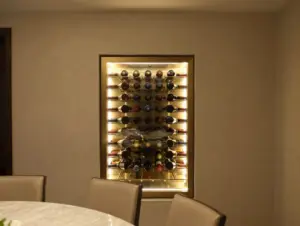
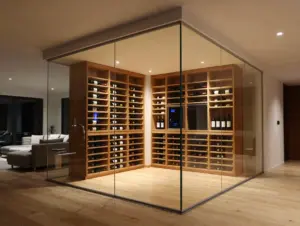
5. The Glass-Enclosed Pine Display Cellar
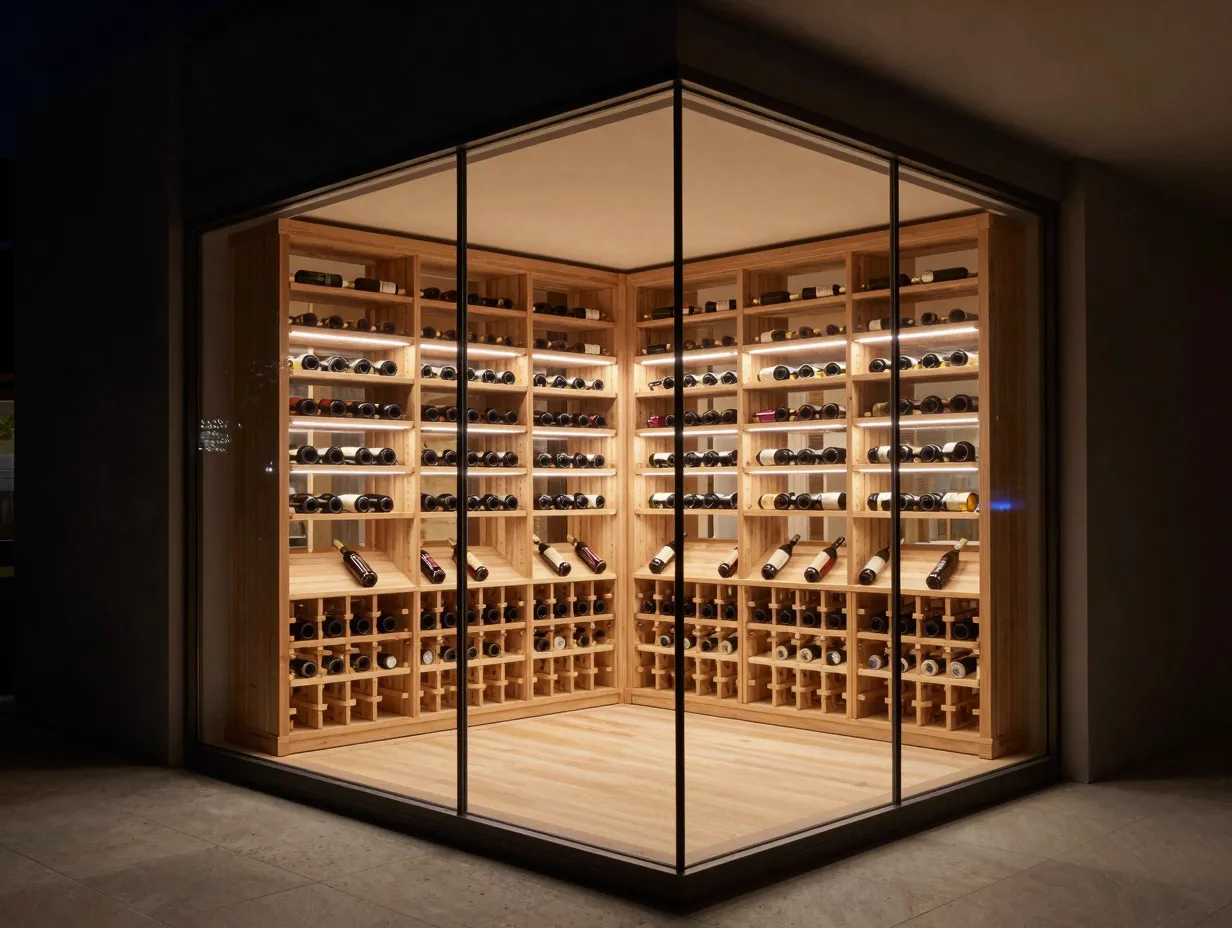
Glass and wood are natural partners in modern wine cellar design. A glass-enclosed pine display cellar uses floor-to-ceiling tempered glass panels to create a climate-controlled room that is fully visible from adjacent living spaces [2]. Pine provides the racking structure — affordable, light in color, and easy to customize.
The transparency serves a dual purpose. It showcases the collection as a design element while allowing the homeowner to monitor bottle levels and organization at a glance. LED strip lighting installed beneath each rack shelf makes the bottles glow like an art installation.
Critical design considerations:
- UV-filtering glass is essential to protect wine from light damage
- Consistent climate control becomes more critical with glass walls
- Orientation matters — avoid south-facing glass in warm climates
This design works beautifully in dining rooms, home offices, and open-plan living spaces where the cellar becomes a conversation piece.
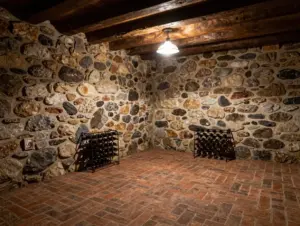
6. The Rustic Reclaimed Wood Farmhouse Cellar
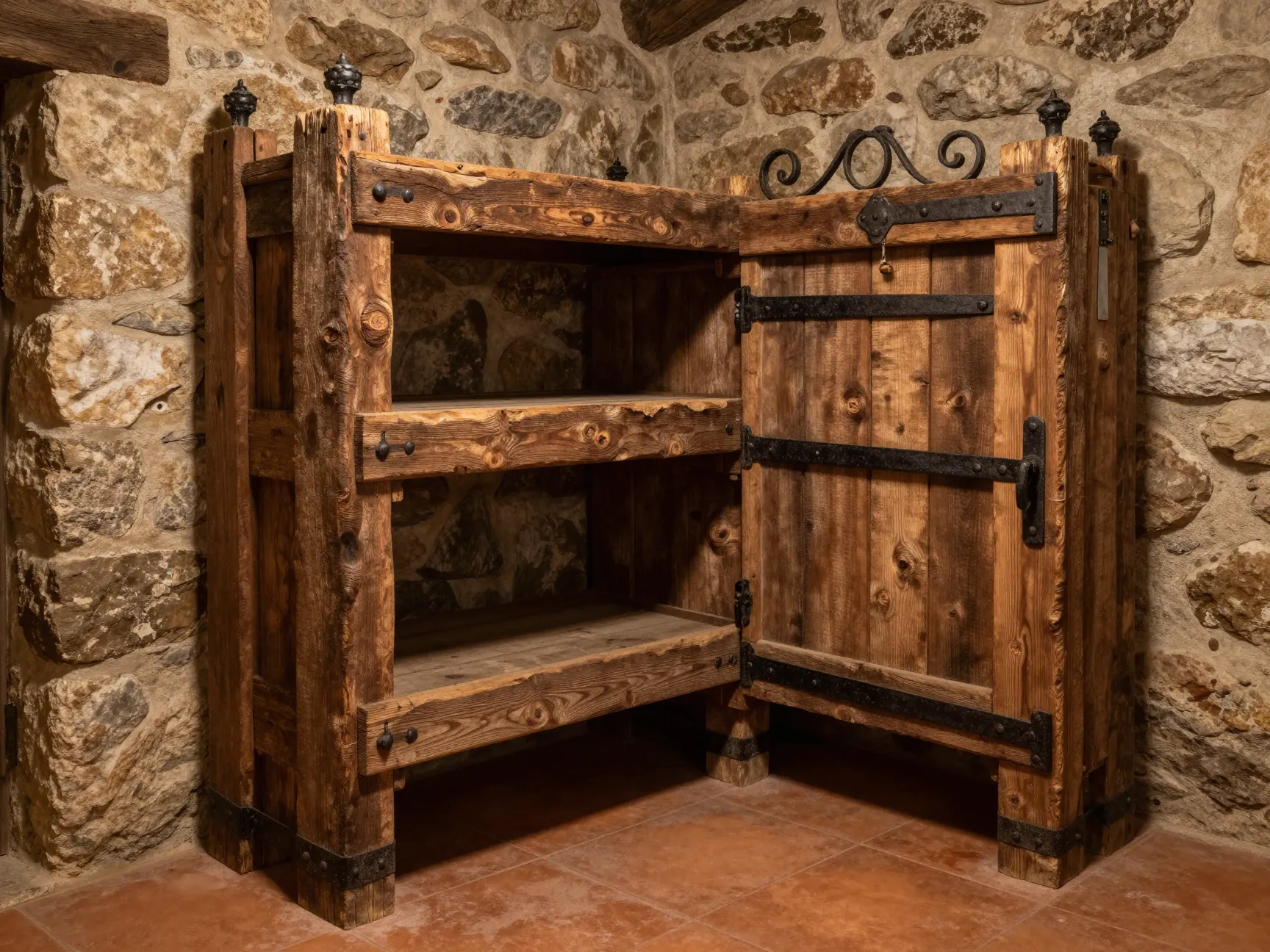
Reclaimed wood carries history in its grain. Barn boards, old-growth timbers, and salvaged factory flooring bring a texture and patina that no new material can replicate. A rustic reclaimed wood farmhouse cellar celebrates imperfection — knots, nail holes, and color variation are features, not flaws.
This design pairs naturally with stone walls, wrought iron hardware, and terracotta or slate flooring. The overall effect is a cellar that feels like it has existed for a century, even if it was built last year.
Sourcing reclaimed wood responsibly:
- Work with certified salvage dealers
- Confirm the wood is free of lead paint and chemical treatment
- Kiln-dry reclaimed wood before installation to prevent warping
The farmhouse cellar is a strong choice for collectors who value authenticity and want their space to feel rooted in something larger than trend cycles.
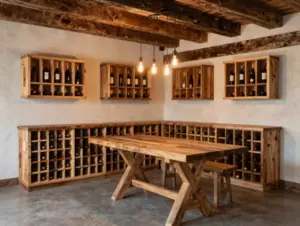
7. The Integrated Tasting Room and Oak Cellar
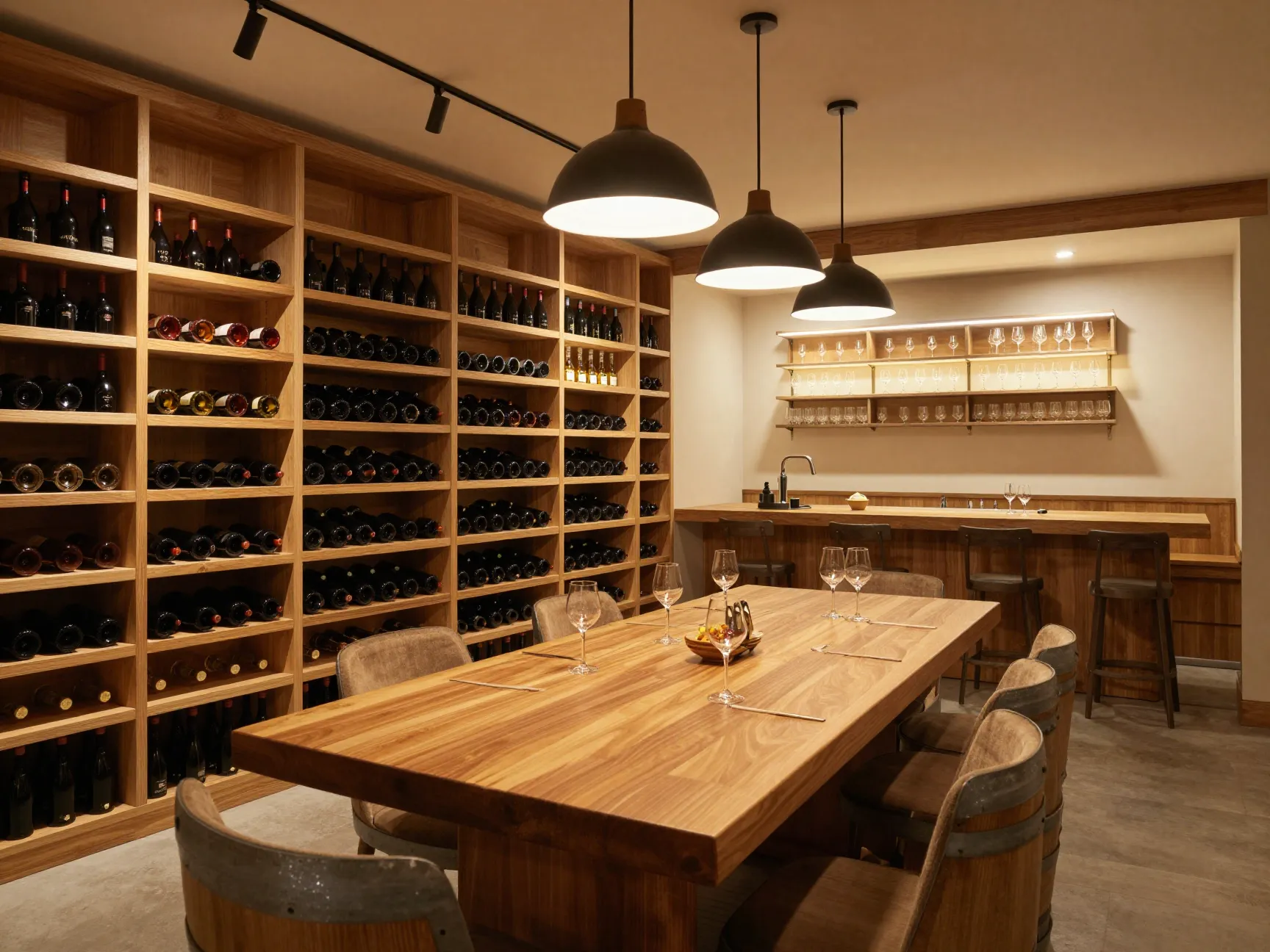
The most forward-thinking wine cellar designs blur the line between storage and social space. An integrated tasting room and oak cellar combines a full racking system with a dedicated seating area, creating a room that functions as both archive and gathering place [5].
Oak is the natural choice for this design because of its warmth and versatility. A long oak tasting table anchored by barrel-style chairs, surrounded by floor-to-ceiling bottle storage, creates an environment that encourages lingering. Layered lighting — ambient overhead, LED accent beneath shelves, and pendant lights over the table — allows the mood to shift from functional to atmospheric [5].
Elements that complete the tasting room experience:
- A small wine refrigerator for short-term serving temperature management
- Glassware storage integrated into the racking system
- A chalkboard or digital display for tasting notes
I have seen this design transform a weekend at home into something that rivals a winery visit. When the space invites you to stay, you drink more thoughtfully.
8. The Right-Sized Custom Hardwood Cellar for Curated Collections
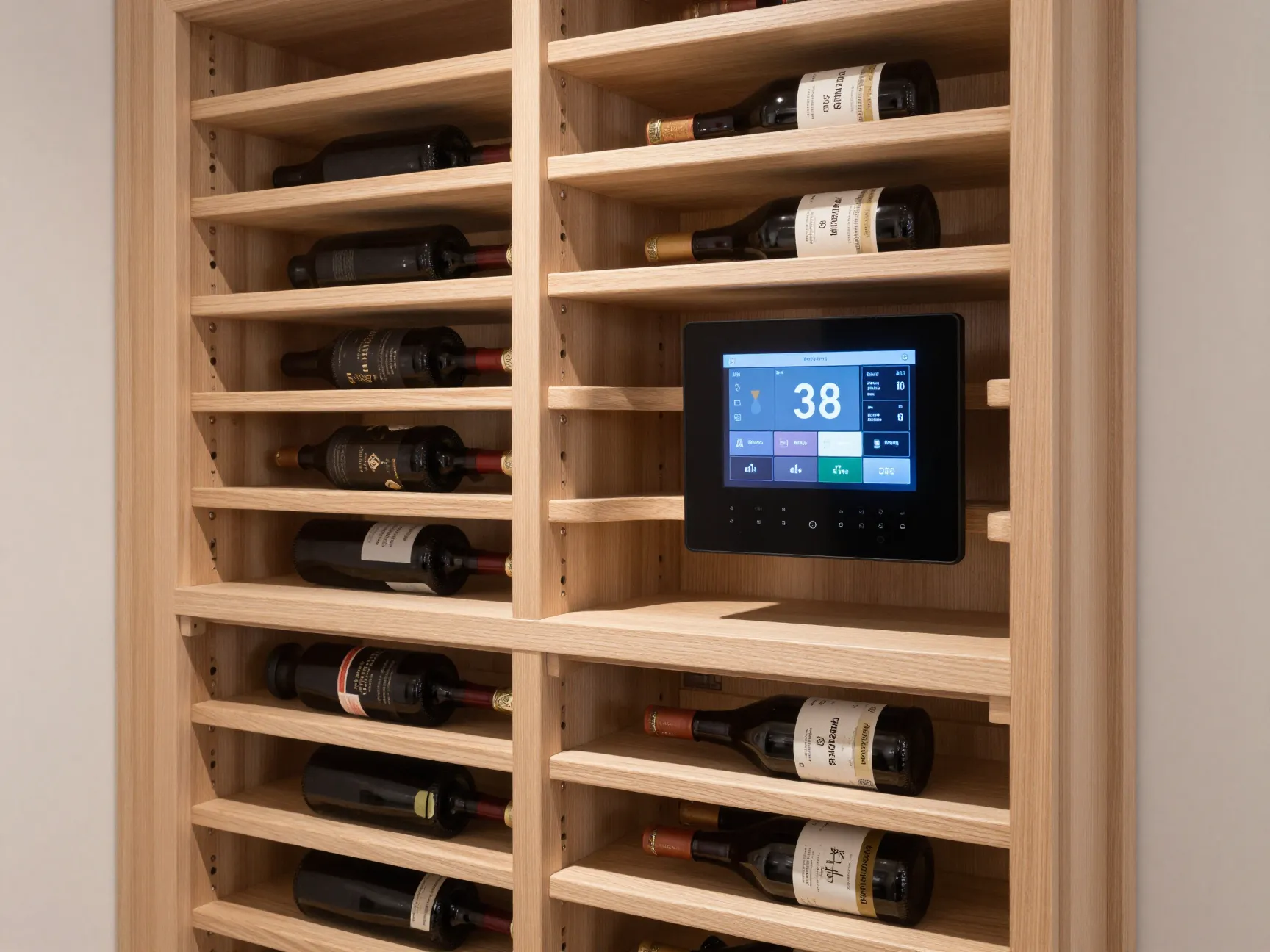
The final design in this exploration of 8 warm and inviting wood wine cellar designs to showcase your collection is perhaps the most personal: the right-sized custom hardwood cellar built specifically for a curated collection [6].
The industry is shifting away from the “bigger is better” mentality. Collectors are increasingly focused on quality over quantity, building cellars that hold exactly what they need — no more, no less [6]. A custom hardwood cellar might hold 200 bottles or 500, but every slot is intentional.
Digital inventory and climate monitoring systems integrate seamlessly into these builds, allowing collectors to track each bottle’s provenance, purchase date, and optimal drinking window from a smartphone [4]. The wood species, finish, and racking configuration are chosen to reflect the collector’s specific tastes rather than a generic template.
Questions to ask before building a right-sized cellar:
- How many bottles do I currently own, and how many do I realistically plan to add per year?
- Do I prefer label-forward display or traditional horizontal storage?
- What is my primary wood preference — light and modern, or dark and traditional?
- Will I need a tasting area, or is this purely for storage?
Eco-friendly climate control systems are increasingly standard in these builds, maintaining optimal temperature and humidity while reducing energy consumption [2]. For collectors who care about sustainability as much as style, this is a meaningful consideration.
How to Choose the Right Wood Wine Cellar Design for Your Space
Selecting from the 8 warm and inviting wood wine cellar designs to showcase your collection requires honest self-assessment. The most beautiful cellar in the world is useless if it does not fit your space, budget, or lifestyle.
A practical decision framework:
- Measure your available space before falling in love with a design
- Determine your bottle count now and project five years forward
- Set a realistic budget that includes climate control, lighting, and installation
- Decide whether the cellar is primarily functional, primarily decorative, or both
- Choose a wood species that complements your existing interior palette
Natural materials like wood and stone continue to dominate collector preferences because they align with the organic nature of wine itself [3]. There is a coherence to storing a living product in a material that was once alive.
Common mistakes to avoid:
- Underestimating climate control costs — this is not an area to cut corners
- Choosing wood purely for aesthetics without considering moisture resistance
- Building too large and leaving the cellar looking sparse for years
- Ignoring lighting, which dramatically affects both function and ambiance
The Role of Lighting and Technology in Modern Wood Wine Cellars
Even the most traditional wood cellar benefits from thoughtful lighting and modern technology. Layered LED accent lighting beneath each rack shelf creates a warm glow that highlights bottle labels and adds depth to the space [5]. Dimmable systems allow the same room to function as a working storage area during the day and an atmospheric tasting space in the evening.
Digital monitoring systems track temperature and humidity in real time, sending alerts to a smartphone if conditions drift outside the optimal range [4]. For collectors with significant investments on their shelves, this peace of mind is invaluable.
The integration of these technologies does not have to compromise the warmth of a wood cellar. Slim-profile sensors, concealed wiring, and recessed displays keep the tech invisible while the wood and bottles remain the visual focus.
Conclusion
The 8 warm and inviting wood wine cellar designs to showcase your collection covered in this article represent a spectrum of possibilities — from grand traditional builds in mahogany to compact urban conversions in oak, from rustic reclaimed farmhouse spaces to sleek mixed-material contemporary rooms. What unites them is the central role of wood, a material that brings warmth, durability, and a deep sense of authenticity to wine storage.
Actionable next steps to move forward:
- Audit your current collection and project your growth over the next three to five years
- Identify the space in your home most suitable for conversion — basement, under-staircase, or dedicated room
- Research local wine cellar designers and request portfolio examples that match your preferred style
- Prioritize climate control in your budget before aesthetics — the wine must be protected first
- Choose a wood species that suits your climate, your collection size, and your existing interior design
- Consider integrating LED accent lighting and a digital monitoring system from the start, even in a modest build
The right wood wine cellar is not a luxury reserved for collectors with vast resources. It is a thoughtful investment in the bottles you love and the experiences they make possible. Start with the design that excites you most, build it well, and let it grow with your collection.
References
[1] Traditional Wine Cellars (Classic Wood) – https://www.theprestigecellars.com/signature-styles/traditional-wine-cellars-%28classic-wood%29?utm_source=openai
[2] The Complete Guide To Custom Wine Cellar Design Trends For 2026 – https://baroque-design.com/the-complete-guide-to-custom-wine-cellar-design-trends-for-2026/?utm_source=openai
[3] Wine Cellar Design Trends – https://www.wineenthusiast.com/basics/buying-and-collecting/wine-cellar-design-trends/?utm_source=openai
[4] State Of Wine Cellars 2026 Industry Trends Market Data Design Insights – https://www.genuwinecellars.com/state-of-wine-cellars-2026-industry-trends-market-data-design-insights/?utm_source=openai
[5] This Years Wine Cellar Design Trends – https://moderncellars.com/blogs/inspiration/this-years-wine-cellar-design-trends?utm_source=openai
[6] Wine Cellar Design Trends For 2026 Curating The Future Of Wine Storage And Style – https://vineyardwinecellars.com/blogs/news/wine-cellar-design-trends-for-2026-curating-the-future-of-wine-storage-amp-style-nbsp?utm_source=openai