8 Foolproof Red Wine Steak Sauce Recipes That Turn Dinner Into a Feast
A properly made red wine sauce can increase the perceived quality of a home-cooked steak by as much as a full restaurant tier — and yet fewer than 30% of home cooks attempt one, mostly out of fear of getting it wrong. That fear is unfounded. These 8 Foolproof Red Wine Steak Sauce Recipes That Turn Dinner Into a Feast are built on simple techniques, widely available ingredients, and the kind of reliable results that make guests assume you trained in a French kitchen.
Disclosure: This post contains affiliate links. As an Amazon Associate, we earn from qualifying purchases, and at no extra cost to you.
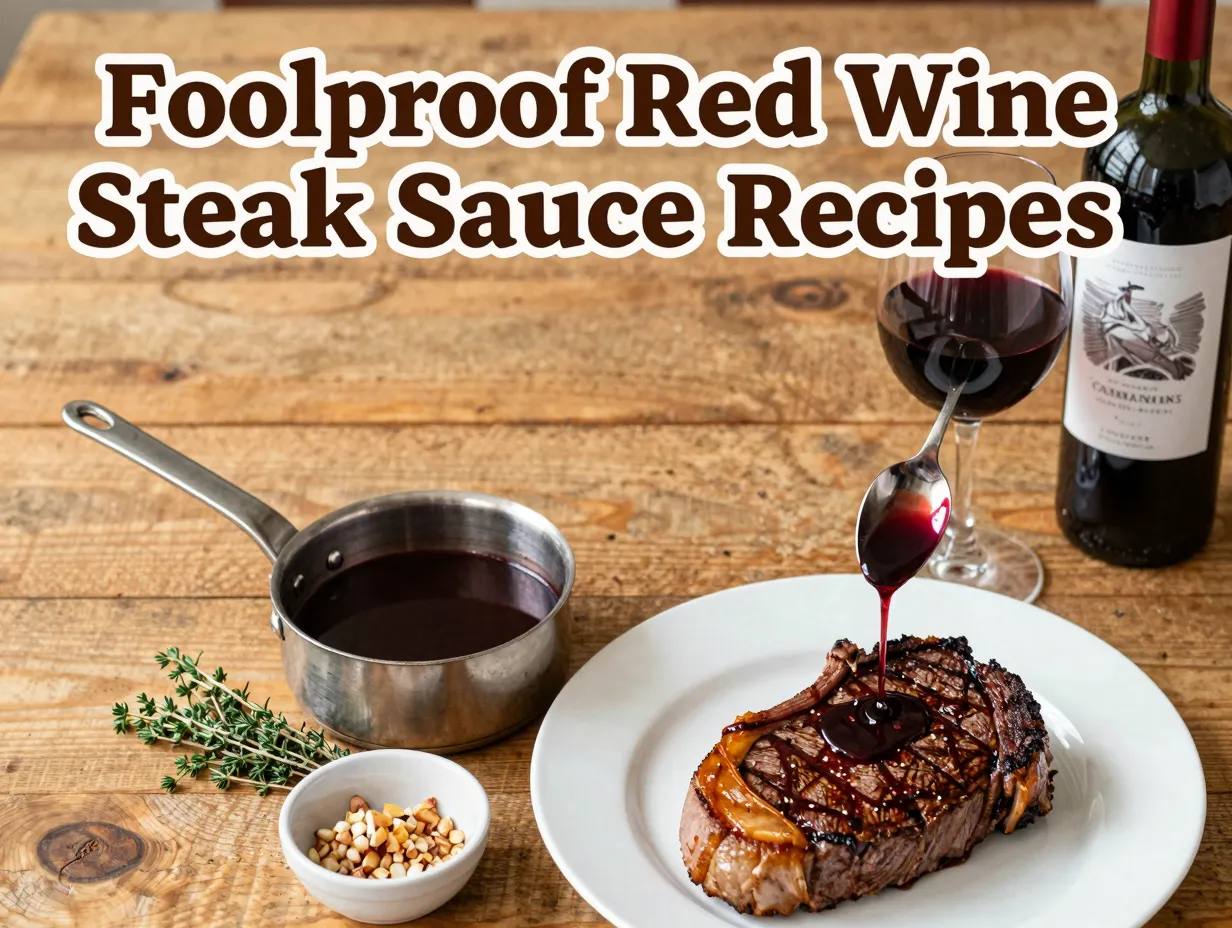
I have spent years testing red wine sauces on everything from budget supermarket sirloin to dry-aged ribeye, and the lesson is always the same: the sauce does the heavy lifting. Whether you are cooking for a Tuesday night dinner or a special occasion in 2026, this guide gives you eight distinct, proven recipes that cover every skill level and occasion.
Key Takeaways
- Red wine sauces range from quick pan sauces ready in under 10 minutes to slow-cooked French classics like Bordelaise that reward patience.
- The quality of the wine matters, but you do not need an expensive bottle — any drinkable, dry red wine works well.
- Deglazing the pan after searing steak is the single most important technique for building deep, layered flavor.
- Butter, shallots, and fresh herbs are the three supporting ingredients that appear across nearly every recipe in this collection.
- Each sauce in this list can be made ahead and reheated gently, making them ideal for dinner parties.
Why Red Wine and Steak Are a Perfect Match
Before diving into the recipes themselves, it helps to understand why red wine works so well with beef. Red wine contains tannins and acids that cut through the fat in steak, balancing richness and brightening every bite. When you cook wine down in a pan, the alcohol evaporates and the fruit, earth, and mineral notes concentrate into something far more complex than the wine itself.
The fond — those browned bits left in the pan after searing a steak — dissolves into the wine during deglazing, adding a savory, meaty depth that no store-bought sauce can replicate [4]. This is the foundation of nearly every recipe below.
What wine should you use?
| Wine Type | Flavor Profile | Best Paired With |
|---|---|---|
| Cabernet Sauvignon | Bold, tannic, dark fruit | Ribeye, T-bone |
| Merlot | Soft, plummy, medium body | New York strip, sirloin |
| Pinot Noir | Light, earthy, bright acidity | Filet mignon, tenderloin |
| Bordeaux blend | Complex, structured | Any premium cut |
| Côtes du Rhône | Spicy, rustic, full-bodied | Flank steak, skirt steak |
A general rule: never cook with a wine you would not drink. You do not need to open a prized bottle, but avoid anything labeled “cooking wine,” which often contains added salt and preservatives that muddy the final flavor [5].
The 8 Foolproof Red Wine Steak Sauce Recipes That Turn Dinner Into a Feast
These recipes are organized from simplest to most involved, so you can match your available time and skill level to the right sauce.
1. Classic Red Wine Pan Sauce
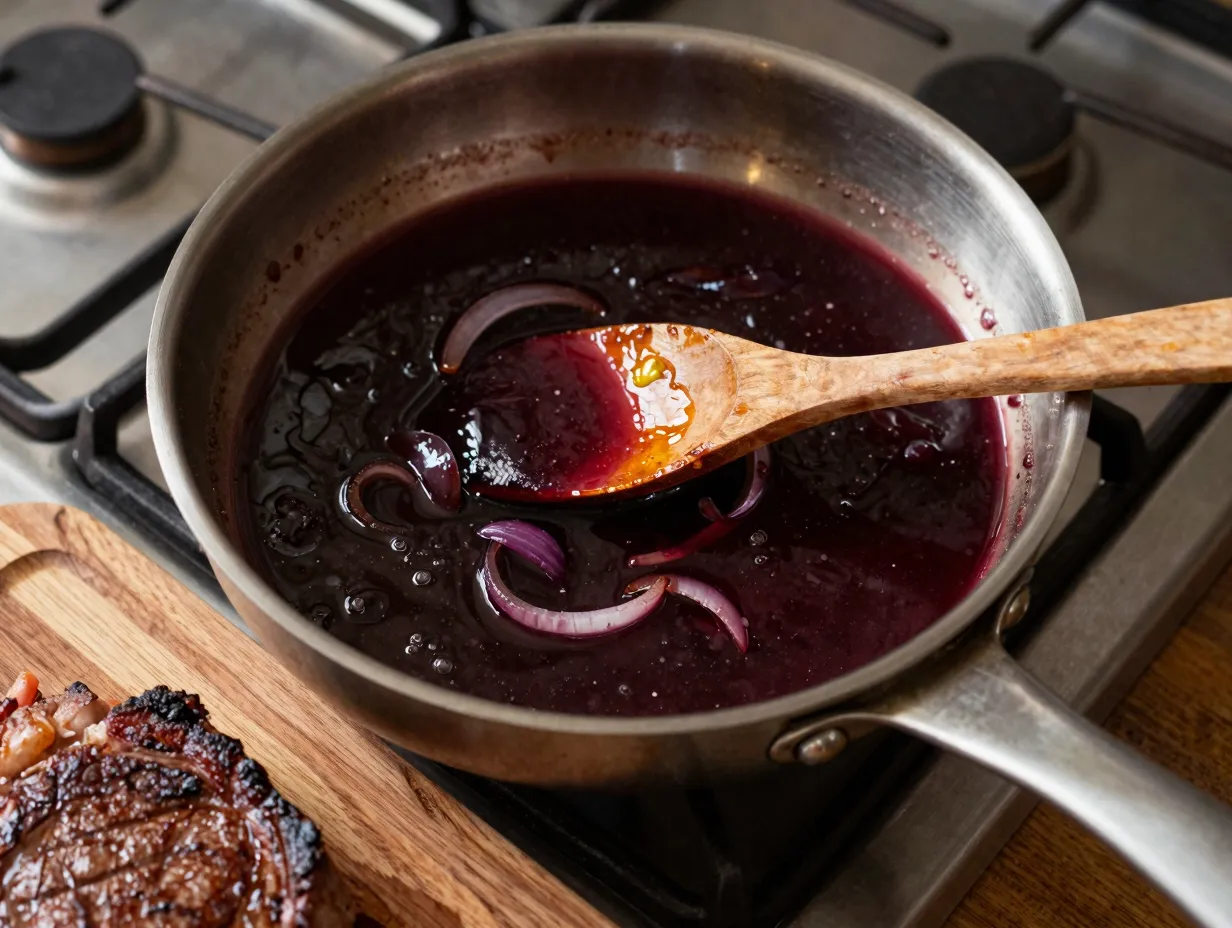
Time: 8 minutes | Skill Level: Beginner
This is the sauce I make on weeknights when I want something extraordinary with minimal effort. After searing your steak and setting it aside to rest, leave the pan on medium heat. Add one finely minced shallot and cook for 60 seconds. Pour in half a cup of dry red wine and scrape up every browned bit from the pan bottom. Let the wine reduce by half, then whisk in a teaspoon of Dijon mustard and two tablespoons of cold butter cut into cubes. Season with salt and pepper, and you are done [4].
Key ingredients:
- 1/2 cup dry red wine
- 1 shallot, minced
- 1 tsp Dijon mustard
- 2 tbsp cold unsalted butter
- Salt and black pepper
The Dijon acts as an emulsifier, helping the butter bind smoothly into the wine without breaking. This is the technique that separates a glossy, restaurant-style sauce from a thin, greasy one.
2. Red Wine Reduction Sauce
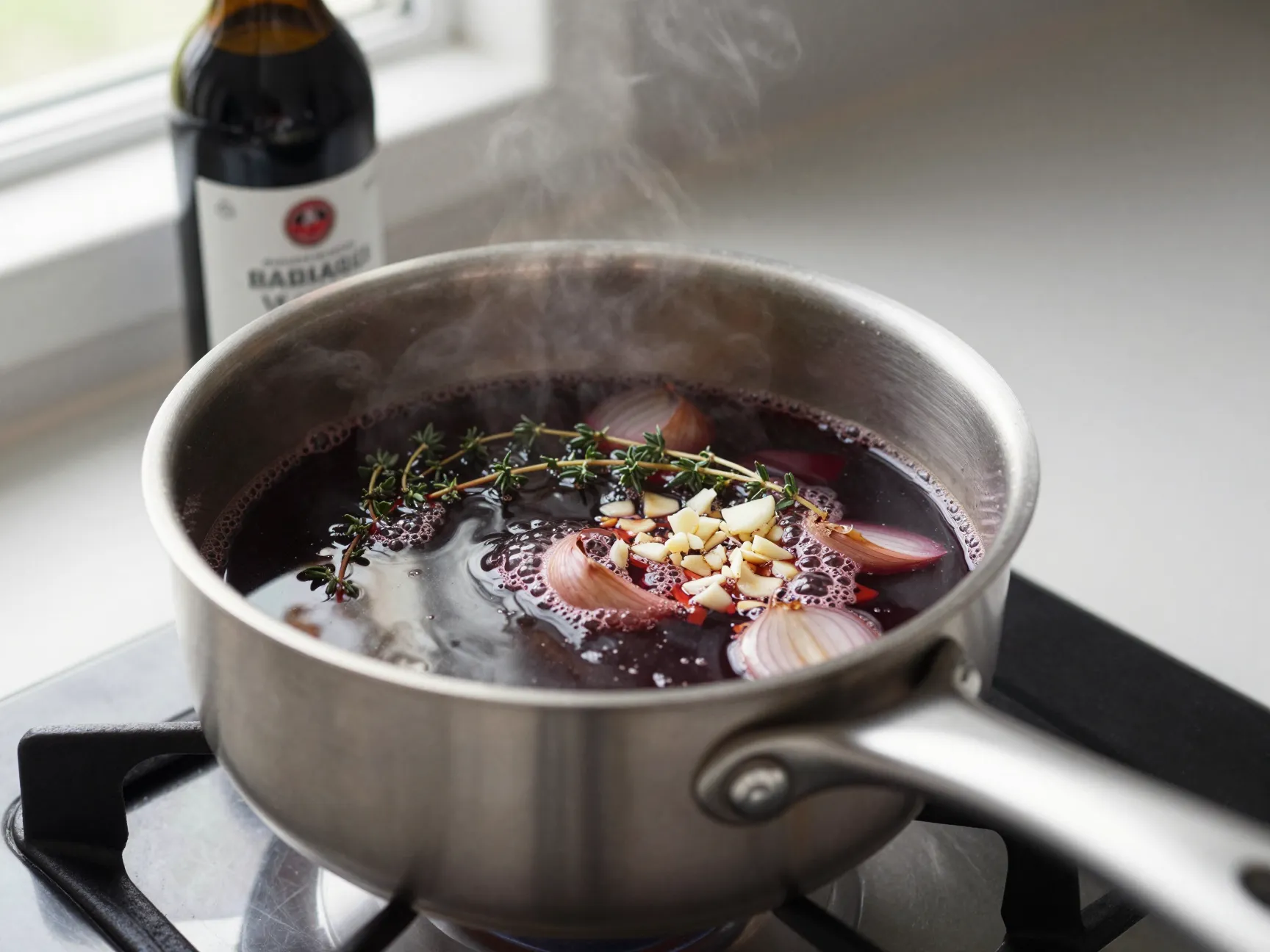
Time: 20 minutes | Skill Level: Beginner to Intermediate
A red wine reduction is a syrupy, concentrated sauce made by simmering wine with aromatics until it thickens naturally. Combine one cup of red wine with two minced garlic cloves, one shallot, a sprig of fresh thyme, and a tablespoon of balsamic vinegar in a small saucepan. Bring to a boil, then reduce to a steady simmer. Cook until the liquid reduces to about a third of its original volume. Swirl in two tablespoons of butter at the end, strain, and serve [5].
“The magic of a reduction is patience. Give it time, and the wine transforms from something sharp and raw into something silky and profound.”
This sauce works beautifully over filet mignon or a New York strip, where its concentrated flavor does not compete with a heavily marbled cut [2].
Pro tip: Add a tablespoon of beef stock or demi-glace to the reduction for extra body without additional cooking time.
3. Red Wine Jus
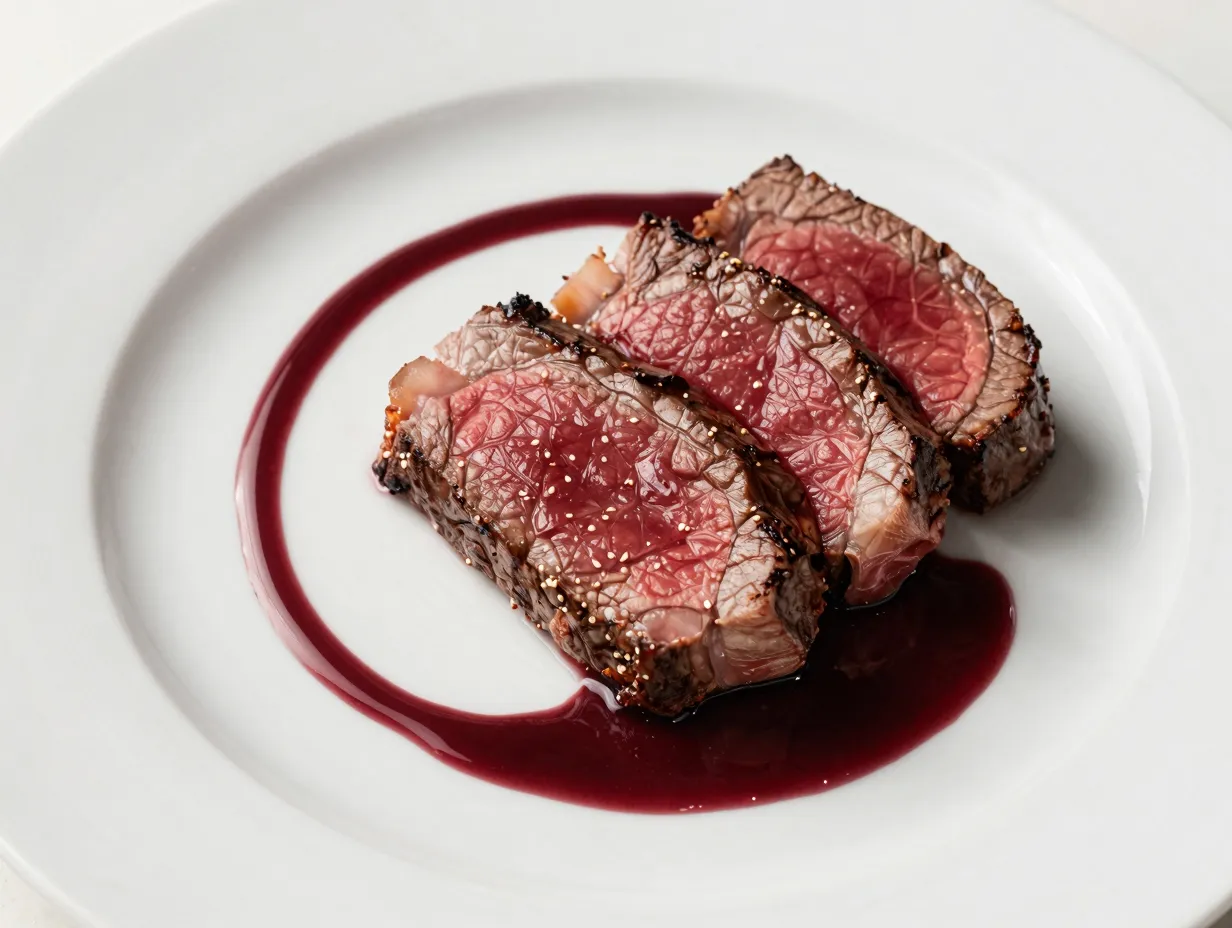
Time: 30 minutes | Skill Level: Intermediate
A jus is lighter than a reduction but more refined than a pan sauce. The classic French version combines red wine with port wine and shallots, producing a thin but intensely flavored liquid that pools elegantly around sliced steak [1].
Start by sweating three minced shallots in butter over low heat until completely soft, about 8 minutes. Add half a cup of port wine and reduce by half. Add one cup of red wine and one cup of good beef stock. Simmer gently for 15 to 20 minutes. Season, strain through a fine mesh sieve, and finish with a small knob of cold butter for sheen.
What makes a jus different from a sauce?
- A jus is thinner and relies on natural gelatin from stock for body
- It is never thickened with flour or cornstarch
- It is strained for a clear, refined appearance
- The port adds a subtle sweetness that balances the wine’s tannins
This is the sauce I serve when I want to impress without overwhelming the flavor of a premium cut.
4. Bordelaise Sauce
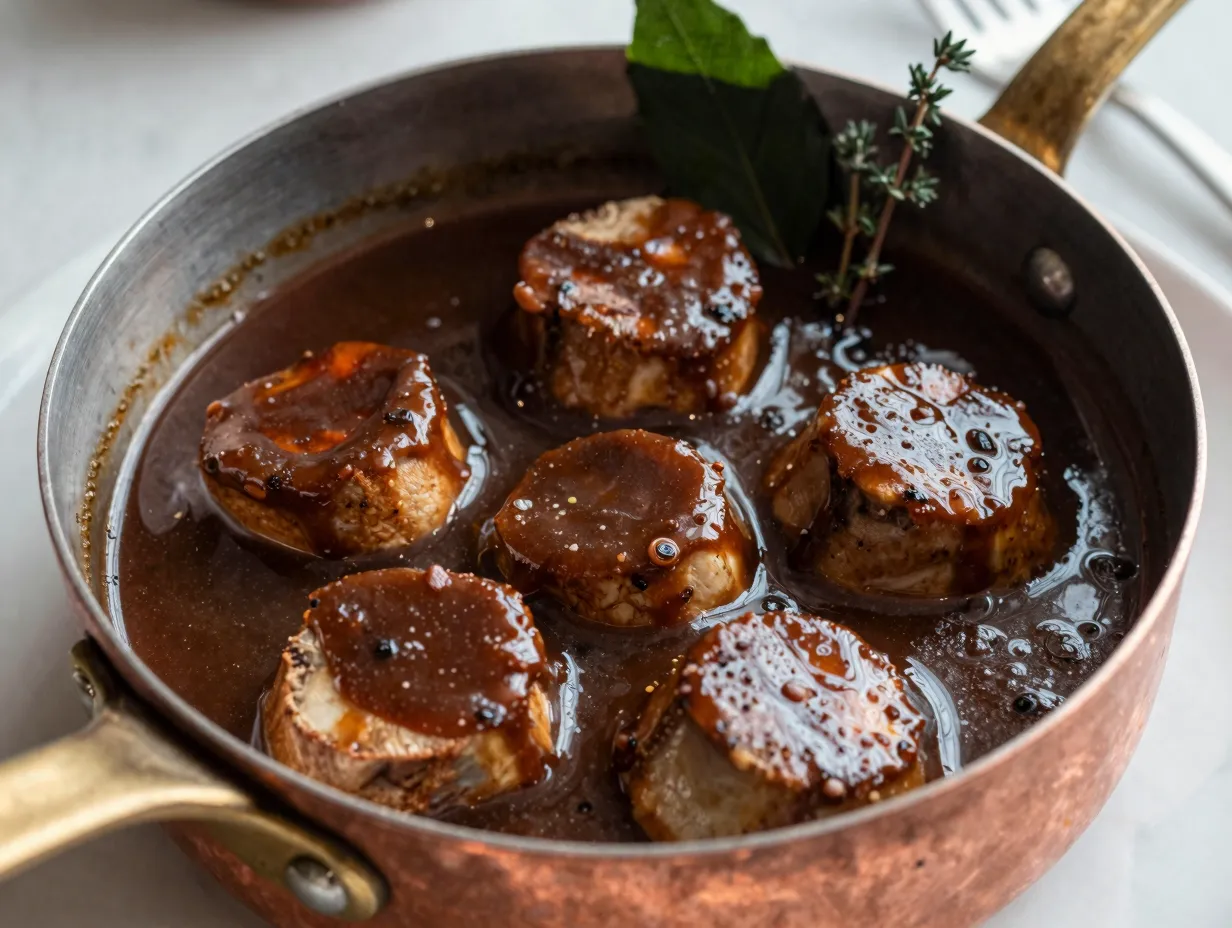
Time: 45 minutes | Skill Level: Intermediate
Bordelaise is the grand French classic from the Bordeaux wine region, and it earns its reputation. This sauce uses bone marrow, shallots, thyme, bay leaf, and a full cup of Bordeaux-style red wine, all reduced and finished with a rich beef stock [3].
Begin by combining one cup of red wine, four minced shallots, a bay leaf, and a sprig of thyme in a saucepan. Reduce the wine until only about three tablespoons remain — this is called a wine glaze. Add one cup of beef demi-glace or rich beef stock and simmer for 15 minutes. Strain, then whisk in one tablespoon of butter. For the traditional finish, poach small rounds of bone marrow in salted water for two minutes and float them in the finished sauce.
Bordelaise at a glance:
| Component | Purpose |
|---|---|
| Bordeaux red wine | Structure and fruit depth |
| Shallots | Savory sweetness |
| Thyme and bay leaf | Herbal complexity |
| Demi-glace | Body and richness |
| Bone marrow | Luxurious, silky finish |
The bone marrow is optional but transformative. Even without it, this sauce is one of the finest things you can put on a grilled steak [3].
5. Buttery Herbed Red Wine Sauce
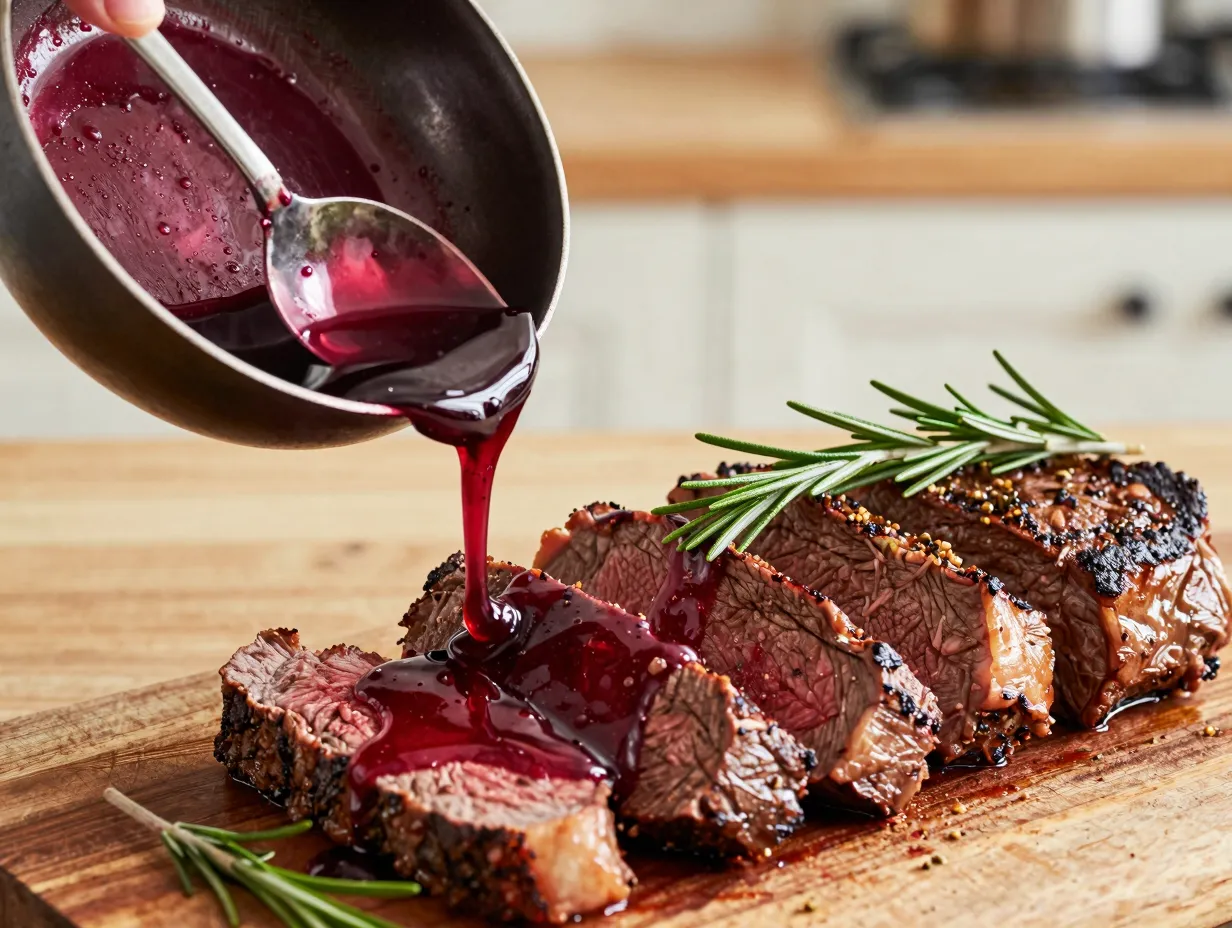
Time: 15 minutes | Skill Level: Beginner
This recipe leans into butter and fresh herbs to create something that feels indulgent without being complicated. It is the sauce from The Kitchn’s popular steak recipe, which features tender steak slices served with a drizzle of buttery, herby red wine sauce [7].
After searing your steak, deglaze the pan with half a cup of red wine. Add a minced garlic clove and reduce the wine by half. Lower the heat and whisk in three tablespoons of cold butter, one piece at a time, until the sauce is glossy and thick. Stir in a tablespoon of fresh chopped rosemary or thyme. Taste and adjust salt.
The technique of adding cold butter piece by piece — called “mounting” in French cooking — is what gives this sauce its velvety texture. Never let the pan get too hot during this step, or the butter will separate.
6. Simple Red Wine Steak Sauce with Garlic
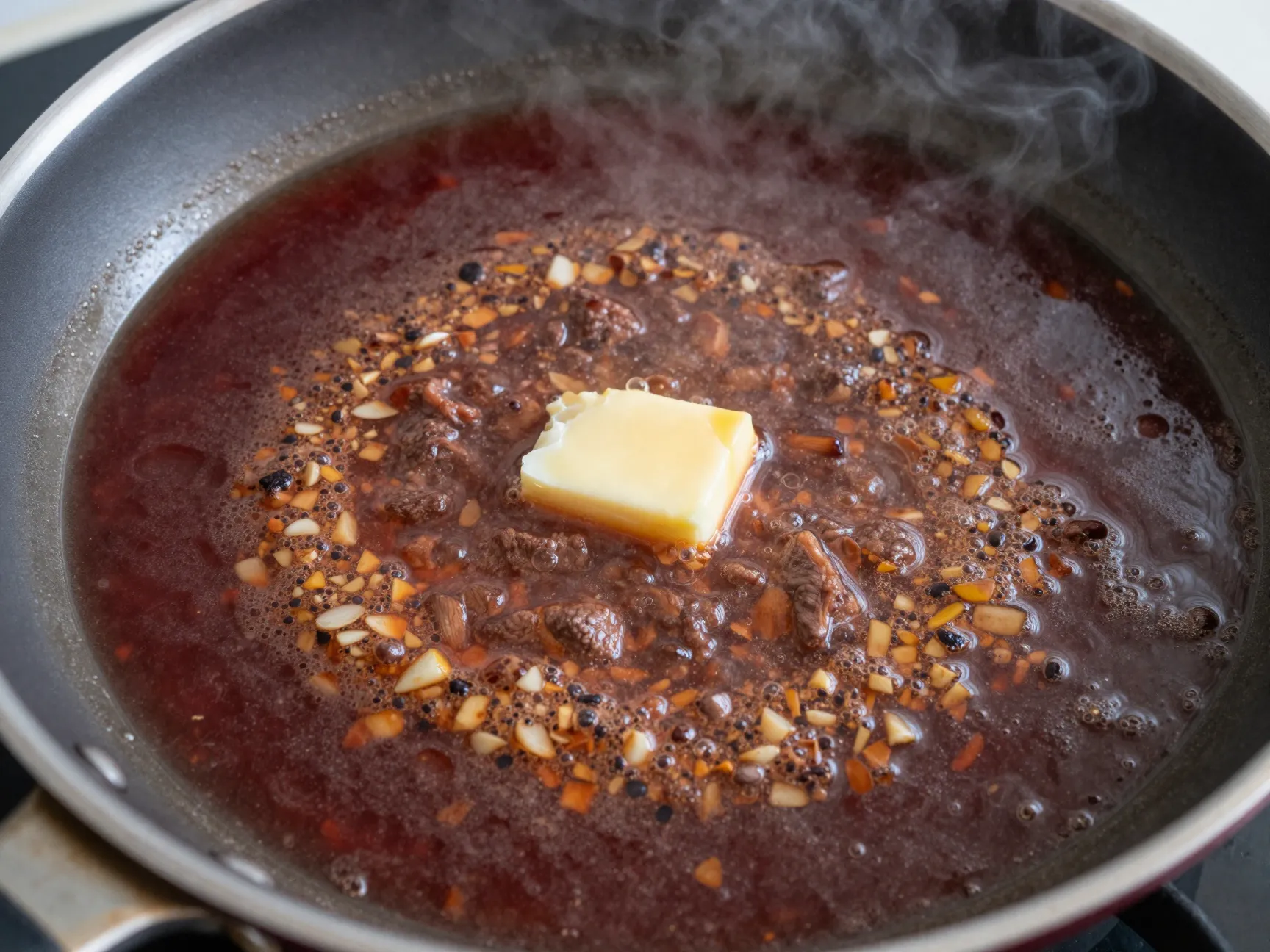
Time: 12 minutes | Skill Level: Beginner
Sometimes you want a sauce that is rich and delicious without requiring any special techniques or hard-to-find ingredients. This recipe from Eating on a Dime delivers exactly that [6].
Sauté three minced garlic cloves in a tablespoon of butter over medium heat for one minute. Add half a cup of red wine and half a cup of beef broth. Bring to a boil and reduce by half, about 8 minutes. Stir in a teaspoon of Worcestershire sauce, a pinch of sugar, salt, and pepper. Finish with a tablespoon of butter.
Why this works for beginners:
- No straining required
- No special equipment needed
- Ready before your steak finishes resting
- Works with any dry red wine
This is the sauce I recommend to anyone who has never made a wine sauce before. It builds confidence and tastes genuinely impressive over a simple sirloin or roast beef.
7. Red Wine and Mushroom Sauce
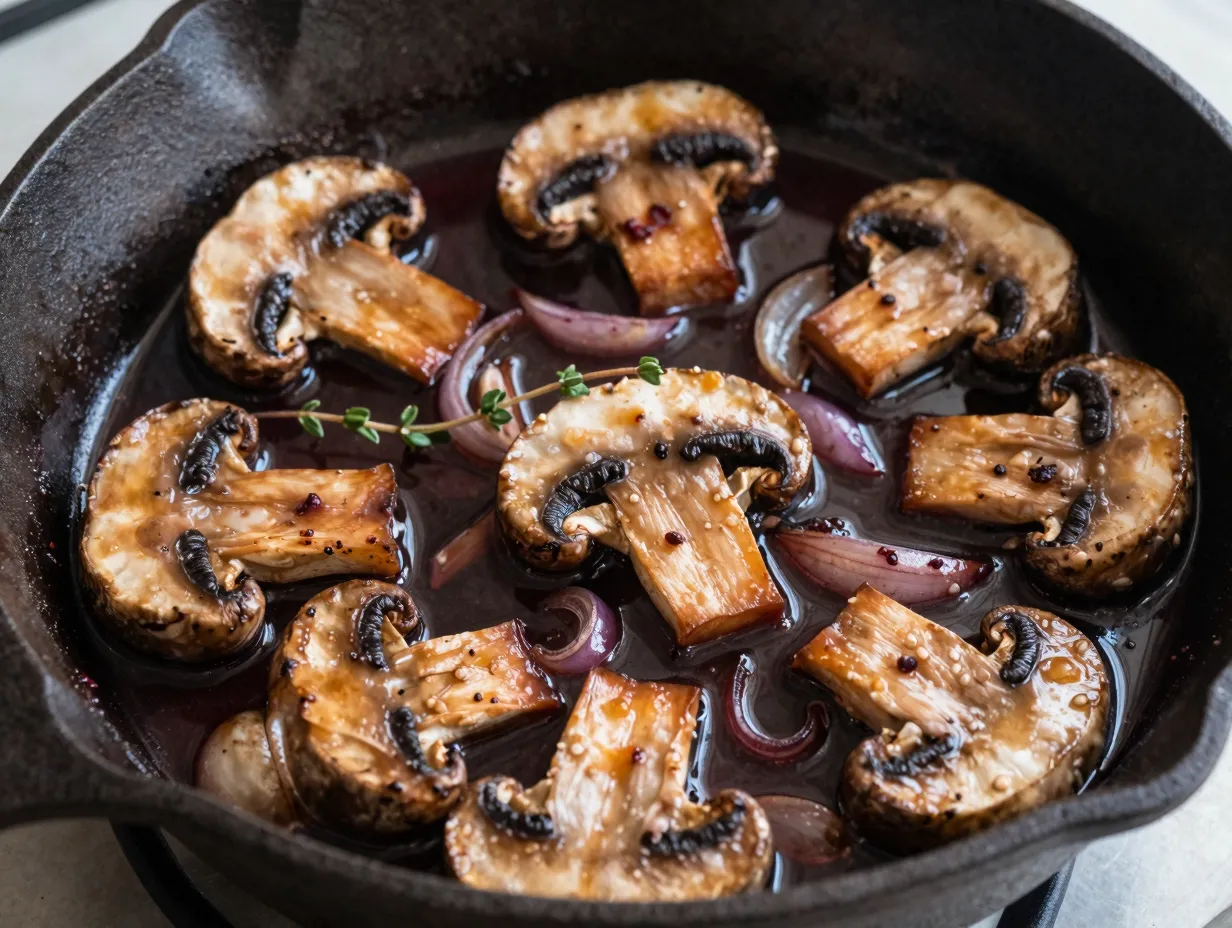
Time: 25 minutes | Skill Level: Intermediate
Mushrooms and red wine share earthy, umami-rich qualities that make them natural partners. This sauce adds depth that a plain reduction cannot achieve on its own.
Sauté one cup of sliced cremini or porcini mushrooms in butter over high heat until golden brown, about 5 minutes. Add two minced shallots and cook for two more minutes. Deglaze with three-quarters of a cup of red wine and scrape up any browned bits. Add half a cup of beef stock and a sprig of thyme. Reduce until the sauce coats the back of a spoon. Finish with a tablespoon of cold butter and a teaspoon of fresh thyme leaves.
“Porcini mushrooms bring an almost smoky, forest-floor intensity to red wine sauce that makes it taste like it has been cooking for hours, even when it has not.”
This sauce pairs especially well with a bone-in ribeye or a thick-cut New York strip, where its bold flavor stands up to the richness of the meat [8].
8. Red Wine and Shallot Cream Sauce
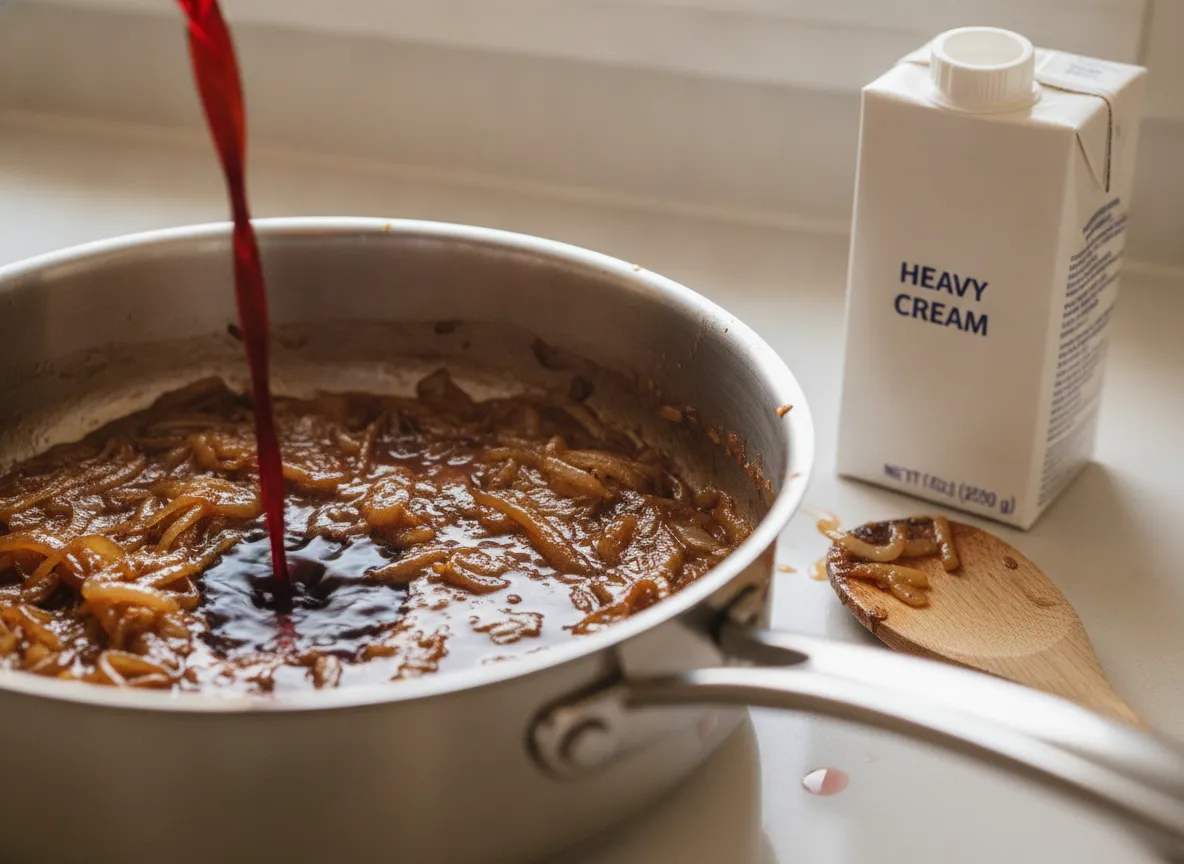
Time: 20 minutes | Skill Level: Intermediate
This final recipe breaks from the purely French tradition by incorporating heavy cream, creating a sauce that is richer, slightly milder, and absolutely stunning over a filet mignon.
Soften four thinly sliced shallots in butter over low heat for 10 minutes until they are completely caramelized. Add three-quarters of a cup of red wine and increase the heat to medium. Reduce the wine until almost completely evaporated. Pour in half a cup of heavy cream and simmer gently for 5 minutes until the sauce thickens. Season with salt, white pepper, and a squeeze of lemon juice to brighten the richness.
Flavor balance tips:
- The lemon juice cuts through the cream’s heaviness
- White pepper keeps the sauce visually clean
- Caramelizing the shallots fully removes any harsh bite
- A splash of brandy or cognac added with the wine adds another layer of complexity
This sauce is the one I save for special occasions. It photographs beautifully, tastes luxurious, and can be made up to two days ahead and reheated gently over low heat.
Essential Techniques That Make Every Sauce Better
Knowing the recipes is one thing. Understanding the underlying techniques ensures you can adapt and troubleshoot on the fly.
Deglazing
Deglazing means adding liquid — in this case, red wine — to a hot pan to dissolve the fond. Always add wine off the heat or with the heat reduced to avoid a dangerous flare-up. Scrape the bottom of the pan with a wooden spoon or silicone spatula as the wine hits the surface [4].
Mounting with Butter
Adding cold butter at the end of a sauce, piece by piece while swirling the pan, creates emulsification. The result is a glossy, velvety texture. If the butter breaks and the sauce looks greasy, the pan was too hot. Remove it from the heat and whisk in a splash of cold water to bring it back.
Reducing
Reduction concentrates flavor by evaporating water. The longer you reduce, the more intense and syrupy the sauce becomes. For most of these recipes, reducing to one-third of the original volume is the target. Watch carefully near the end — a sauce can go from perfect to burnt in under a minute [5].
Straining
For refined sauces like a jus or Bordelaise, straining through a fine mesh sieve removes solids and produces a smooth, restaurant-quality result. Press the solids gently with the back of a spoon to extract every drop of flavor.
Make-Ahead and Storage Guide
| Sauce | Fridge Storage | Freezer Storage | Reheating Method |
|---|---|---|---|
| Red Wine Pan Sauce | 3 days | Not recommended | Low heat, add splash of stock |
| Red Wine Reduction | 5 days | 3 months | Low heat, whisk to recombine |
| Red Wine Jus | 5 days | 3 months | Gentle simmer |
| Bordelaise | 4 days | 2 months | Low heat, do not boil |
| Buttery Herbed Sauce | 2 days | Not recommended | Very low heat |
| Simple Garlic Sauce | 4 days | 2 months | Medium-low heat |
| Mushroom Sauce | 4 days | 2 months | Medium heat, stir frequently |
| Cream Sauce | 3 days | Not recommended | Low heat, stir constantly |
Making sauces ahead is one of the smartest moves for dinner parties. You can focus on cooking the steak perfectly while the sauce warms quietly on a back burner.
Common Mistakes and How to Avoid Them
Using wine that is too sweet. Sweet wines like Merlot-based blends with residual sugar can make a sauce cloying. Stick to dry red wines with less than 4 grams of residual sugar per liter.
Rushing the reduction. Turning the heat too high to speed up a reduction scorches the sugars in the wine and creates a bitter, acrid flavor. Medium heat and patience are always the answer.
Skipping the fond. The browned bits in the pan are pure concentrated flavor. Never discard them by cleaning the pan before making your sauce [4].
Adding butter to a boiling sauce. Butter must be added off the heat or over very low heat to emulsify properly. Boiling breaks the emulsion and leaves you with a greasy, separated sauce.
Over-reducing. A sauce that has gone too far becomes sticky, overly sweet, and harsh. If this happens, thin it with a splash of warm beef stock and stir to combine.
Conclusion
The 8 Foolproof Red Wine Steak Sauce Recipes That Turn Dinner Into a Feast collected here represent a full spectrum of technique, time commitment, and flavor profile. From the 8-minute weeknight pan sauce to the slow-built Bordelaise with bone marrow, every recipe in this list is designed to succeed on the first attempt.
Here are your actionable next steps:
- Start with the Classic Red Wine Pan Sauce on your next steak night. Master the deglaze and the butter-mounting technique before moving on.
- Once comfortable, try the Red Wine Reduction or the Red Wine Jus to understand how concentration changes flavor.
- Reserve the Bordelaise and the Cream Sauce for occasions when you have time to cook with intention and want to genuinely impress.
- Build a small pantry of shallots, fresh thyme, Dijon mustard, and a reliable dry red wine so you are always ready to make one of these sauces without a special shopping trip.
- Make sauces ahead when hosting. A reheated Bordelaise or mushroom sauce is indistinguishable from one made fresh, and it frees you to focus on the steak.
A great steak deserves a great sauce. In 2026, with these eight recipes at your disposal, there is no reason to serve dinner any other way.
References
[1] Steak Sauce Recipes – https://www.bbcgoodfood.com/recipes/collection/steak-sauce-recipes?utm_source=openai
[2] Red Wine Reduction Steak Sauce Recipe – https://www.chefsresource.com/recipes/red-wine-reduction-steak-sauce-recipe/?utm_source=openai
[3] Decadent Bordelaise Sauce – https://cookingwithkendra.net/recipes/decadent-bordelaise-sauce/?utm_source=openai
[4] How To Make Pan Sauce – https://fond.kitchen/blog/how-to-make-pan-sauce/?utm_source=openai
[5] Red Wine Reduction Sauce Recipe – https://www.masterclass.com/articles/red-wine-reduction-sauce-recipe?utm_source=openai
[6] Red Wine Steak Sauce – https://www.eatingonadime.com/red-wine-steak-sauce/?utm_source=openai
[7] Steak Red Wine Sauce Recipe 23280649 – https://www.thekitchn.com/steak-red-wine-sauce-recipe-23280649?utm_source=openai
[8] Steak In Red Wine Sauce – https://www.tfrecipes.com/steak-in-red-wine-sauce/?utm_source=openai