9 Creative Polymer Clay Wine Glasses That Are True Works of Art
A plain wine glass costs less than two dollars at a dollar store, yet the global handmade craft market is projected to surpass $1.2 trillion by 2027. That gap between mass-produced and handcrafted tells you everything about where value truly lives. When artists apply polymer clay to glassware, something remarkable happens: an ordinary object becomes a conversation piece, a collectible, and sometimes a genuine heirloom.
Disclosure: This post contains affiliate links. As an Amazon Associate, we earn from qualifying purchases, and at no extra cost to you.
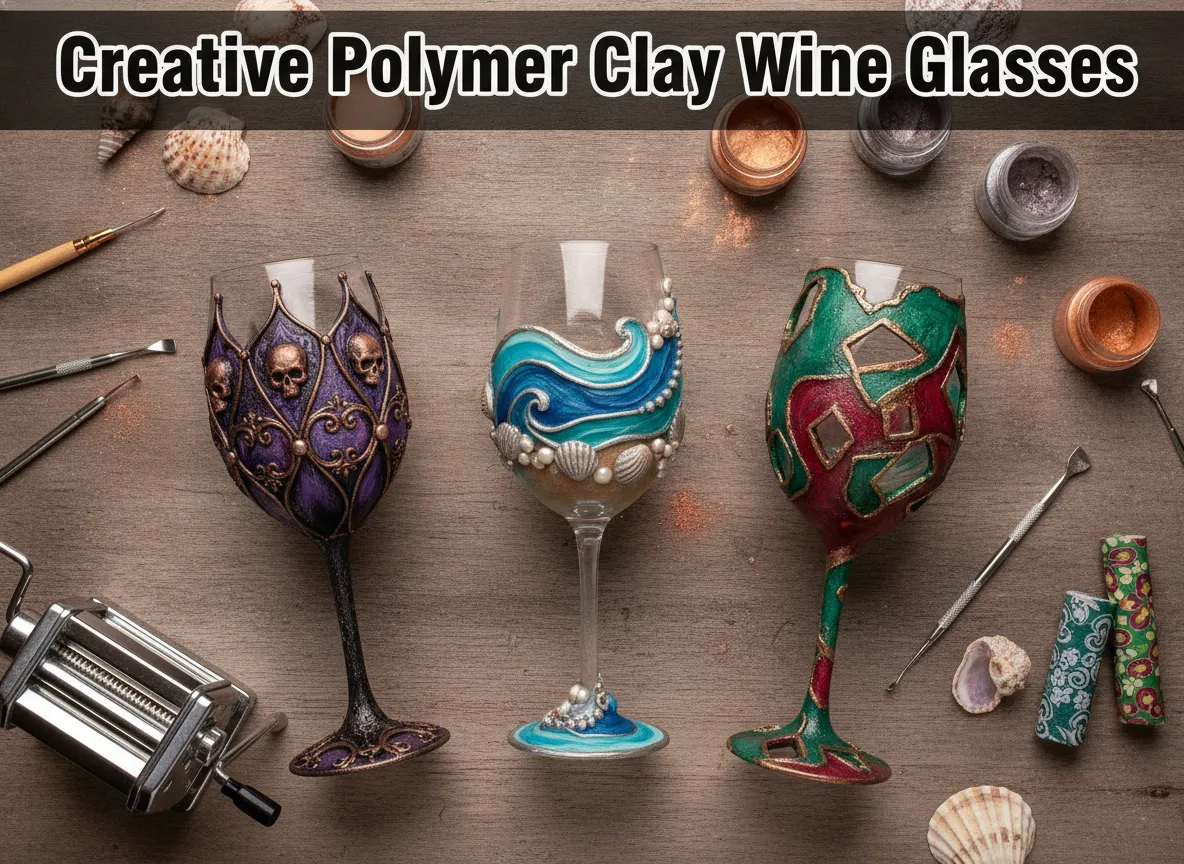
This guide covers 9 Creative Polymer Clay Wine Glasses That Are True Works of Art, walking you through real designs, tutorials, safety considerations, and the creative techniques behind each one. Whether you are a seasoned crafter or someone who just discovered polymer clay last week, these examples will inspire your next project or help you find the perfect handmade piece to add to your collection.
Key Takeaways
- Polymer clay can transform inexpensive wine glasses into high-value art pieces without specialized equipment
- Designs range from gothic and medieval themes to coastal, floral, and abstract styles
- Safety matters: polymer clay should only be applied to the exterior of glassware, never to surfaces that touch food or drink [7]
- FDA-compliant resin sealants significantly improve durability and longevity of finished pieces [5]
- Both beginners and advanced crafters can achieve stunning results by following structured tutorials [1][6]
What Makes Polymer Clay Wine Glasses Special
Before diving into the 9 Creative Polymer Clay Wine Glasses That Are True Works of Art on this list, it helps to understand why polymer clay has become the medium of choice for glassware artists.
Polymer clay is a PVC-based modeling material that remains pliable at room temperature and hardens when baked in a standard home oven, typically at temperatures between 215 and 300 degrees Fahrenheit. Unlike air-dry clay, it does not shrink or crack during curing, which makes it ideal for adhering to curved glass surfaces.
Key advantages of polymer clay for glassware:
- It bonds well to glass when applied correctly and baked
- It accepts paint, metallic powders, and mixed-media embellishments
- It is available in hundreds of colors and can be blended to create custom shades
- Finished pieces can be sealed with resin for food-safe exteriors and added durability
One important safety note that every crafter should keep in mind: polymer clay is safe for decorating the exteriors of glassware, but it must never be applied to the rim, interior, or any area that comes into direct contact with food or beverages [7]. This is a non-negotiable rule, not a suggestion.
The 9 Creative Polymer Clay Wine Glasses That Are True Works of Art
1. The Medieval Pirate Goblet
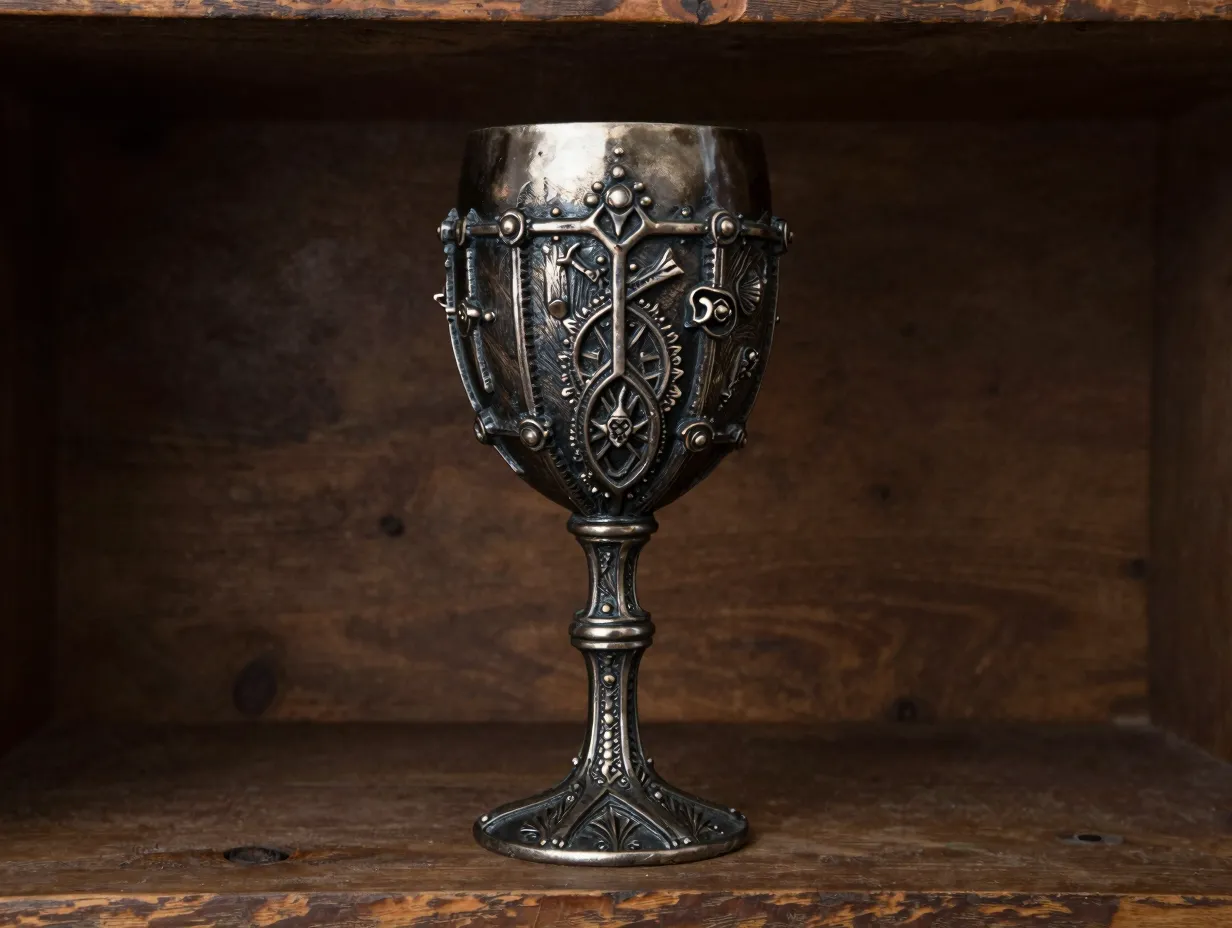
Few transformations in the polymer clay world are as dramatic as turning a standard wine glass into a medieval gothic pirate goblet. Nikita Maree’s comprehensive 50-step tutorial on Instructables walks crafters through every stage of this process, from surface preparation to final detailing [1].
The design involves wrapping the stem and base of a wine glass in textured polymer clay, then sculpting raised details that evoke aged metal, barnacle-encrusted wood, and gothic ironwork. The result looks like something pulled from the prop room of a high-budget fantasy film.
What makes this design stand out:
- The layered texturing technique creates genuine visual depth
- Dark metallic finishes (achieved with acrylic paint dry-brushing) add realism
- The 50-step process is broken down clearly enough for intermediate crafters to follow
This goblet is not just decorative. It is a statement piece that holds its own on a shelf or at a themed dinner party.
2. The Dollar Store Elevation
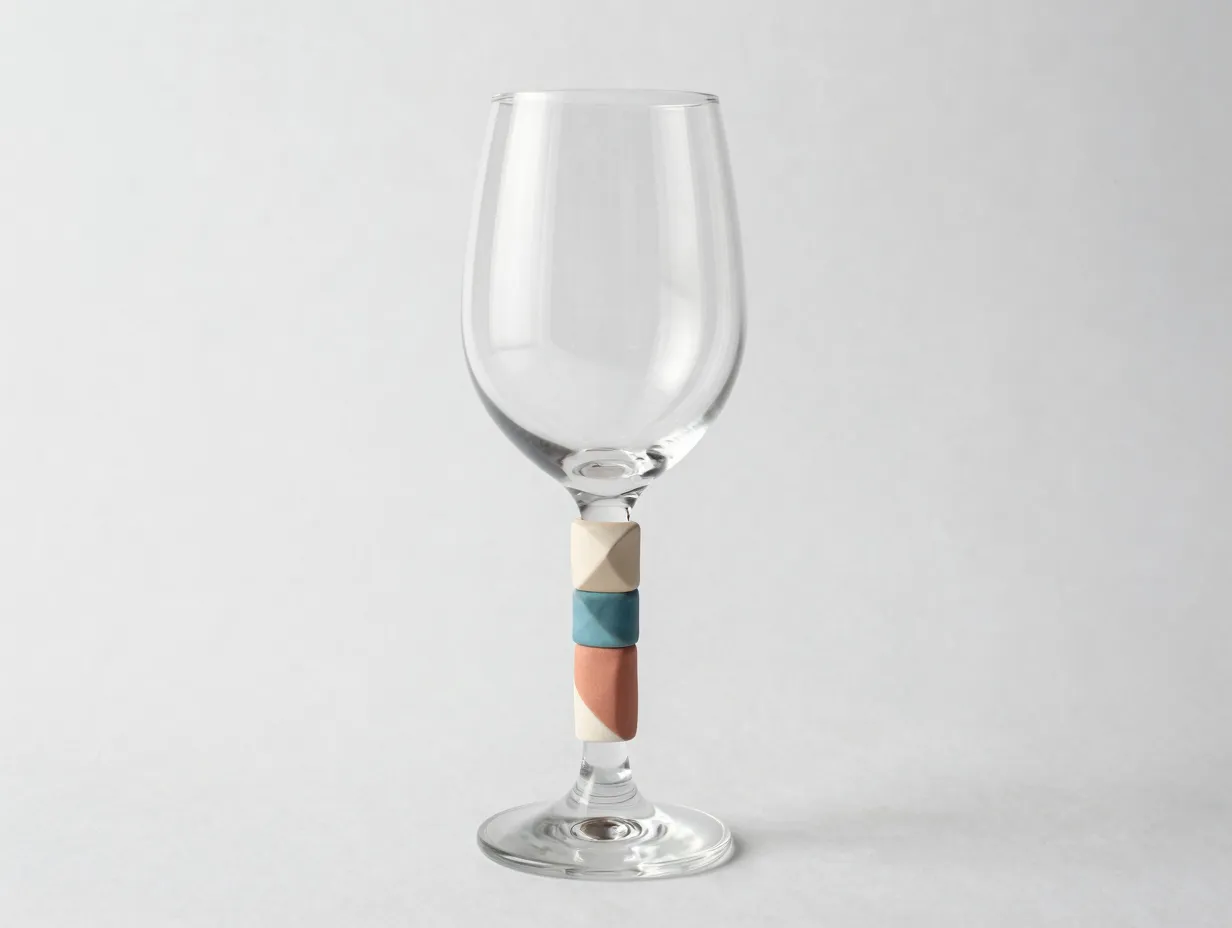
One of the most accessible entry points into polymer clay wine glass art comes from Stacy Cobb’s YouTube tutorial, which demonstrates how to take a dollar store wine glass and transform it into something that looks like it belongs in a boutique gift shop [2].
The approach is deliberately budget-friendly. The glass itself costs almost nothing. The polymer clay investment is minimal. Yet the finished product looks polished and intentional.
I find this particular style inspiring because it removes the intimidation factor. You do not need expensive materials or a professional studio. You need patience, a few basic tools, and a willingness to experiment.
Techniques featured in this style:
- Simple geometric clay wrapping around the stem
- Color blocking with contrasting clay shades
- Basic smoothing and finishing methods suitable for beginners
This design proves that artistic value has nothing to do with the cost of raw materials.
3. The Gothic Rose and Leaf Set
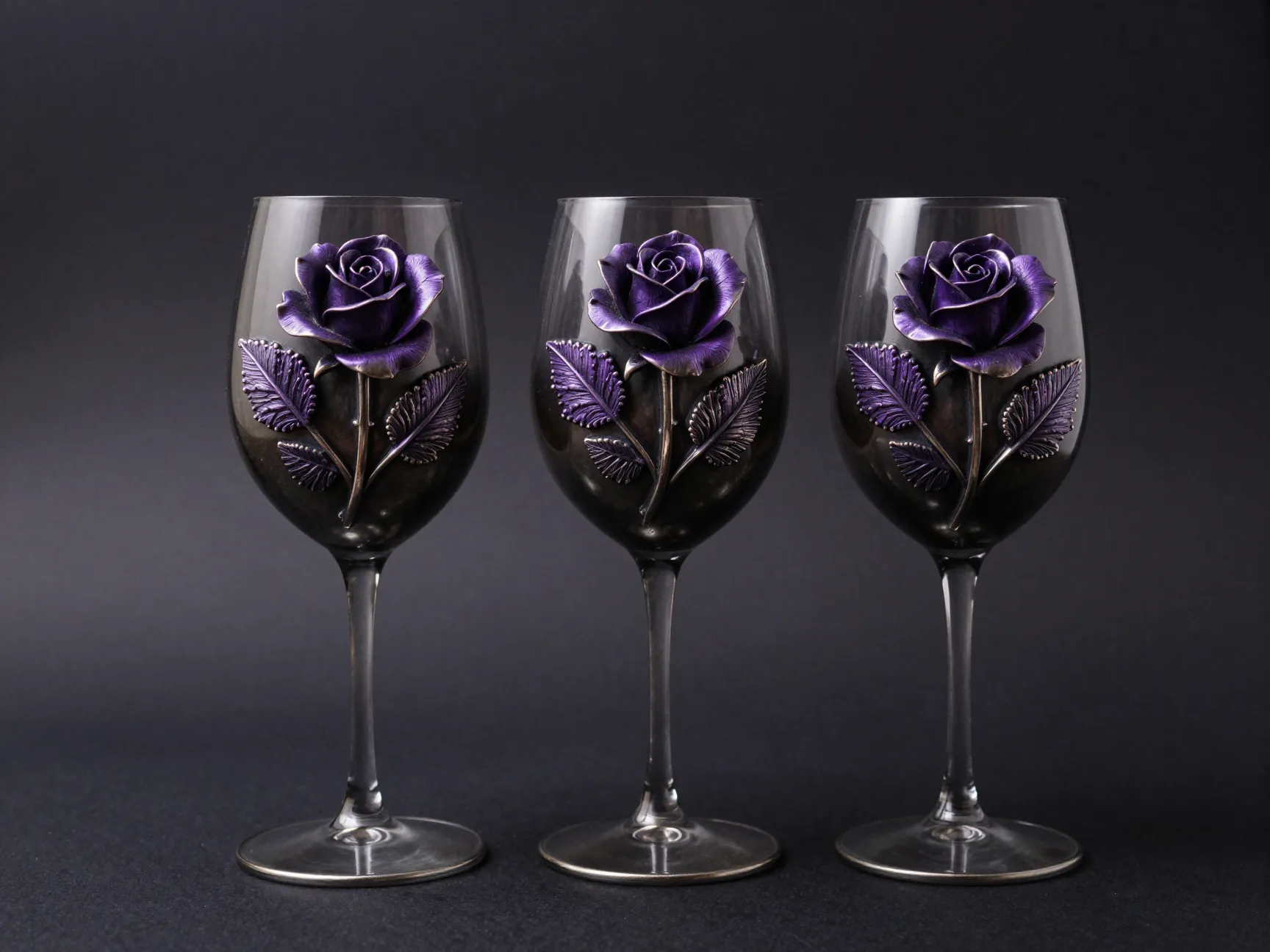
Daree’s Designs offers a commercially available set of two handmade wine glasses that exemplify what skilled polymer clay sculpture can achieve at a professional level [3]. Each glass features hand-sculpted clay leaves and roses, finished in dark pewter with rich purple highlights.
The color palette is deliberate and cohesive. The dark pewter base creates a moody, dramatic foundation, while the purple accents add a jewel-toned warmth that prevents the design from feeling cold or flat.
“The best polymer clay designs do not just decorate a surface. They tell a story about the object’s imagined history.”
Design details worth noting:
- The sculpted roses show individual petal definition, not just rough shapes
- Leaf veining is detailed enough to be visible from a normal viewing distance
- The pewter finish is achieved through layered metallic acrylic paints over a dark clay base
This set represents the kind of work that bridges craft and fine art. It would not look out of place in a gallery setting.
4. The Mermaid Champagne Flutes
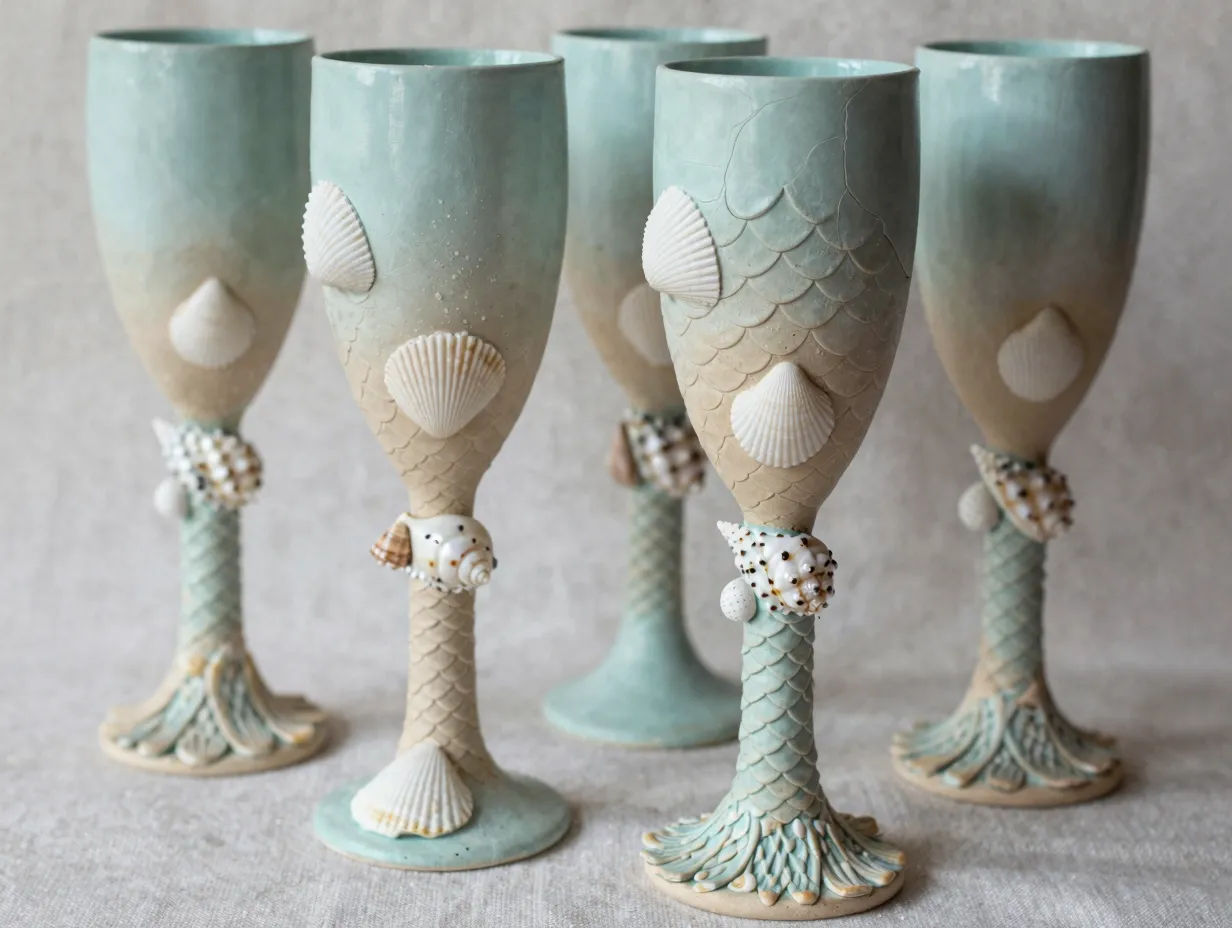
Coastal-themed polymer clay work has surged in popularity, and Daree’s Designs’ mermaid champagne flutes are among the most accomplished examples available [4]. These flutes feature hand-sculpted polymer clay designs with real seashell details incorporated into the decoration.
The use of actual seashells alongside sculpted clay creates an interesting mixed-media effect. The organic irregularity of real shells contrasts beautifully with the precise, intentional quality of the sculpted clay elements.
What makes this design technically impressive:
- Integrating real organic materials with polymer clay requires careful planning to ensure adhesion and durability
- The mermaid scale texture is achieved through repetitive stamping or molding techniques
- Coastal color palettes (seafoam, sandy beige, pearl white) are blended directly into the clay
These flutes work equally well as functional glassware and as decorative objects on a shelf or mantle.
5. The Blue, White, and Copper Stem Set
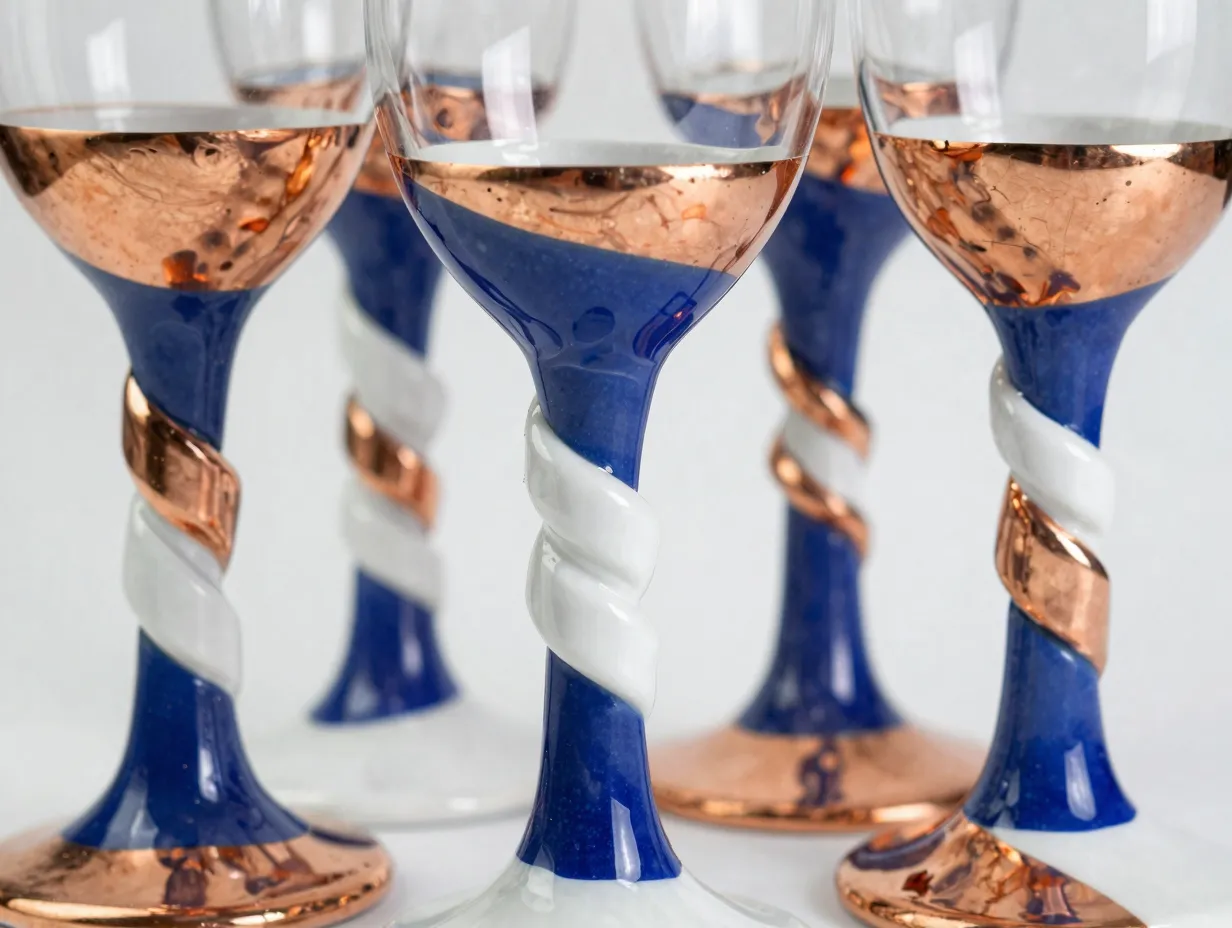
An Etsy listing showcases a set of two wine glasses with stems wrapped in a carefully blended combination of blue, white, and copper polymer clay [5]. What sets this design apart from simpler wrapping techniques is the finishing process: the completed pieces are sealed with FDA-compliant resin, significantly improving both durability and the quality of the surface finish.
The resin seal serves two purposes. First, it protects the clay from chipping or wear during regular use. Second, it creates a glassy, smooth surface that makes the metallic copper elements genuinely gleam.
Why the resin seal matters:
| Feature | Without Resin | With FDA-Compliant Resin |
|---|---|---|
| Surface durability | Moderate | High |
| Metallic finish quality | Matte | Glossy, reflective |
| Longevity | 1-2 years with care | 5+ years with care |
| Cleanability | Wipe only | Gentle hand wash |
This approach to finishing is something every polymer clay glassware artist should consider adopting.
6. The Interlaced Pattern Design
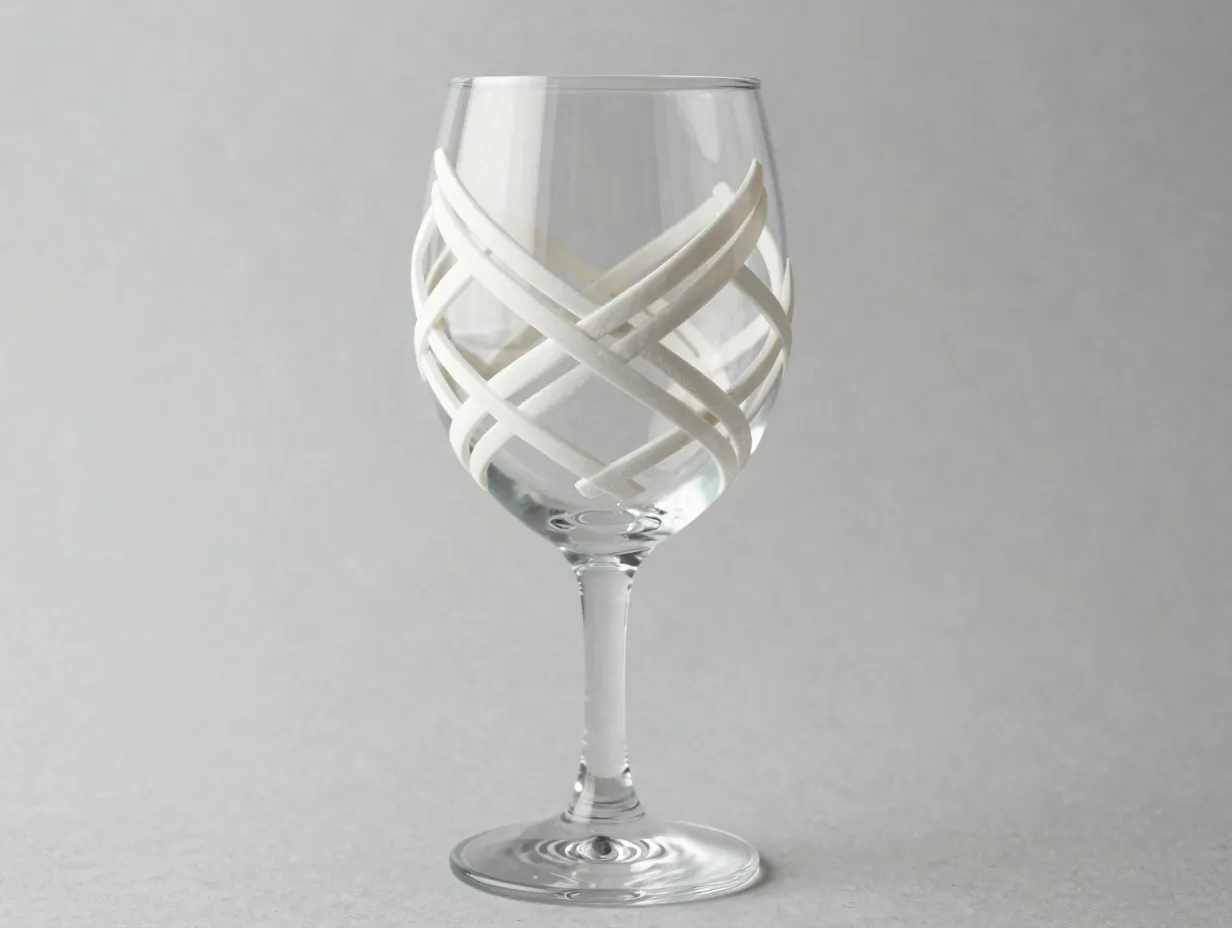
The Polymer Clay Workshop tutorial details a specific technique for applying interlaced polymer clay designs directly onto a wine glass surface [6]. Unlike designs that focus on sculptural elements, this approach is about pattern and geometry.
Interlaced designs involve creating thin ropes or sheets of clay and weaving or layering them across the glass surface in a structured, repeating pattern. The effect is similar to decorative ironwork or Celtic knotwork, depending on the color choices and pattern complexity.
Steps in the interlaced design process:
- Condition the clay thoroughly to ensure flexibility
- Roll even ropes or cut uniform strips
- Plan the pattern layout on paper before applying to glass
- Apply clay sections in sequence, pressing firmly to ensure adhesion
- Smooth seams carefully to maintain clean lines
- Bake according to clay manufacturer instructions
- Finish with paint or metallic powder as desired
This style rewards careful planning. Rushing the layout stage almost always results in uneven patterns that are difficult to correct once the clay is on the glass.
7. The Nature-Inspired Floral Wrap
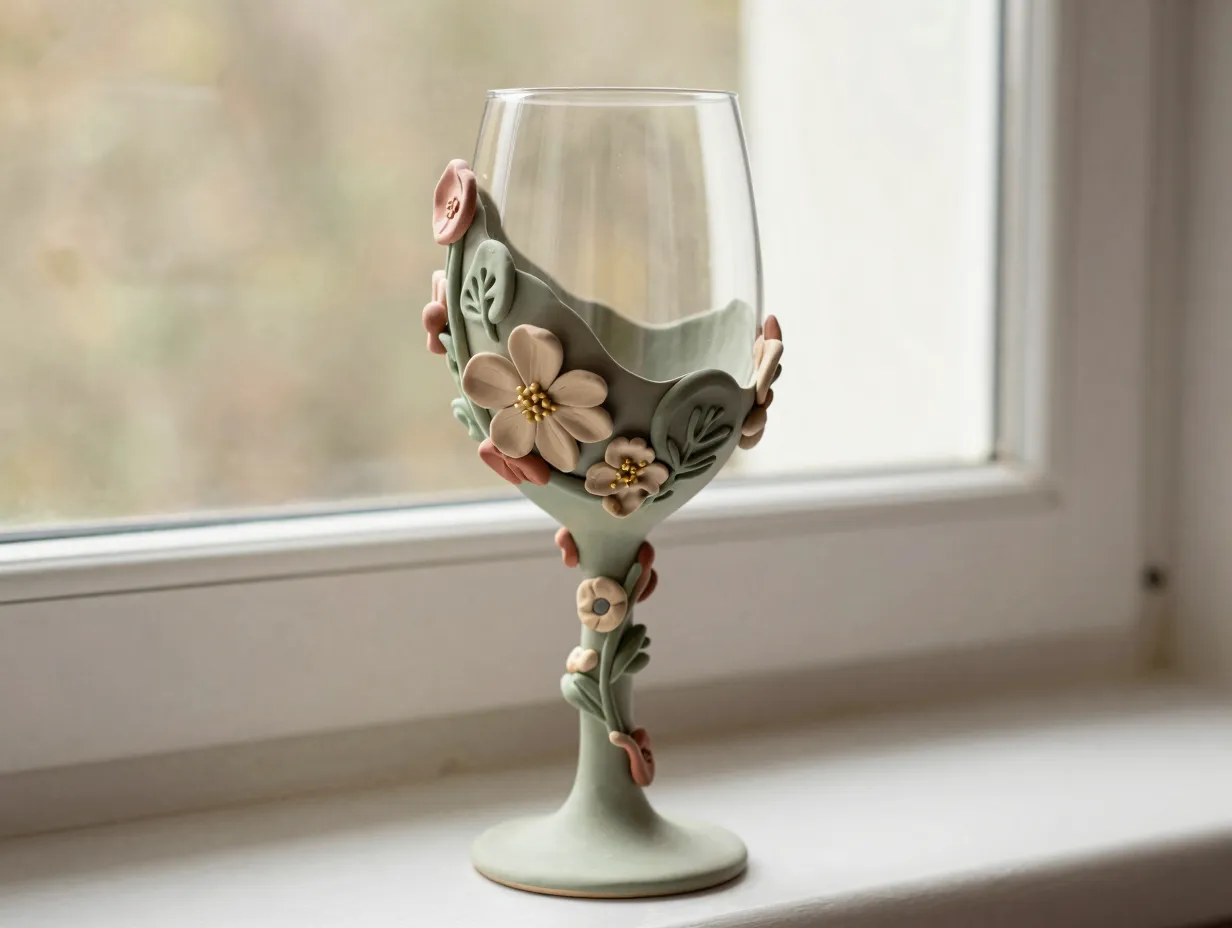
Building on the techniques from the Polymer Clay Workshop tutorial [6] and the gothic rose set from Daree’s Designs [3], the nature-inspired floral wrap takes a softer, more romantic approach to polymer clay glassware.
This style typically features sculpted flowers, leaves, vines, and sometimes insects or birds, arranged in a flowing composition that wraps around the stem and base of the glass. The palette tends toward natural, earthy tones: sage green, dusty rose, cream, terracotta, and soft gold.
Design principles for floral wraps:
- Asymmetry reads as more natural than perfectly symmetrical arrangements
- Varying the scale of flowers and leaves adds visual interest
- Leaving some glass surface visible creates breathing room in the composition
- Matte finishes often suit botanical themes better than high-gloss options
I have seen floral wrap glasses used as centerpieces at garden parties, displayed in kitchen windows where the light catches the translucent glass beneath the clay, and given as wedding gifts. They are versatile in a way that more dramatic gothic or pirate designs are not.
8. The Fantasy Creature Stem

Some of the most technically ambitious polymer clay wine glasses feature fully sculpted fantasy creatures incorporated into the stem design. Dragons, phoenixes, and mythical serpents are popular choices, with the creature’s body forming the stem itself or coiling around it.
This style requires intermediate to advanced sculpting skills. The armature (internal support structure) must be planned carefully to ensure the finished sculpture is stable and does not put undue stress on the glass connection points.
Technical considerations for creature stems:
- Thin clay sections (like wings or tails) may need wire armatures to prevent breakage
- Multiple baking sessions may be required as layers are built up
- Painting and detailing is often more time-intensive than the sculpting itself
- A final resin coat protects fine details from chipping
The fantasy creature style produces the most dramatic and collectible results of any approach on this list. A well-executed dragon stem wine glass is genuinely museum-quality work.
9. The Abstract Texture Study
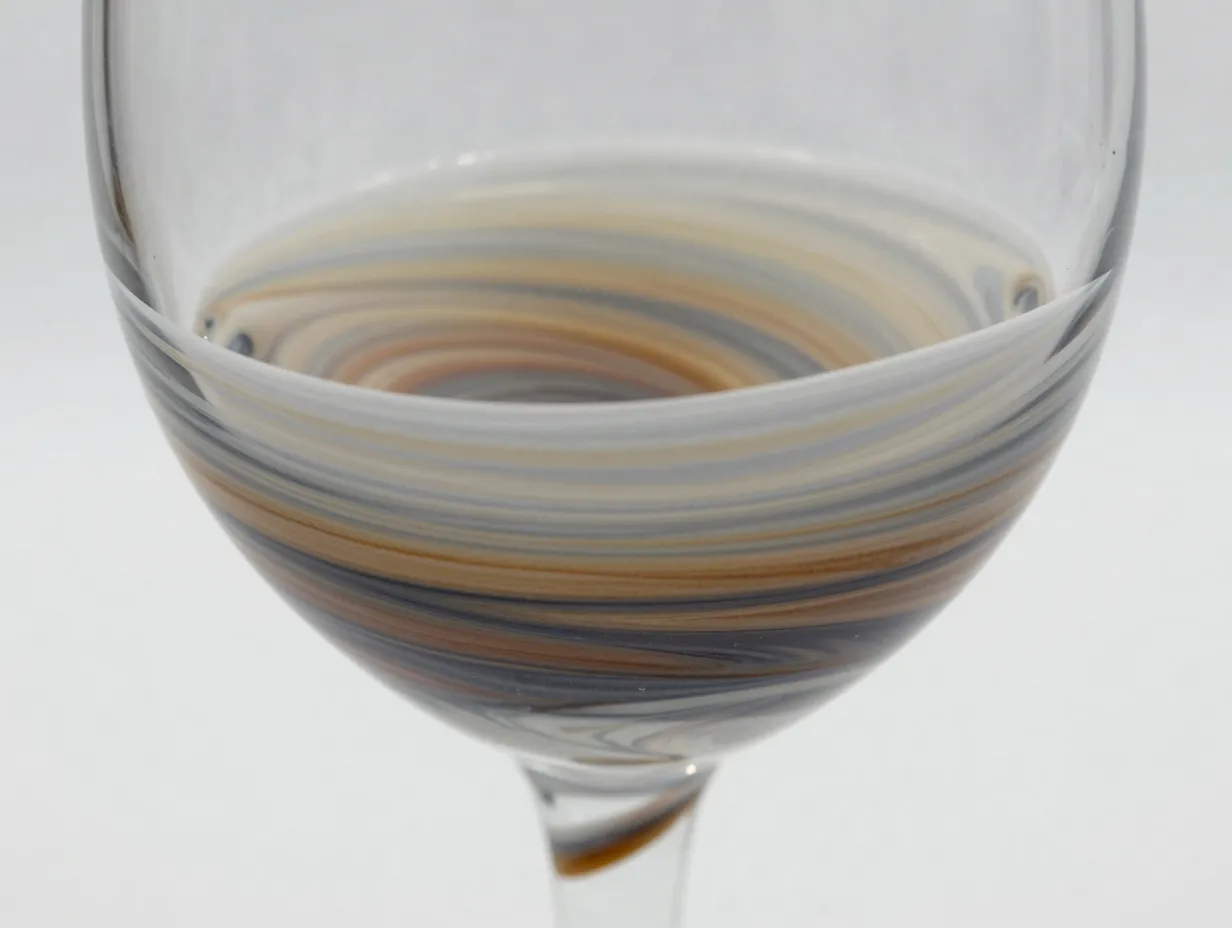
The final style in this exploration of 9 Creative Polymer Clay Wine Glasses That Are True Works of Art takes a completely different direction from the representational designs above. Abstract texture studies use polymer clay not to depict recognizable objects but to create purely tactile and visual experiences.
This might involve pressing clay through a pasta machine with multiple colors to create a marbled or caned effect, then wrapping the resulting sheet around the glass. It might involve stamping random or geometric textures into the clay surface before baking. The results are unpredictable in the best possible way.
Abstract techniques worth exploring:
- Skinner blend sheets for smooth color gradients
- Mokume-gane (a Japanese metalworking technique adapted for clay) for layered, wood-grain-like patterns
- Alcohol ink transfers onto raw clay before application
- Crumpled foil pressing for irregular, organic surface textures
Abstract designs are often the most approachable for true beginners because they do not require precise sculpting skills. They reward experimentation and happy accidents.
Safety and Durability: What Every Crafter Needs to Know
No guide to polymer clay wine glasses would be complete without addressing the safety questions that come up repeatedly in crafting communities.
The Blue Bottle Tree, a well-regarded resource in the polymer clay community, makes the key safety principle clear: polymer clay is safe for decorating the exteriors of glassware, but it should never be applied to areas that come into direct contact with food or beverages [7]. This means the rim of a wine glass must always remain free of clay decoration.
Practical safety guidelines:
- Keep all clay decoration at least one inch below the rim of any drinking vessel
- Use FDA-compliant resin sealants when available, particularly for pieces that will be used regularly [5]
- Hand wash only; dishwashers can damage both clay and resin finishes
- Inspect pieces periodically for chips or cracks in the clay or sealant
On the question of durability, properly baked and sealed polymer clay is surprisingly robust. The key word is “properly.” Underbaked clay remains brittle and is prone to breaking. Following the manufacturer’s baking instructions precisely is not optional.
Getting Started: Tools and Materials
If the designs above have inspired you to try creating your own polymer clay wine glass, here is a practical starting point.
Essential tools:
- Polymer clay in your chosen colors (Sculpey, Premo, and Fimo are reliable brands)
- A pasta machine or acrylic roller for conditioning and flattening clay
- Basic sculpting tools (a needle tool, ball stylus, and silicone-tipped tools cover most needs)
- A dedicated baking surface (ceramic tile works well)
- Acrylic paints and metallic powders for finishing
- A quality brush-on or pour-on resin for sealing
Wine glass selection:
The glass itself matters more than many beginners realize. Smooth, simple shapes accept clay more easily than heavily faceted or textured glasses. The stem should be long enough to accommodate your design without crowding. Dollar store glasses are genuinely a good starting point [2], not just because of cost but because their simple forms are ideal for learning.
Time investment:
| Project Type | Estimated Time |
|---|---|
| Simple stem wrap (beginner) | 2-4 hours |
| Interlaced pattern design | 4-8 hours |
| Floral wrap | 6-12 hours |
| Gothic sculpted design | 10-20 hours |
| Fantasy creature stem | 15-30+ hours |
These are honest estimates. The more complex designs require patience, and patience is the single most important tool in any crafter’s kit.
Conclusion
The 9 Creative Polymer Clay Wine Glasses That Are True Works of Art explored in this guide represent a spectrum of skill levels, aesthetic sensibilities, and creative approaches. From the accessible dollar store transformation to the ambitious fantasy creature stem, each style demonstrates that polymer clay is one of the most versatile and rewarding mediums available to artists and crafters in 2026.
Actionable next steps:
- Choose one design style from this list that matches your current skill level
- Gather basic materials: a simple wine glass, one or two colors of polymer clay, and basic sculpting tools
- Review the Polymer Clay Workshop tutorial [6] or the Instructables pirate goblet guide [1] for structured, step-by-step instruction
- Practice the core technique (wrapping, sculpting, or patterning) on a spare piece of glass before committing to your final piece
- Always apply a quality resin sealant to protect your finished work [5]
- Share your results with online crafting communities for feedback and encouragement
The distance between a two-dollar glass and a genuine work of art is measured not in money but in time, skill, and intention. Start with what you have. Build from there.
References
[1] Turning A Wine Glass Into A Pirate Goblet – https://www.instructables.com/Turning-a-Wine-Glass-Into-a-Pirate-Goblet/?utm_source=openai
[2] Watch – https://www.youtube.com/watch?v=yC1wnvyNz_w&utm_source=openai
[3] Purple And Pewter Rose And Leaves – https://dareesdesigns.com/products/purple-and-pewter-rose-and-leaves?utm_source=openai
[4] Beach Champagne Flutes – https://dareesdesigns.com/products/beach-champagne-flutes?utm_source=openai
[5] Set Of 2 Hand Painted Wine Glasses With – https://www.etsy.com/listing/1708664005/set-of-2-hand-painted-wine-glasses-with?utm_source=openai
[6] Polymer Clay Wine Glass – https://polymerclayworkshop.com/2013/05/08/polymer-clay-wine-glass/?utm_source=openai
[7] Polymer Clay Safe – https://thebluebottletree.com/polymer-clay-safe/?utm_source=openai